
Johan Rosihan Highlights Forestry Law Revision, Emphasises Social Justice
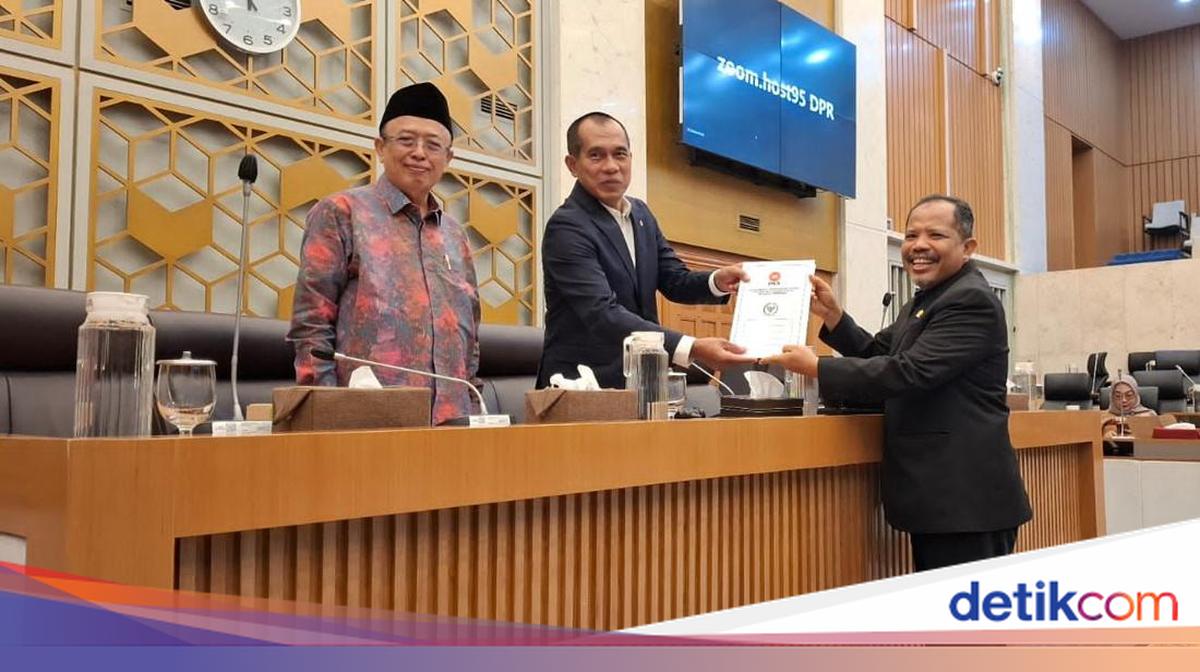
Member of the House of Representatives’ Commission IV from the PKS faction, Johan Rosihan, delivered the faction’s mini-viewpoint at the Working Committee Meeting on the Draft Law (RUU) concerning the Fourth Amendment to Law Number 41 of 1999 on Forestry. He emphasised the importance of fundamental reform in national forest governance.
“Indonesia’s forests should not be viewed merely as economic commodities, but possess strategic functions as life supporters, climate controllers, and living spaces for communities,” stated Johan in a written statement on Wednesday (8/4/2026).
He stressed that the Forestry Law revision must be grounded in principles of social justice, ecological sustainability, and state sovereignty over natural resources in accordance with the constitutional mandate.
According to him, this legislative amendment must address various fundamental issues, such as land tenure conflicts, imbalances in forest area control, weak law enforcement, and the suboptimal empowerment of communities.
Furthermore, climate change challenges must be responded to through integrated, ecosystem-based forestry policies.
Johan also highlighted the importance of strengthening forestry objectives so that the principle of “the greatest prosperity for the people” is not merely normative but translated into measurable indicators, such as improvements in the welfare of communities around forests and reductions in land tenure conflicts.
“The principle of the greatest prosperity for the people must be truly realised concretely, not just normatively,” he asserted.
He emphasised the need for cross-sectoral regulatory synchronisation and firm law enforcement against forest destruction practices. Regarding state control over forests, Johan assessed that clear limitations are necessary to avoid excessive dominance that could neglect community rights.
Furthermore, he cautioned that policies on utilising forest areas, including for food security, must be implemented cautiously to prevent loopholes for massive forest conversion that could damage ecosystems. He also stressed the importance of transparent and participatory data-based governance.
In terms of funding, Johan encouraged transparent, accountable, and performance-based management, as well as opening opportunities for financing innovations such as green financing schemes and environmental services.
Based on these notes, the PKS faction expressed approval for the RUU on the Fourth Amendment to the Forestry Law to proceed to the next discussion stage, with the strengthening of norms as an integral part of the legislative process.
Johan reaffirmed his commitment to continue overseeing the Forestry Law revision to deliver fair, sustainable forest governance that provides the greatest benefits for the welfare of the Indonesian people.