
Job Seekers Flock to Jakarta to Change Their Fate, But the Reality is Harsh
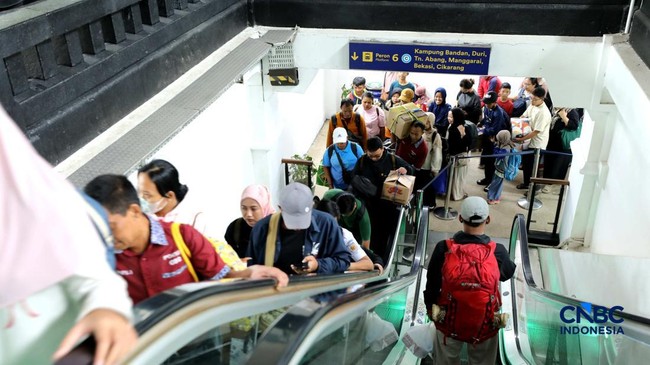
Job Seekers Flock to Jakarta to Change Their Fate, But the Reality is Harsh
Jakarta, CNBC Indonesia - The surge of new arrivals in Jakarta following Lebaran has once again come under the spotlight. Amid an unstoppable wave of urbanisation, industry players are facing a bitter reality, where formal job opportunities are increasingly limited and even eroded by waves of efficiency drives and layoffs (PHK).
Deputy Chairman of the Provincial Leadership Council (DPP) of the Indonesian Employers Association (Apindo) for DKI Jakarta, Nurjaman, stated that the post-Eid al-Fitr urbanisation phenomenon is not new. According to him, Jakarta remains a strong economic magnet for job seekers from the regions.
“This is because Jakarta is still a magnet for the economy,” Nurjaman told CNBC Indonesia on Thursday (26/3/2026).
In addition, Jakarta is still perceived as a city with easier access to job opportunities.
“That earning a living in Jakarta is easy, job opportunities in Jakarta are plentiful, that’s the perception,” he continued.
However, behind this allure, the real conditions on the ground show limitations in job opportunities, particularly in the formal sector. The business world is currently not in an expansive state.
“Well, from the business side, the current conditions mean that formal job opportunities are very limited. Honestly, they are limited, and there have been layoffs happening everywhere, meaning people from the regions are coming to Jakarta in search of work, but within companies, there are also efficiency measures,” said Nurjaman.
This situation creates a paradox, where the number of job seekers is increasing, while the availability of formal jobs is shrinking. As a result, many newcomers may not be absorbed into the formal job market.
Nurjaman also emphasised that the job opportunities still available are mostly in the non-formal sector.
“Yes, in the non-formal sector; in the formal sector, there is a reduction in workforce,” he said.
On the other hand, the ongoing urbanisation flow also has the potential to add to the unemployment burden in Jakarta. According to Nurjaman, every migrant who comes to seek work essentially falls into the category of new unemployed.
“Because people from the regions come here to look for work, and looking for work means they are unemployed. This is something that we all need to address,” he stressed.
Nevertheless, he acknowledged that urbanisation does not have entirely negative impacts. If absorbed well, the additional workforce can actually drive economic growth.
“But there are benefits, there are positives; once the workforce is absorbed, growth will rise, because there is movement,” said Nurjaman.
To that end, he emphasised the need for an active role from the government, both central and local, in creating new job opportunities, not only in Jakarta but also in the regions of origin for the job seekers.
“Well, the government should also respond to this phenomenon—does it have to keep going like this? So, the regions that can create their own magnets, how should they create job opportunities in the regions,” he said.
In agreement, Chairman of the Employment Sector of Apindo, Bob Azam, noted that the phenomenon of a flood of job seekers after Lebaran is a recurring pattern every year.
“Job seekers are indeed rampant after Lebaran, usually following their seniors who arrived in Jakarta earlier. Usually, they are those with not very high education levels and are willing to work in anything, including the informal sector,” said Bob when contacted separately.
He also highlighted the lack of company expansions amid global pressures, including the oil crisis triggered by geopolitical conflicts.
“Sectorally, not many companies have expansion plans, especially amid the oil crisis triggered by the Iran war. If there are any, they are very limited, just to replace those who resign or retire,” he explained.
With these conditions, formal job opportunities are becoming narrower, so the majority of job seekers are likely to be absorbed into the informal sector.
“So, most likely they will work in the informal sector. Currently, the informal sector is quite large; in our case, it’s probably more than 60%, and unemployment is high, especially among young people aged 16-30 years,” he concluded.