
Jiangsu Delong's Indonesian Nickel Subsidiaries Weather Parent Company's Financial Crisis
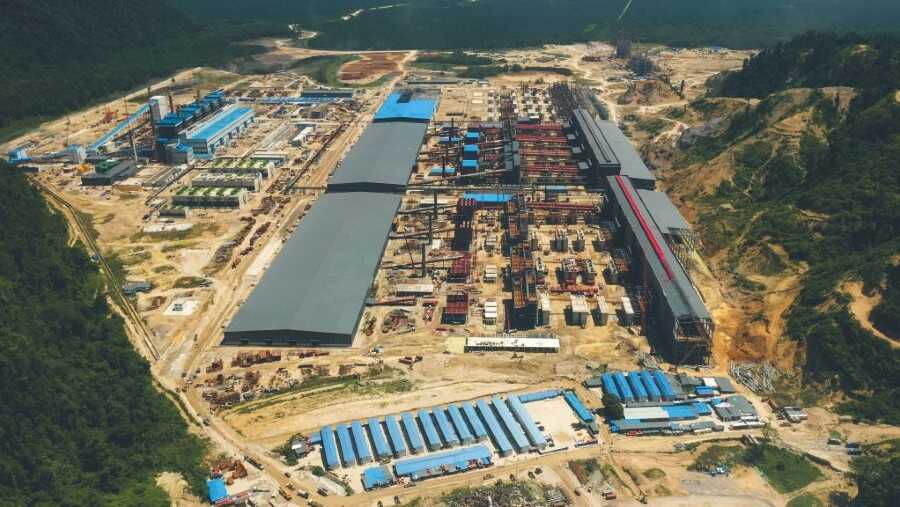
Due to financial pressures and the debt restructuring process suffered by Jiangsu Delong in China, Djoko continued, many shares in its Indonesian subsidiaries have been taken over by other companies from China.
Not Yet Collapsed
He added — based on HSBC Securities analysis — that the operations of Jiangsu Delong’s subsidiaries in Indonesia remain relatively undisrupted, although some production lines have been scaled back, particularly at GNI.
“GNI is reportedly currently seeking new funding. Regarding VDNI and OSS, there is no information,” he said.
The news of GNI’s new funding was previously confirmed by the Ministry of Industry. In this regard, Director General of Metal, Machinery, Transportation Equipment and Electronics Industries (ILMATE) at the Ministry of Industry, Setia Diarta, said the new funding would likely be completed by August 2025, following a change in company management on 18 January.
“GNI is currently awaiting the schedule for a creditors’ meeting. Possibly in August. That is the update we have received,” Setia told Bloomberg Technoz when asked for confirmation on Wednesday (11/6/2025). “During the transition process, funding still comes from Jiangsu Delong.”
Jiangsu Delong is one of the major investors in nickel downstreaming for the stainless steel segment in Indonesia, alongside Tsingshan Holding Group Co Ltd — which also originates from China.
The Chinese conglomerate, which has been grappling with a financial crisis and debt restructuring since mid-2024, was founded by legendary metals entrepreneur Dai Guo Fang in 2010 with more than 10,000 employees.
Jiangsu Delong has an annual production capacity of more than 10 million tonnes of stainless steel and other alloy products from factories in China and Indonesia, but many of its operations have faced difficulties due to declining nickel prices in recent years.
Jiangsu Delong applies significant expertise from pyrometallurgical nickel smelters using rotary kiln-electric furnace (RKEF) technology at its industrial complex in China. Before Indonesia imposed its nickel ore export ban on 1 January 2020, Delong processed nickel ore imported from the Philippines and Indonesia into ferronickel through smelting and refining methods, with an annual capacity of 1 million tonnes of nickel pig iron.
The company subsequently entered Indonesia and established business units, including PT GNI.
When inaugurating PT GNI in North Morowali Regency, Central Sulawesi on 27 December 2021, Indonesia’s seventh President Joko Widodo underlined that foreign companies had no choice but to build downstream industries in Indonesia to utilise and process nickel ore following the export ban.
According to statements on the company’s official website, GNI is a nickel ore processing and refining smelter company established in 2019. The GNI smelter project is also classified as a national strategic project (PSN) under Coordinating Minister for Economic Affairs Regulation Number 7 of 2021, grouped together with the VDNI project.
PT GNI’s operations are located in Bunta Village, East Petasia District, North Morowali Regency, Central Sulawesi. Using pyrometallurgical or RKEF technology, the GNI smelter has a production capacity of 1.9 million tonnes of nickel pig iron (NPI) per year. The company also produces ferronickel products, which are subsequently processed into raw materials used for stainless steel production and nickel alloy industries.
PT GNI also collaborates with PT Aneka Tambang Tbk (ANTM), a member of the state-owned enterprise (SOE) mining holding company PT Mineral Industri Indonesia (MIND ID). This cooperation was established through a heads of agreement (HoA) between the two companies and another firm called Alchemist Metal Industry Pte Ltd in May 2021, for the development of smelter operations in the North Konawe and North Morowali areas.
According to a press release from the Coordinating Ministry for Economic Affairs, the GNI smelter complements the production line previously operated at the OSS smelter, which produces ferronickel with a capacity of 2.2 million tonnes per year and stainless steel billets with a capacity of 3 million tonnes per year. Meanwhile, VDNI is a ferronickel-producing smelter with a production capacity of 1 million tonnes per year.
The Coordinating Ministry for Economic Affairs previously reported that OSS, VDNI, and GNI have collectively invested approximately US$8 billion (around Rp130 trillion at current exchange rates), employing approximately 27,000 workers.