
Jember Regent Fawait Visits Japanese Wood Processing Factory, Begins Reducing Private Official Vehicles
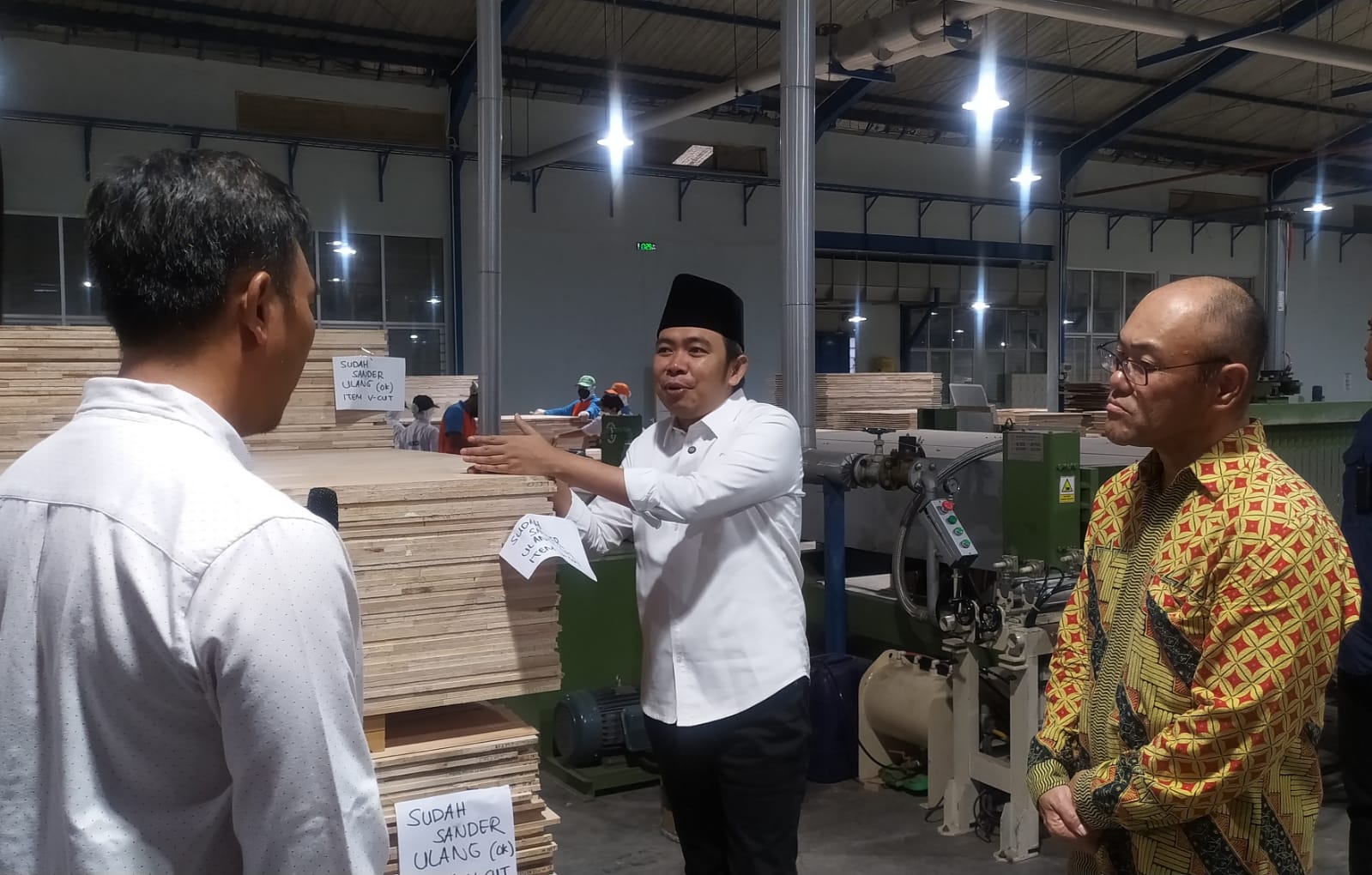
Jember, Indonesia – Jember Regent Muhammad Fawait conducted an official visit to PT Nankai Indonesia, a Japanese wood processing company located in Garahan Village, Silo District, on Saturday, 14 March 2026. The visit aimed to observe production activities directly and assess the company’s investment contributions to the regional economy.
PT Nankai Indonesia is a foreign direct investment enterprise engaged in wood processing. The company has invested approximately $10 million US dollars, equivalent to over Rp150 billion, in Jember.
In its operations, the company employs around 250 workers, with approximately 80 per cent being local residents of Jember, particularly from areas surrounding Silo District.
Fawait acknowledged the importance of such investments as PT Nankai in driving regional economic growth. Beyond creating employment opportunities, the industry contributes to the development of community forestry, particularly sengon wood, which serves as the primary raw material.
“Investment is one of the keys to reducing poverty in Jember alongside government spending. Therefore, we want to ensure that Jember increasingly welcomes investors,” he stated.
He also emphasised that the local government is promoting the completion of spatial planning regulations through the Regional Regulation on Regional Spatial Planning (RTRW). According to him, regulatory certainty is essential for creating a more conducive investment climate in Jember.
PT Nankai Indonesia operates several production facilities in East Java, including sites in Gresik and Lumajang in addition to Jember. The industrial expansion aims to meet wood, particularly sengon, demand for the Japanese market and expand distribution to European and American markets.
During the visit, the official delegation demonstrated an unusual approach. Whereas regional officials typically travel in separate official vehicles, Fawait and the heads of regional apparatus organisations (OPD) travelled together in a single Hiace minibus.
According to Fawait, this approach was deliberately adopted as a form of fuel efficiency within the local government. He noted that the measure aligns with President Prabowo Subianto’s directive to promote energy conservation amid global uncertainty, including impacts of geopolitical tensions in the Middle East on world oil prices.
“We travelled as a group, not individually. This is part of efficiency in line with the President’s directive. Global circumstances make oil prices potentially volatile, so we must be wiser in fuel consumption,” Fawait explained.
He maintained that local government should set an example in energy conservation, including reducing the separate use of official vehicles for official duties. Such a straightforward measure, he believed, could contribute to budget efficiency and energy consumption control.