
Jeffrey Sachs: US-Iran Conflict is About Regional Interests, Not Nuclear Weapons
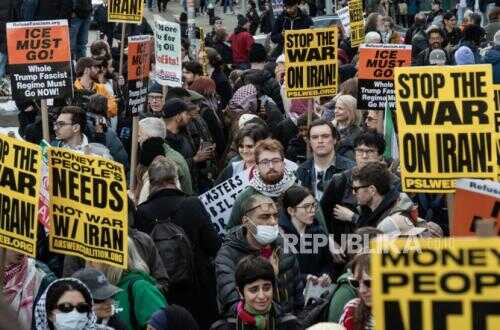
American economist Jeffrey Sachs has argued that the conflict between the United States and Iran is fundamentally about geopolitical interests in the Middle East rather than nuclear weapons alone, and that the nuclear issue is often used as a pretext while deeper concerns are at stake.
In a statement to Analyst News, Sachs said that war against Iran does not reflect genuine American national interests. “This is not about nuclear weapons. This is about Israel’s regional hegemony in the Middle East. Israel wants to topple the Iranian regime, period,” he stated.
Sachs contended that Washington’s narrative about preventing Iran from acquiring nuclear weapons is not entirely accurate. He pointed to the previously negotiated Iranian nuclear agreement, which was subsequently cancelled during President Donald Trump’s administration. “The idea that this is to prevent Iran from getting nuclear weapons—that was already negotiated. Trump cancelled it,” he said.
He also stated that Iran has repeatedly expressed its willingness to negotiate, but that the United States has not accepted these offers. “The United States does not accept ‘yes’ as an answer because this works for the Israeli government. That’s the bottom line,” Sachs said.
Furthermore, he questioned why American foreign policy in the Middle East has consistently aligned with Israeli interests over the past several decades. He even suggested the possibility of domestic political factors, pressure from particular groups, and other suspected interests behind such policy.
“The US has no interest whatsoever in going to war with Iran at this time. If war happens, it is because Israel is telling the United States what to do,” he said.
Sachs’s statement came amid escalating regional tensions following military strikes and retaliatory actions between the two sides. The conflict has triggered global market concerns, particularly regarding energy prices and world economic stability.
For the international community, the escalation of conflict is not merely a matter of foreign policy, but also impacts oil prices, inflation, and global economic uncertainty.