
JEDA Initiative Helps Society Wisely Navigate Information Overload
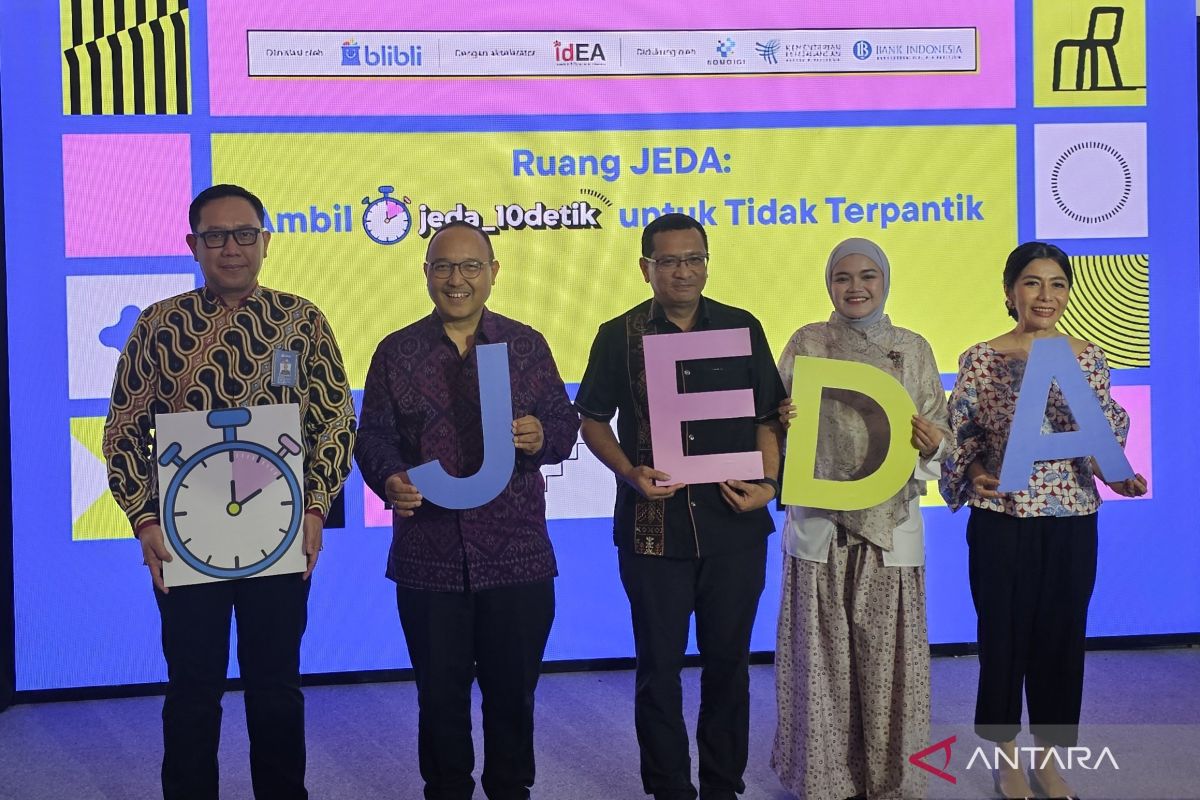
Jakarta (ANTARA) - The online trading service platform Blibli has introduced an initiative named JEDA to help Indonesian society wisely face the information overload in the increasingly uncontrollable digital era.
JEDA is an acronym for Jangan Reaktif, Evaluasi, Double-check, Ambil keputusan dengan tenang, which is hoped to be practised in daily life.
“The JEDA initiative stems from the understanding that the quality of decisions is not determined solely by speed but also by clarity, so we want to provide an experience that is not only fast but also instils confidence, both online and offline,” said Blibli’s Head of PR, Nazrya Octora, in Jakarta on Tuesday.
As Blibli’s contribution to Indonesia’s digital ecosystem, JEDA is supported by the Indonesian E-commerce Association (idEA). Additionally, government representatives from the Ministry of Communication and Digital Affairs and the Ministry of Trade have also endorsed the launch of this initiative.
This initiative is a strategic step to strengthen consumer protection and digital literacy through the microsite jeda10detik.com.
The core of this initiative, in line with its meaning, is to encourage a pause culture among society so that people can stop for a moment before acting.
As a result, seven out of ten people reported feeling calmer after performing JEDA for 10 seconds, indicating that a brief pause can help reduce impulsive responses and bring clarity before making decisions.
As a form of digital literacy, this initiative is considered brilliant by government representatives, specifically from the Ministry of Communication and Digital Affairs (Kemkomdigi).
Head of the Human Resource Development Agency of Kemkomdigi, Bonifasius Wahyu Pudjianto, stated that the results of the JEDA social experiment provide an overview that the main challenge of the digital era now is not just accurate access to information but how to respond to it.
“In the midst of such a rapid flow, the ability to pause briefly before reacting becomes an important part of digital literacy. Approaches like JEDA serve as concrete examples of how education can be packaged simply, relevantly, and easily applied in daily life,” said Boni.
Not only to face information overload, the JEDA step is also expected to be applied by society in conducting digital transactions that are now ingrained in daily life.
By habituating these steps, it is hoped that awareness will grow among Indonesian society to become critical consumers in this digital era.
“JEDA is expected to encourage consumers not to rush into decisions but to take time to think, evaluate information, and ensure the security and validity of products before transacting. Therefore, a simple habit like a brief JEDA before buying becomes a very important preventive step,” said Director of Consumer Empowerment at the Ministry of Trade, Immanuel Tarigan Sibero.