
JCI Weakens Following Asian Markets Amid US-Iran Ceasefire Negotiation Uncertainty
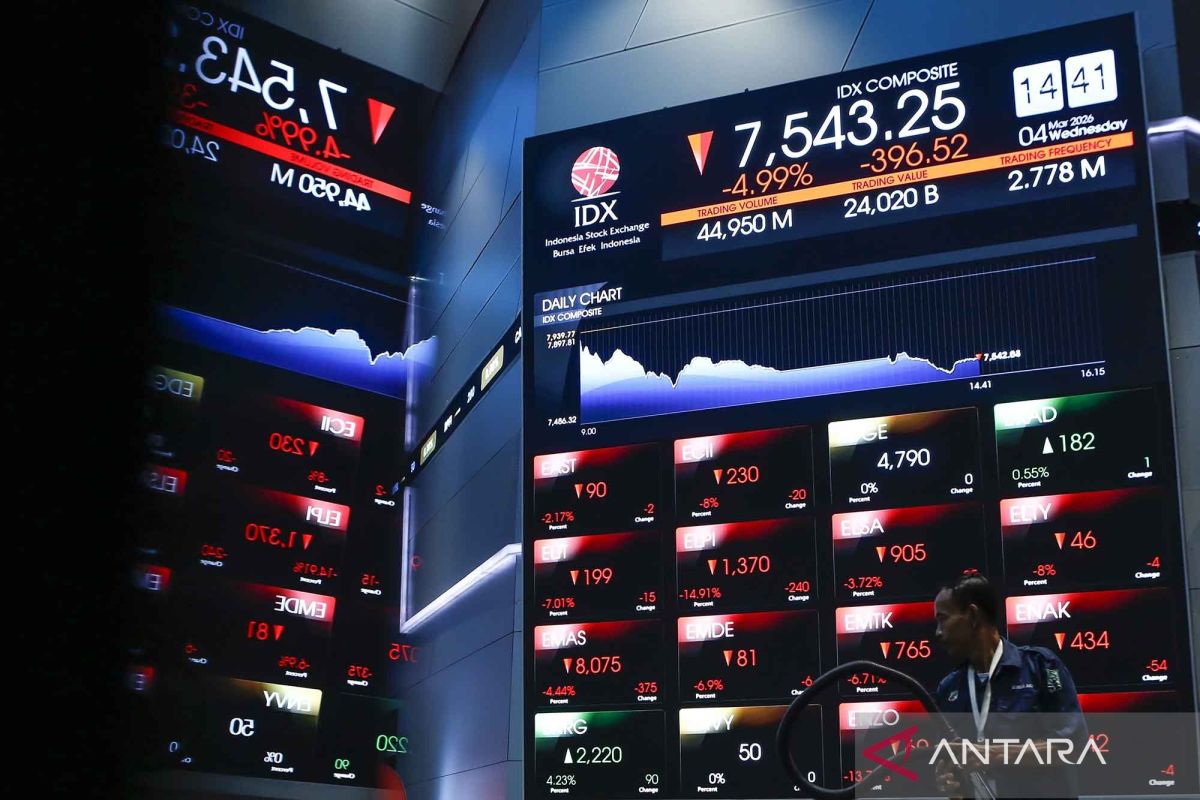
Global fund flows are also tending towards safe-haven assets such as the US dollar and energy, thereby exerting additional pressure on emerging markets including Indonesia. Jakarta (ANTARA) - The Composite Stock Price Index (JCI) of the Indonesia Stock Exchange (BEI) closed lower on Thursday afternoon, following the weakening of stock markets in the Asian region, in line with uncertainties in ceasefire negotiations between the United States (US) and Iran. The JCI closed down 138.03 points or 1.89% at 7,164.09. Meanwhile, the LQ45 index of 45 leading stocks fell 14.72 points or 1.97% to 731.73. “The escalation of the US-Iran conflict, which also involves Israel, is driving a surge in oil prices, thereby triggering concerns that global inflation will rise again and delaying expectations for interest rate cuts,” said capital market observer Elandry Pratama when contacted by Antara in Jakarta on Thursday. Elandry stated that uncertainties in the US-Iran conflict are driving the weakening of stock markets in the Asian region due to risks of energy supply disruptions and potential broader military escalation. He said market participants are currently awaiting developments in the Middle East conflict, including the chances of a ceasefire or further escalation risks despite diplomatic pushes from Donald Trump. In addition, the direction of US central bank The Fed’s policies remains a primary focus, particularly regarding inflation and certainty on the timing of global interest rate cuts. According to him, investors are currently tending to be defensive, with foreign investors continuing their selling actions. Moreover, there are indications of significant rotation from institutional investors, particularly from growth stocks to defensive sectors and commodity-based ones. “Global fund flows are also tending towards safe-haven assets such as the US dollar and energy, thereby exerting additional pressure on emerging markets including Indonesia,” said Elandry. From the domestic side, he mentioned additional pressure coming from the weakening of the rupiah exchange rate, as well as concerns over increasing fiscal burdens due to high energy prices. Opening higher, the JCI moved into negative territory until the close of the first trading session. In the second session, the JCI remained in the red zone until the close of stock trading. Based on the IDX-IC Sectoral Index, one sector strengthened, namely the transportation & logistics sector which rose by 2.68%. Meanwhile, ten sectors weakened, with the energy sector declining the most by 2.67%, followed by the industrial sector and raw materials sector which fell by 2.65% and 2.16% respectively. The stocks experiencing the largest gains were AYLS, KUAS, TALF, SSTM, and SOTS. Meanwhile, the stocks experiencing the largest declines were DEFI, ROCK, INDS, ICON, and ARTA. Stock trading frequency was recorded at 1,725,786 transactions with the number of shares traded at 31.14 billion shares worth Rp32.34 trillion. A total of 292 stocks rose, 380 stocks fell, and 148 remained unchanged.