
JCI Weakens Amid Renewed US-Iran Tensions
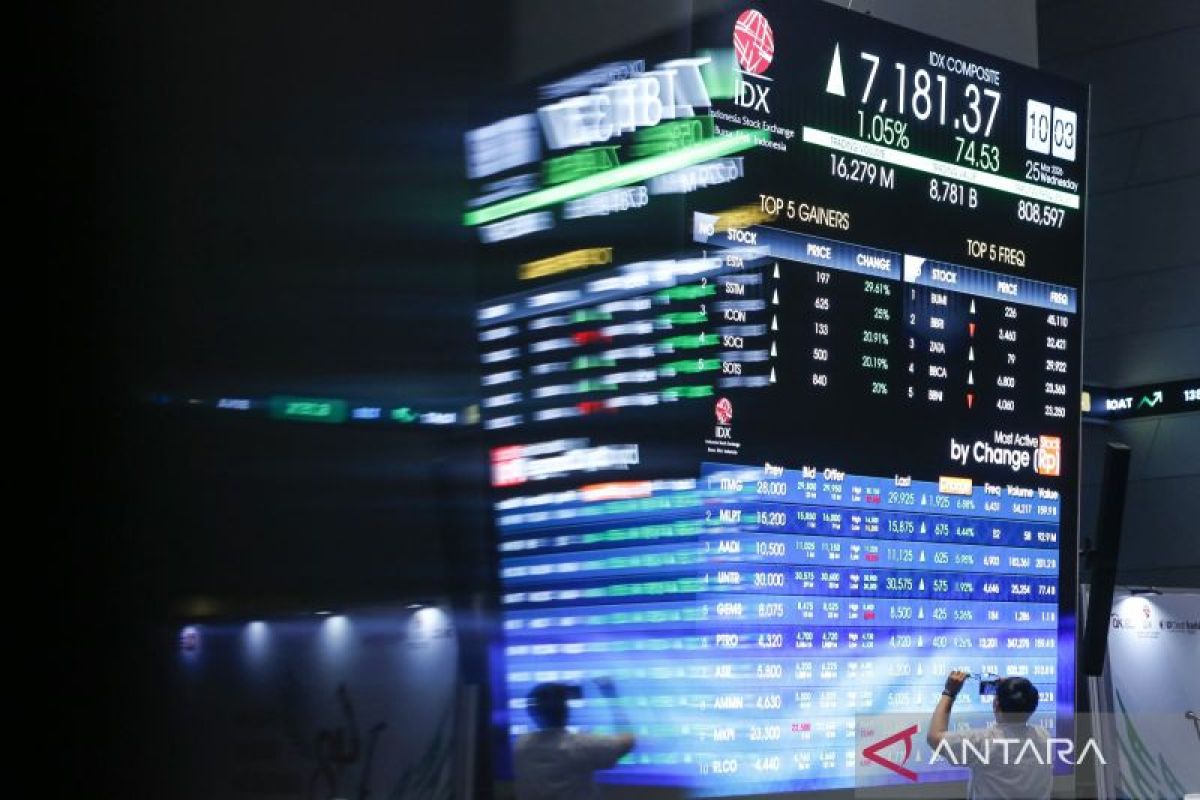
Technically, the JCI is expected to remain sideways in the 7,500-7,700 range. However, if the JCI breaks below 7,500, it could potentially test the 7,450-7,480 levels. Jakarta (ANTARA) - The Composite Stock Price Index (JCI) of the Indonesia Stock Exchange (BEI) moved lower on Tuesday morning amid renewed tensions between the United States (US) and Iran. The JCI opened down 33.83 points or 0.45 percent to 7,560.28. Meanwhile, the LQ45 Index of 45 leading stocks fell 7.00 points or 0.93 percent to 748.85. “Technically, the JCI is expected to remain sideways in the 7,500-7,700 range. However, if the JCI breaks below 7,500, it could potentially test the 7,450-7,480 levels,” said Ratna Lim, Head of Research at Phintraco Sekuritas, in her analysis in Jakarta on Tuesday. From abroad, tensions between the US and Iran have intensified again, dimming hopes for the early reopening of the Strait of Hormuz and driving up crude oil prices once more. Additionally, Trump has threatened to destroy Iran’s key infrastructure if the country does not agree to a deal with the US. Meanwhile, the ceasefire period between the two countries is scheduled to end this week. Domestically, Bank Indonesia (BI) data shows the non-performing loan ratio for property credit in February 2026 at 3.24 percent, up from 2.99 percent in February 2025. If BI raises the BI-Rate to curb rupiah depreciation, it could lead to an increase in non-performing loans. However, BI is not expected to raise the BI Rate at the Board of Governors’ Meeting on Tuesday (21/4) and Wednesday (22/4). Meanwhile, the increase in non-subsidised fuel prices, although Pertalite and Pertamax remain unchanged, reduces pressure on the potential rise in the state budget burden, albeit limited. The rise in non-subsidised fuel prices will reduce the compensation burden that the government must allocate from the state budget to cover the price difference to the public. On Monday (20/04) trading, European stock markets uniformly weakened, including the Euro Stoxx 50 down 1.28 percent, the UK’s FTSE 100 down 0.55 percent, Germany’s DAX down 1.15 percent, and the CAC down 1.12 percent. US stock markets on Wall Street also uniformly weakened on Monday (20/04), including the Nasdaq Composite down 0.31 percent to 26,590.34, the S&P 500 down 0.24 percent to 7,109.14, and the Dow Jones down 0.01 percent to 49,442.56. Regional Asian stock markets this morning included the Nikkei up 776.11 points or 1.32 percent to 59,601.00, the Hang Seng up 16.93 points or 0.06 percent to 26,378.00, the Shanghai down 13.41 points or 0.33 percent to 4,068.71, and the Straits Times up 8.99 points or 0.18 percent to 5,013.06.