
JCI Plummets to 7,020 Level Amid US-Iran Conflict Escalation and Energy Crisis
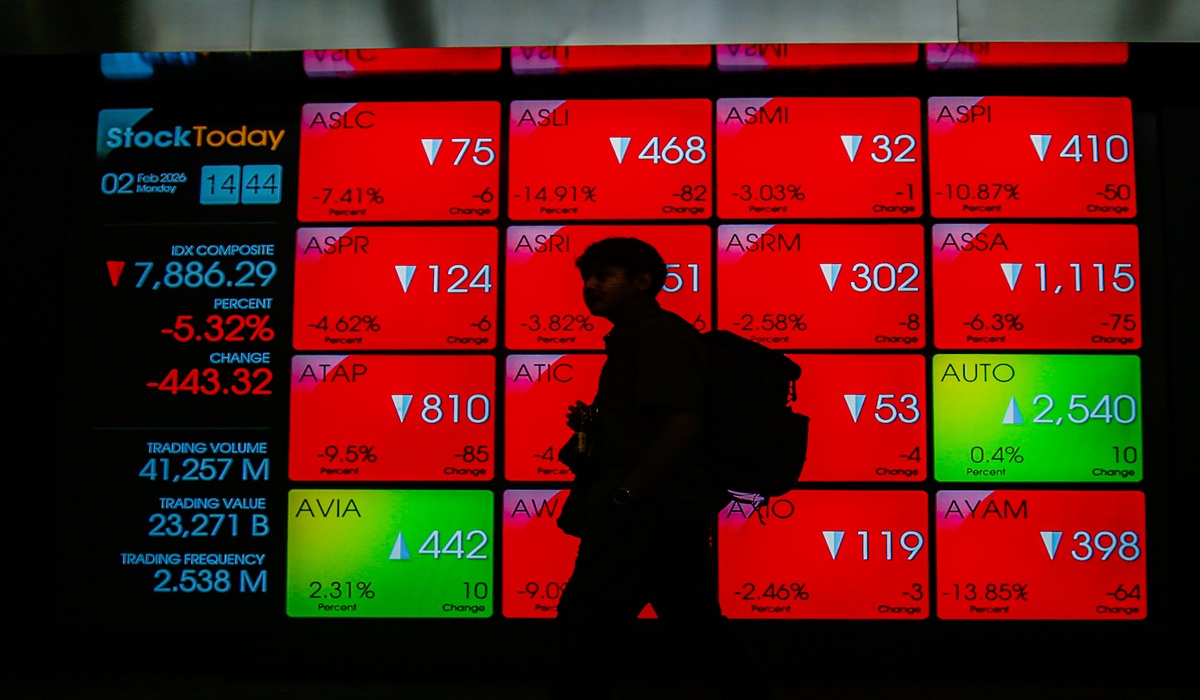
The Composite Stock Price Index (JCI) of the Indonesia Stock Exchange (BEI) opened significantly weaker in trading on Monday morning (30/3). This decline followed the negative trend in Asian stock markets amid rising global uncertainty due to the conflict between the United States (US) and Iran.
The JCI fell 76.53 points or 1.08% to 7,020.53. Similarly, the index of the top 45 blue-chip stocks (LQ45) also corrected by 11.00 points or 1.53% to 707.96.
Head of Research at Kiwoom Sekuritas Indonesia, Liza Camelia Suryanata, explained that the current market movements are heavily influenced by headline-driven news related to tensions in the Middle East.
“Kiwoom Research reminds investors to remain cautious, adopting a wait-and-see approach pending developments in the US-Iran war, US payroll data, Indonesian inflation data, and the government’s upcoming risk mitigation decisions on the fuel crisis this week,” said Liza in her analysis in Jakarta on Monday (30/3).
Global sentiment is intensifying following reports of a potential addition of 10,000 US troops to the conflict zone.
On the other hand, mediation efforts by Pakistan through a 15-point peace proposal have yet to yield significant results, as Iran continues to reject the US proposal despite allowing 20 ships to pass through the Strait of Hormuz.
This conflict, now in its fifth week, is directly impacting global energy supplies. Brent and WTI crude oil prices remain above US$100 per barrel due to the effective closure of the Strait of Hormuz, which typically channels 15-20 million barrels per day.
UBS predicts that in an extreme scenario, oil prices could reach US$150 per barrel. This situation is feared to trigger global inflation above 4% and push recessions in the US and European regions.
Domestically, the government is continuously engaging in intensive communications to maintain energy supplies.
Although two Pertamina tankers (Pertamina Pride and Gamsunoro) have been granted permission to exit the Strait of Hormuz, risks to national energy resilience remain high.
The capacity of these two tankers is equivalent to only 1 to 1.5 days of national fuel needs, so prolonged disruptions in Hormuz would directly affect domestic stability.
This morning’s JCI correction aligns with the global market downturn at last week’s close (27/3). On Wall Street, the Dow Jones index plunged 1.73%, the S&P 500 weakened 1.67%, and the Nasdaq corrected 1.93%. Similar conditions occurred in Europe, with the Euro Stoxx 50 and German DAX indices each weakening by more than 1%.
This morning, regional Asian markets also opened sharply lower:
This uncertainty is exacerbated by political pressures within the US, as millions protest against President Donald Trump’s policies.
This situation has rendered safe-haven assets like gold and the Japanese Yen unable to provide maximum protection, leading investors to aggressively reduce risk exposure.