
JCI Plummets to 6,900s Level, Down 20% Since the Start of the Year
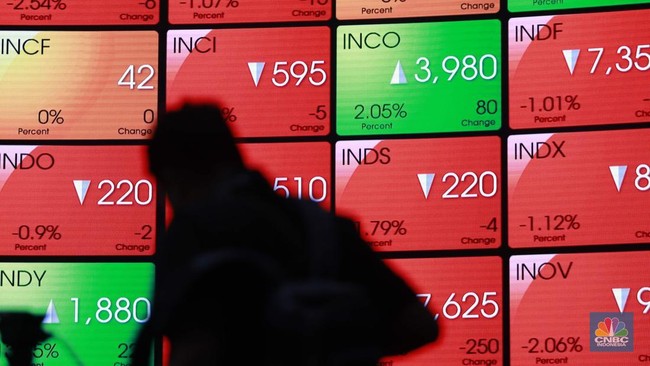
Jakarta, CNBC Indonesia - The Jakarta Composite Index (JCI) faced significant pressure in the first trading session today, Thursday (30/4/2026), with a decline of more than 2%.
At 10:20 WIB, the JCI was recorded at the level of 6,932.50, down 168 points (-2.38%) and becoming the lowest point for the JCI throughout 2026. Since the beginning of the year, the JCI has been corrected by 20%.
Selling pressure was evident from the opening of trading, where the JCI briefly opened at the level of 7,103.26 before immediately experiencing a sharp weakening to touch the lowest level at 7,028.23.
Only 105 stocks strengthened, 606 stocks weakened, and 99 stocks were stagnant. The transaction value reached Rp 10.42 trillion with a trading volume of around 21.59 billion shares in more than 1.40 million transactions.
All trading sectors weakened, with the deepest corrections recorded by infrastructure, basic materials, and energy.
The coal mining issuer from the Sinar Mas Group, Dian Swastatika Sentosa (DSSA), became the main burden on the JCI’s performance with a weakening of 13.22 index points. This was followed by BBRI and BBCA with weakenings of 12.54 and 11.71 index points, respectively.
Other issuers that weighed on the JCI include BREN, MEGA, TPIA, BRPT, MDKA, AMMN, and UNTR.
Entering the last trading of the week, domestic financial market players will monitor several important sentiments from abroad.
The main focus of the market today is on the results of the Federal Reserve’s interest rate decision, the release of China’s Manufacturing PMI, US Personal Consumption Expenditures or PCE inflation, as well as US unemployment claims data.
As previously reported, the Fed again maintained interest rates at the level of 3.50-3.75%. This decision was taken amid significant divisions in votes within the Fed.
In a meeting that may be the last for Chairman Jerome Powell as leader, a wave of officials opposed the statement that further interest rate cuts are still possible.
FOMC member votes were split with a result of 8-4, where officials had different reasons for their choices. The number of dissenting votes is the highest since October 1992.
Governor Stephen Miran again expressed dissent to support a 25 basis point interest rate cut, as he has done since joining the central bank in September 2025.
The other three “no” votes came from regional Fed Presidents: Beth Hammack from Cleveland, Neel Kashkari from Minneapolis, and Lorie Logan from Dallas. They agreed to hold interest rates but rejected the dovish bias in the official statement.
The main issue of disagreement is the following sentence:
“In considering the size and timing of additional adjustments to the target range for the federal funds rate, the Committee will carefully assess incoming data, evolving outlooks, and the balance of risks.”
This phrase indicates that the next step is likely a rate cut, as the use of the word “additional” suggests that the Fed’s last action was a cut.
Meanwhile, President Donald Trump discussed ways to reduce the impact of a potential months-long Iranian port blockade with oil companies.
The discussion with oil executives on Tuesday occurred after a deadlock in efforts to resolve the conflict, which prompted the United States to pressure Iranian oil exports through a naval blockade to force the reopening of the Strait of Hormuz.
Amid mutual threats between Washington and Tehran, Pakistan is attempting to act as a mediator to prevent escalation, while both sides continue to exchange messages regarding potential agreements.
Trump said Iran could contact if it wants to negotiate, but also mocked that Tehran “is not capable of acting properly.”
The White House stated that Trump and the oil executives discussed steps to stabilise the global oil market as well as options to continue the blockade for months while minimising the impact on US consumers.