
JCI Opens Higher at 7,697 This Morning
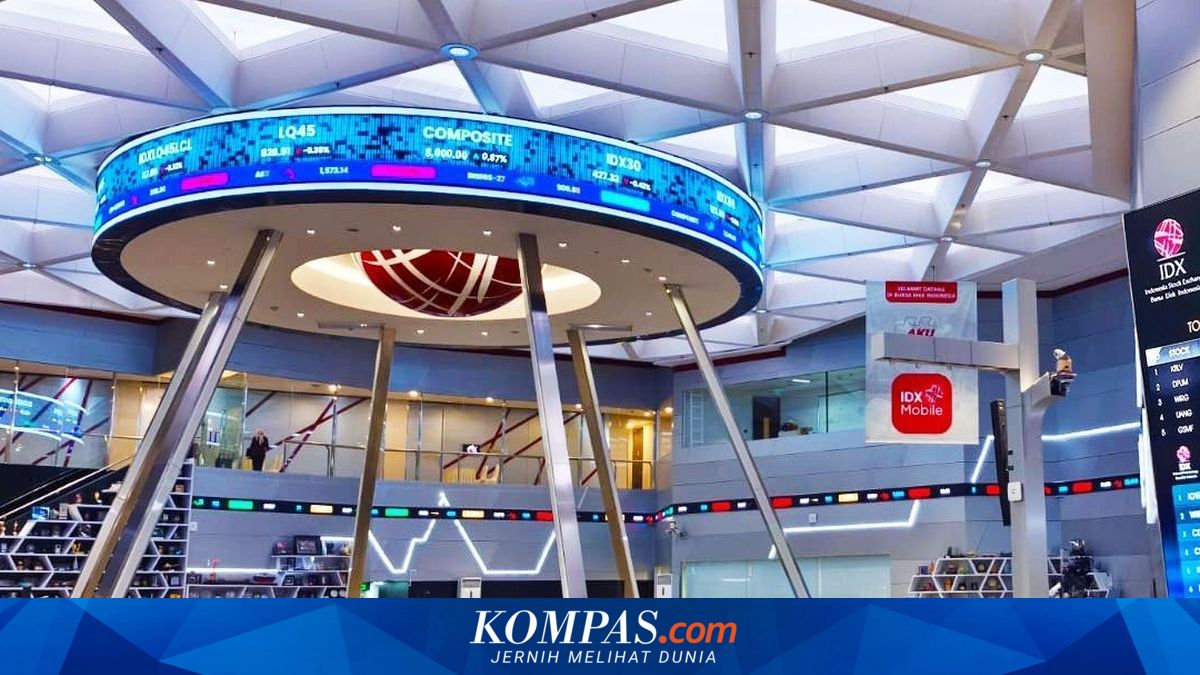
JAKARTA – The Composite Stock Price Index (JCI) opened higher on Thursday (16/4/2026). According to data from the Indonesia Stock Exchange (BEI) around 09:06 WIB, the JCI rose 73.89 points or 0.97% to 7,697.48.
The JCI opened at 7,663.34 and moved within the range of 7,663.15 to 7,702.24 throughout the morning session. This position is higher compared to the previous close at 7,623.59.
Market activity was observed to be quite active. Trading volume reached 3.34 billion shares with a transaction value of Rp1.38 trillion and a frequency of 213,200 times. A total of 395 stocks strengthened, 151 weakened, and 413 remained stagnant.
Meanwhile, Sharia-based indices also recorded gains. The Jakarta Islamic Index (JII) rose 6.52 points or 1.22% to 538.77. The Indonesia Sharia Stock Index (ISSI) strengthened 3.13 points or 1.13% to 280.57.
On the other hand, the IDX30 also rose 3.65 points or 0.90% to 407.25. The JII70 recorded an increase of 2.17 points or 1.08% to 203.51.
Analysts predict that the JCI will move consolidatively today after experiencing a correction following a rally in the past few days.
Sectorally, infrastructure was the deepest contributor to the correction in the previous trading session. From a technical perspective, the Stochastic RSI indicator is in the overbought area and has formed a death cross pattern.
Nevertheless, the Moving Average Convergence Divergence (MACD) histogram still shows a positive trend with continued rises.
“Thus, the JCI is expected to experience consolidation in the range of 7,500–7,700,” wrote Phintraco Sekuritas in its research on Wednesday (15/4/2026).
On the other hand, the rupiah exchange rate closed weaker at Rp17,140 per US dollar, which also serves as an additional sentiment for domestic stock market movements.
Rising energy prices have the potential to increase the government’s subsidy burden and pressure the state budget, while also widening the current account deficit due to higher oil import costs.
Additionally, accelerated inflation is expected to drive interest rate hikes, which will ultimately increase the government’s borrowing costs.
At the global level, the United States’ policy of blockading the Strait of Hormuz is also increasing pressure on energy-consuming countries such as China and India.
This situation also has the potential to affect the dynamics of US-China relations ahead of the planned meeting between President Donald Trump and President Xi Jinping in mid-May.