
Javan Tiger Not Extinct, Found Roaming in This Region
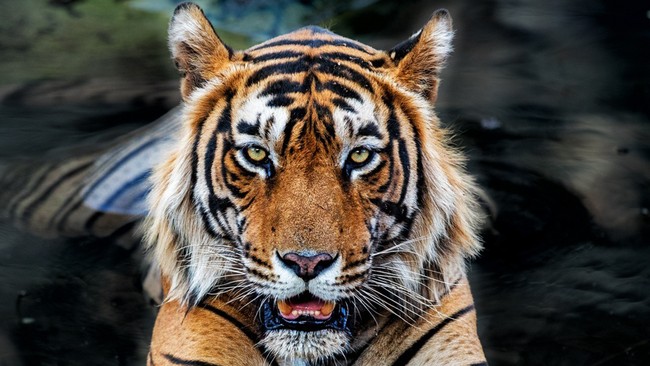
The Javan tiger was long believed to be extinct. The International Union for Conservation of Nature (IUCN) officially listed it as extinct in 2008.
However, recent research has revealed that the Javan tiger may still be alive. Although many reports described sightings of the animal, these lacked strong evidence until 2019, when concrete proof emerged. The tiger was suspected to be living in the forests of Sukabumi, West Java.
Residents of Cipendeuy village in Sukabumi reported seeing the Javan tiger, including spotting paw prints, scratch marks, and a strand of hair. DNA analysis was subsequently conducted on the hair sample found. The results confirmed that the hair indeed came from a Javan tiger.
Researchers conducted mitochondrial analysis and compared it with samples stored in museums since 1930. Testing was also performed on hair samples from other tiger subspecies and the Javan leopard for comparison.
However, the finding did not immediately bring joy to researchers, as further study was needed to confirm the animal’s existence. “Whether the Javan tiger still lives in the wild must be confirmed through further genetic and field research,” stated the research team in a scientific report published in the journal Oryx.
Despite this caution, wildlife protection activists in Indonesia are optimistic about the prospect of the Javan tiger still being alive. According to a 2024 Reuters report, the Ministry of Environment and Forestry pledged to follow up on the findings.
The ministry has installed cameras and is conducting broader DNA searches. The government is also consulting with genetic experts. Should the Javan tiger prove to still exist, Setyawan Pudyatmoko, Director General of Natural Resource and Ecosystem Conservation at the Ministry of Environment and Forestry, stated that the species must be strictly protected.
“If it is indeed proven to still exist, it will certainly become a protected species. It is the responsibility of all parties, including the community, to participate in preserving its population,” Pudyatmoko said.