
Java Enters PMK Red Zone, Here Are the Rules for Selling Sacrificial Animals
Java in PMK Red Zone, Here Are the Rules for Selling Sacrificial Animals
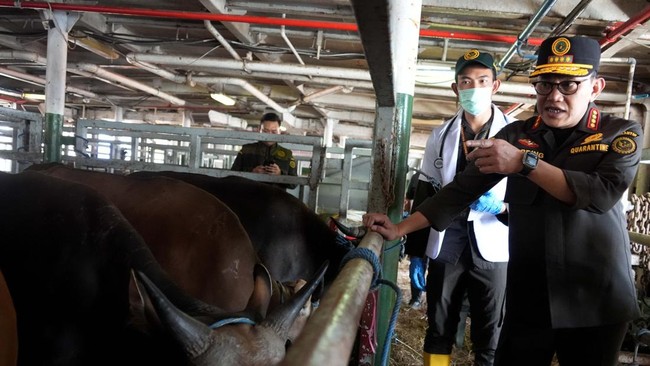
Jakarta, CNBC Indonesia - Head of the Indonesian Quarantine Agency Abdul Kadir Karding personally checked the arrival of sacrificial cattle from Kupang, East Nusa Tenggara (NTT), at Port Kade 108, Tanjung Priok, North Jakarta, on Thursday (21 May 2026). The move was taken to ensure sacrificial animals entering Java Island are free from contagious diseases ahead of Iduladha (Eid al-Adha).
A total of 275 cattle arrived at the port and immediately underwent checks by quarantine officers. Inspections covered health certificates, laboratory test results, and the animals’ physical condition to ensure the herd is free of Foot-and-Mouth Disease (PMK) and Lumpy Skin Disease (LSD).
In addition, officers checked the condition of the livestock transport equipment to ensure the distribution of animals continues to meet animal welfare standards and minimize stress during transit.
Karding said the oversight was tightened because Java remains in PMK red zone, while NTT is PMK-free. Therefore, he urged all biosecurity procedures at entry points to be carried out strictly without exception.
“We must be fully vigilant because Java is currently in the PMK red zone or infected area, while NTT is a green zone free from PMK. Accordingly, biosecurity measures at entry points must be uncompromising. I have ordered all levels of staff to implement a one-way ticket policy. Cattle that have already landed in Java cannot and will not be able to return to NTT if they are not sold, in order to protect the PMK-free status in the home region,” Karding said in a statement.
To curb the risk of disease transmission, livestock transport trucks are also required to undergo disinfection before and after transport. In addition, officials are anticipating the possibility of productive female cattle that are protected by law, or cattle that do not meet the age requirements for sacrificial animals.
Amid rising demand for sacrificial animals ahead of Eid al-Adha, animal traffic this year has risen significantly. Barantin data shows cattle spending (outflows) from January–April 2026 reached 198,925 head, up by 70% from the previous year. Meanwhile, the outflow of goats and sheep reached 103,216 head, up 77%.
Karding said they have prepared mitigation steps to prevent the spread of PMK, LSD and anthrax during Eid al-Adha momentum.
“To ensure the mitigation is measured and systematic, we are implementing five pillars of the main strategy: analysing trends and evaluating patterns of livestock movement and obstacles from previous years; readiness of facilities and infrastructure on the ground; strengthening regulations by preparing legal cover, circular letters and policy discretions that are swift and adaptive; close cross-sectoral synergy; and taking concrete action to supervise livestock movement,” he explained.
He added that Barantin has also formed a special task force operating 24 hours to oversee livestock traffic, including patrols of illegal routes and monitoring animal health at temporary holding sites.
The Head of Quarantine DKI Jakarta, Amir Hasanuddin, said cattle that pass inspection will be distributed to several areas such as Jakarta, Depok and Bekasi.
“DKI Jakarta Quarantine will issue a Release Certificate for cattle destined for DKI Jakarta and Depok. Meanwhile, for cattle bound for Pekanbaru (Sumatra), DKI Jakarta Quarantine will issue a special transit document to safeguard the legality and health of the commodity during inter-area transit,” Amir said.
According to Amir, monitoring does not stop at the port area. After the release document is issued, monitoring continues together with local livestock services to ensure cattle arrive at their destination and remain healthy until the slaughter process for the sacrificial animals is completed.”