
Jasa Marga Records Highest Eid Exodus Traffic Peak in Indonesia's History, 270,000 Vehicles Pass Through
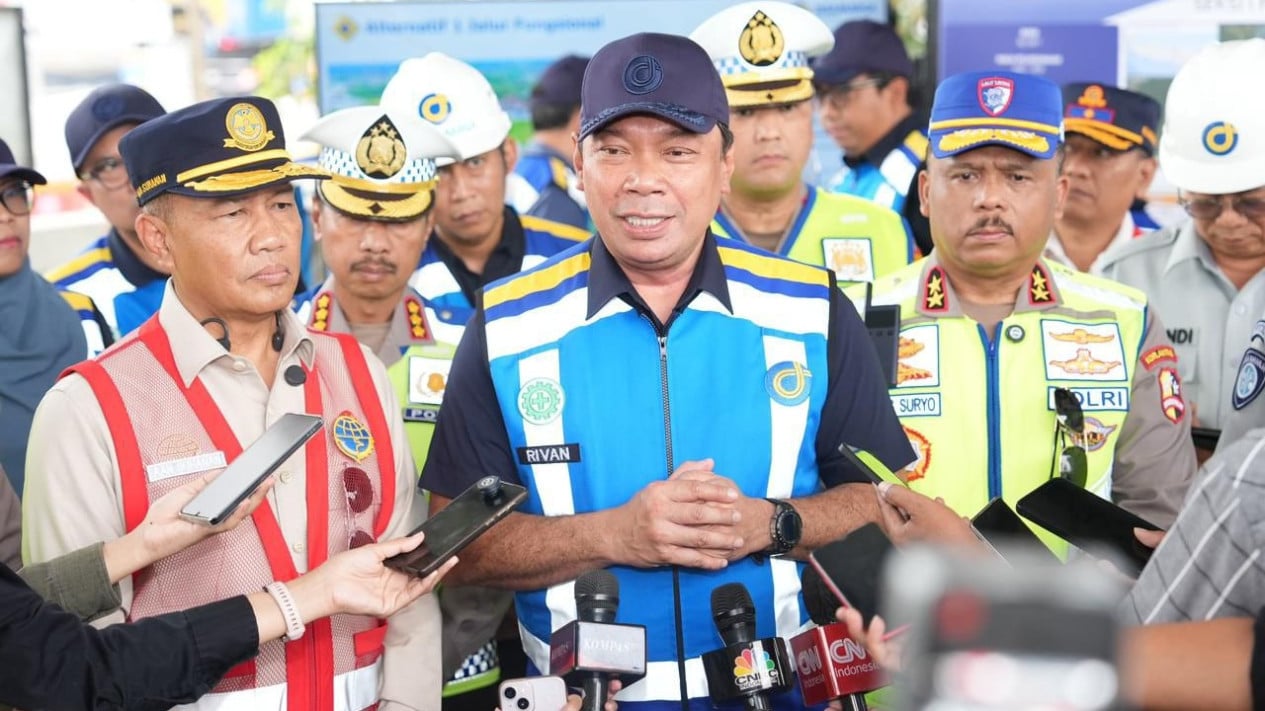
PT Jasa Marga (Persero) Tbk has recorded the highest traffic flow in the history of Indonesia’s Eid exodus. Jasa Marga President Director Rivan A. Purwantono explained that this record occurred during the peak exodus on Wednesday, 18 March.
The peak mudik traffic volume handled by Jasa Marga reached 270,315 vehicles, an increase of 98.3% compared to normal levels and 4.6% compared to the 2025 Eid peak. This figure is the cumulative traffic flow from four main Barrier/Main Toll Gates: Cikupa GT (westbound), Ciawi GT (southbound), and Cikampek GT and Kalihurip Main GT (eastbound).
“Not only those exiting through the four main toll gates. We also recorded the highest number of vehicles heading to the Trans-Java Toll Road, reaching 175,754 vehicles. This is a 6% increase compared to last year’s peak mudik,” said Rivan.
According to Rivan, although the number of vehicles passing through Jasa Marga Group’s toll roads reached a record high, traffic conditions were well controlled due to effective traffic engineering that alleviated congestion.
“Traffic congestion was observed on the MBZ Elevated Road and the lower Jakarta-Cikampek Toll Road. To anticipate the surge in vehicle volume, Jasa Marga, together with the Police, implemented traffic engineering such as contraflow from one lane to three lanes, up to the implementation of a national one-way system from KM 70 to KM 414. The vehicle volumes on both sections were recorded as the highest in their operational history,” he added.
Rivan also explained that, in line with the prepared traffic engineering scenario, congestion was targeted to be resolved maximally within 1x12 hours. On Thursday at 11:00 WIB, traffic conditions were reported to have returned to smooth with average vehicle speeds back to normal.
“Jasa Marga will continue to optimise the use of technology as a decision support system that supports traffic engineering decisions made by the Police according to the latest field conditions. We will also continue to enhance intensive cross-sectoral coordination involving all stakeholders comprehensively in the future,” said Rivan.