
JAPPDI Urges Government to Monitor Buffalo Meat Prices Ahead of Eid al-Fitr
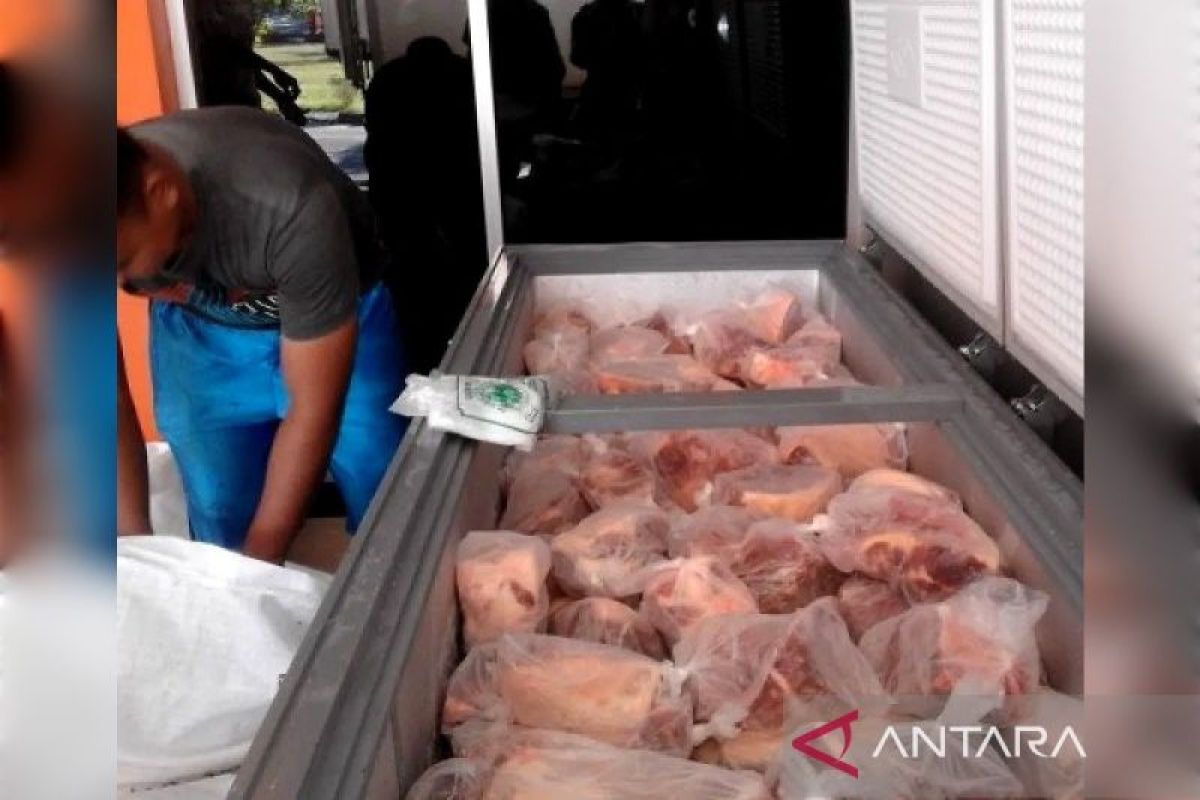
Jakarta (ANTARA) — The Indonesian Meat Butchers and Traders Association (JAPPDI) has demanded that the government monitor not only beef trade but also imported buffalo meat ahead of Eid al-Fitr 1447 H.
JAPPDI chair Asnawi contends that the government tends to pressure beef traders whilst allowing imported buffalo meat prices to remain unregulated, far exceeding the government’s reference purchase price (HAP).
“The government is unfair in monitoring food prices, particularly beef. Imported buffalo meat, whose prices have already surged and violated the National Food Agency’s regulations, is simply allowed to continue,” he stated in a statement in Jakarta on Monday.
According to him, current buffalo meat prices contravene the National Food Agency (Bapanas) Regulation No. 12 of 2024 concerning Reference Purchase Prices at Producer Level and Reference Sale Prices at Consumer Level for Soybean, Shallot, Garlic, Red Bird’s Eye Chilli, Curly Red Chilli, Consumption Sugar, and Beef/Buffalo Meat Commodities.
Based on Bapanas data, average imported buffalo meat prices as of 9 March 2026 reached Rp107,667 per kilogramme, far exceeding the Bapanas-set HAP of Rp80,000 per kilogramme.
“In other words, current prices are nearly 35 per cent above HAP or should trigger market intervention,” he said.
However, he continued, market intervention has never been implemented by the government despite prices exceeding HAP having occurred well before Ramadhan, with average prices in Java even reaching Rp120,000 per kilogramme, or 50 per cent above HAP.
According to Asnawi, under these circumstances, the government and the Central Task Force for Enforcement Action (Satgas Saber) on Food Price, Security, and Quality Violations should take action against buffalo meat producers or distributors selling above HAP, as this constitutes economic crime.
“They (distributors) are not accused of being criminals as beef sellers often are when selling above HAP. Instead, they are permitted to trade. This is grossly unjust,” he said.
Currently, the government has tasked two state-owned enterprises, PT Berdikari and PT Indonesian Trading Company (PPI), with importing buffalo meat.
Based on the 2026 Commodity Balance Sheet, total meat import quotas reach 297,000 tonnes, comprising 100,000 tonnes of buffalo meat from India, 75,000 tonnes of beef from Brazil, and 75,000 tonnes of meat from other nations.
All of this is allocated to state-owned enterprises whilst private companies receive only 30,000 tonnes, with the remaining 17,000 tonnes allocated for meat for industrial use.
The government, he added, has also granted Berdikari and PPI a quota of 150,000 tonnes of beef from Brazil and other countries, which represents a cut in private company quotas from 180,000 tonnes last year to 30,000 tonnes this year.
Asnawi revealed that JAPPDI had previously requested to become a distributor of Indian meat from PT Berdikari, but the state-owned enterprise stated it had already been distributed to 12 private distributors.
“We were instead advised to purchase from these distributors,” he said.
The 12 distributors are PT Banyumas Agro Indonesia, CV Kawan Jaya Bersama, PT Anugerah Pangan Lestari, PT Hijrah Gizi Hewani (Hijrah Food), PT Artha Cipta Saudara, CV Cilacap Pangan Sejahtera, PT Boga Citra Langgeng, PT Borneo Pangan Sejahtera, PT Garindo Food International, PT Estika Tara Tiara, PT Soroja Niaga Boga, and PT Suri Nusantara Jaya.
Regarding the government’s claim that beef prices are currently stable and within HAP ranges, Asnawi suggested this may only apply to areas outside Greater Jakarta.
Under Bapanas Regulation No. 12 of 2024, beef prices are in the range of Rp130,000 per kilogramme (front leg) to Rp140,000 (hind leg).
“However, for the Greater Jakarta region, it is actually difficult for traders to sell beef according to HAP. That is why they sell beef by reducing quality to meet HAP,” he said.