
Japek II Southern Toll Road Ready to Serve as Safety Valve for Return Homecoming Traffic
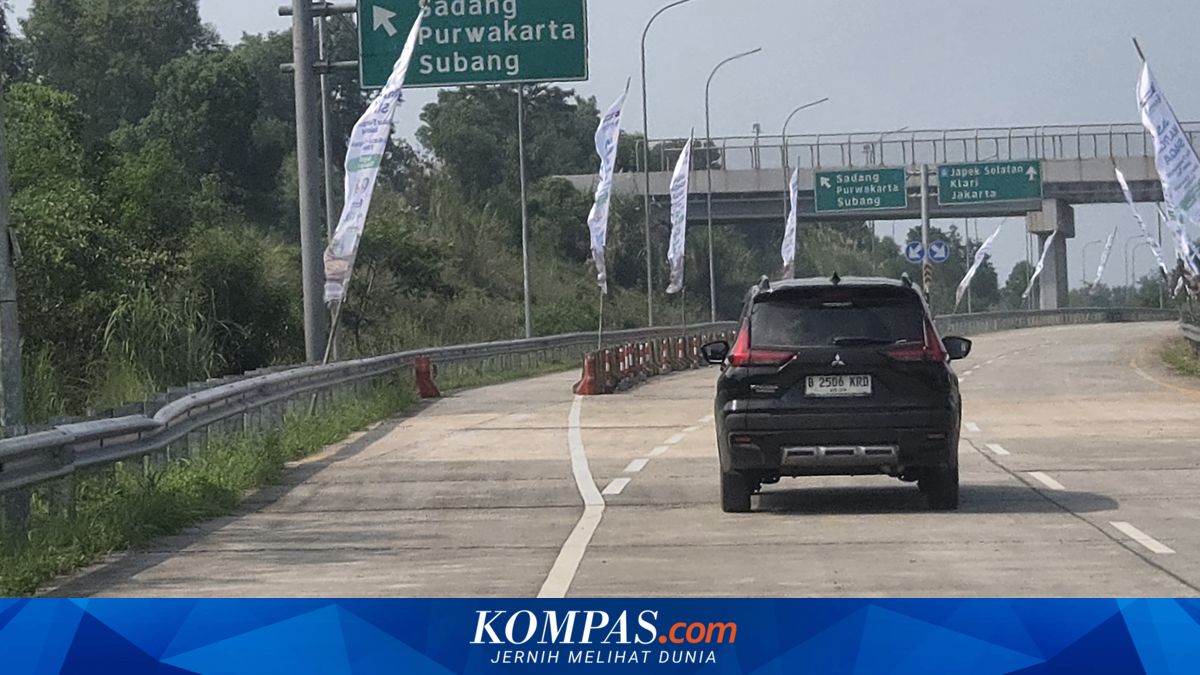
The Jakarta-Cikampek (Japek) II Southern functional toll road segment from Sadang to Kutanegara to Setu is being prepared as an alternative route to distribute vehicle load from Bandung towards Jakarta.
Rivan Achmad Purwantono, President Director of PT Jasa Marga (Persero) Tbk, emphasised that this 52-kilometre stretch is a crucial instrument in national traffic management.
Based on technical data, the maximum capacity that this functional toll road can accommodate is 2,000 vehicles per hour. This figure is considered significant for alleviating congestion on the existing Japek toll route.
“Average congestion on the main route can reach 5,000 to 5,500 vehicles per hour. By diverting 2,000 vehicles to Japek II Southern, we can prevent the capacity index (V/C ratio) from reaching critical points that would necessitate extreme contraflow on the lower Japek or MBZ,” said Rivan during a field inspection on Thursday, 12 March 2026.
The Japek II Southern project is a national strategic project (PSN) with a total investment value reaching Rp 14.69 trillion.
This toll road is designed to connect JORR 2 toll on Jakarta’s side with Purbaleunyi toll on Sadang’s side, Purwakarta, in three segments.
Segment 1 Setu-Sukaragam-Bojongmangu: Construction progress continues to be pursued to connect access to JORR 2 toll.
Segment 3 Kutanegara-Sadang: The most advanced segment that has already undergone frequent functional testing.
As of mid-March 2026, major physical work such as concrete hardening (rigid pavement) at critical points such as KM 17 and KM 18 has reportedly reached 95 per cent completion.
Jasa Marga is targeting completion of all functional construction readiness by 15 March 2026, making it ready for use from 16 March in accordance with police discretion.
Although ready for operation, Japek II Southern toll has special characteristics that must be understood by travellers. This access is recommended to operate only from 06:00 to 17:00 WIB. This is because safety equipment such as street lighting (PJU) and permanent road markings have not yet been installed 100 per cent.