
Japanese Yen in Freefall, Hits Lowest Level in 53 Years
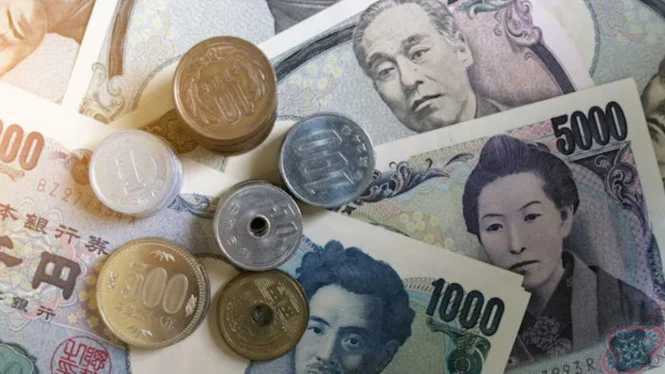
Jakarta, VIVA – The Japanese yen’s exchange rate against major world currencies has slumped to its lowest level in 53 years. The weakness of Japan’s currency reflects the country’s prolonged economic malaise, which has eroded the yen’s purchasing power.
Data from the Bank for International Settlements (BIS) shows that the yen’s real effective exchange rate stood at 67.73 as of January. This marks the lowest level since Japan adopted a floating exchange rate system in 1973.
By comparison, the yen reached its peak at 193.95 in April 1995. This indicates that the yen’s current strength is only roughly one-third of its highest level three decades ago.
The yen’s prolonged weakness is closely linked to Japan’s economic stagnation following the collapse of the economic bubble in the early 1990s, a period known as the “lost decades”. Japan’s potential growth rate, which stood at around 1 per cent in 1995, gradually declined and remained at near-zero levels by the late 2010s, according to Bank of Japan (BoJ) data.
Weak economic growth triggered extremely low inflation and interest rates over many years. These conditions have weighed on the yen’s real effective exchange rate over the long term.
Now, as prices and wages are beginning to show signs of increase, Japan’s central bank is endeavouring to normalise its monetary policy. The BoJ has raised its policy rate to 0.75 per cent — the highest level in 30 years — and has signalled intentions to continue raising rates towards the 1.5–1.75 per cent range.
However, this normalisation carries consequences. According to estimates by Mizuho Research & Technologies, a 0.25 percentage point increase in interest rates would add approximately 18,000 yen (roughly US$116) in annual costs for households with housing loans and other debts.
In the corporate sector, a single rate hike could trim operating profits by up to 0.9 per cent across all industries, excluding the financial and insurance sectors. For small enterprises with capital below 10 million yen, the pressure could be even greater, with operating profit declines reaching 5.1 per cent.
“Small companies that are heavily dependent on debt are more vulnerable to the impact of interest rate rises,” said Naoki Hattori, senior Japan economist at Mizuho Research & Technologies, as quoted by Nikkei Asia on Monday, 23 February 2026.