
Japan Opens Doors to Arms Exports: Between History and Security Realities
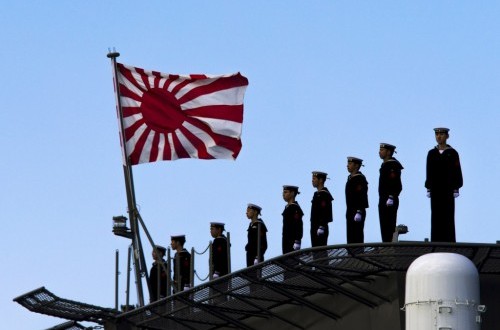
Japan is entering a new chapter in its defence policy. A country known for decades as a peace state with strict restrictions on the use and export of military power is now opening space for the sale of defence equipment abroad.
This change is not merely technical but touches on historical dimensions, national identity, and the balance of power in the Indo-Pacific. It also reflects a new reality: security can no longer be managed in isolation, even by advanced nations.
Substantively, the change is implemented through revisions to Japan’s defence equipment and technology export policy. The Japanese government is relaxing the framework of the Three Principles on Transfer of Defense Equipment and Technology, thereby enabling the export of military equipment, including lethal categories, to partner countries that have defence cooperation agreements with Japan.
Previously, exports were heavily restricted and generally covered non-lethal categories such as logistics, rescue, or surveillance. With this revision, Japan is entering new territory as a potential supplier in the global defence supply chain (The Economist, 2026).
The drivers behind this change are structural. First, the growing military power of China and its increasingly assertive posture in the East China Sea and South China Sea create strategic pressure for Japan. Second, threats from North Korea, particularly its missile and nuclear programmes, continue to be a source of security uncertainty.
Third, and perhaps most significantly, is the emerging doubt over the consistency of US security commitments. In this context, the statement that “no country can maintain its security alone” reflects Japan’s new awareness that security is now collective and interdependent (The Economist, 2026).
Within this framework, arms exports are no longer viewed solely as an economic activity but as a geopolitical instrument. Japan seeks to build what can be called networked security, strengthening its strategic partners so they can contribute to maintaining regional balance.
By bolstering the capabilities of other countries—such as Australia, India, or Southeast Asian nations—Japan indirectly strengthens its own position. This is a form of deterrence not based solely on national power but also on networks.
Reactions to Japan’s move are varied and reflect the complexity of regional politics. China is the most vocal opponent of the policy. Beijing accuses Japan of returning to the path of “militarism”, a term laden with memories of the Second World War.
However, behind the rhetoric lies genuine strategic concern. A more militarily active Japan—especially if integrated into US alliance networks—could strengthen countries in dispute with China and reduce Beijing’s room for manoeuvre in the region (The Economist, 2026).
Conversely, the United States tends to welcome this change positively. From Washington’s perspective, Japan’s step represents the burden-sharing it has long advocated, namely a more balanced distribution of security responsibilities among allies. In a situation where the US faces multiple fronts—from Ukraine to the Middle East—the presence of more capable and independent allies becomes a strategic asset. Japan that can produce and even export defence equipment will help strengthen the security architecture that has long been supported by the US.
In Southeast Asia, responses are more nuanced. No collective ASEAN statement has emerged as an organisation, but several member countries view Japan’s move pragmatically. The Philippines, facing direct pressure from China in the South China Sea, is likely the most open to increased defence cooperation with Japan.
Meanwhile, other countries like Indonesia, Vietnam, and Singapore tend to adopt a more cautious stance, though they still see opportunities, particularly in access to maritime defence technology. Therefore, ASEAN’s reaction is better understood as country-by-country responses rather than a single regional stance (Reuters, 2026; ASPI Strategist, 2026).
This stance reflects ASEAN’s tendency to avoid alignment with major power blocs and opt for a hedging approach. In simple terms, hedging is a “play it safe while keeping all options open” strategy, namely not fully siding with one power but still engaging in cooperation with all relevant parties.
In practice, ASEAN countries can deepen economic ties with China while at the same time enhancing security cooperation with the United States, Japan, or other partners. This approach allows them to reap benefits without losing strategic manoeuvrability. Therefore, opportunities for cooperation with Japan will be viewed pragmatically, not as alignment in broader geopolitical rivalries.
South Korea shows an ambivalent response. Historically, memories of Japanese colonialism remain a sensitive factor in domestic politics. However, strategically, Seoul also recognises the importance of trilateral cooperation with the United States and Japan in facing North Korea and China.
Thus, South Korea’s stance can be understood as uneasy acceptance: pragmatic acceptance but historical wariness. North Korea, for its part, will almost certainly condemn Japan’s move harshly and exploit it to reinforce its narrative of external threats that has long justified its military programme.
From a critical perspective, Japan’s policy carries the classic risks in international relations, namely the security dilemma.