
Japan on Alert Over Iran Situation, Strait of Hormuz Becomes Main Focus
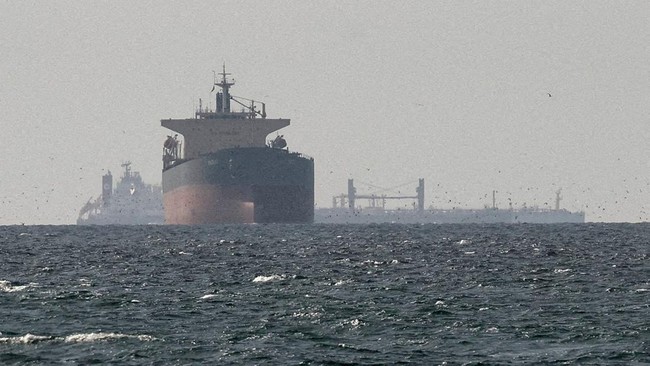
Japan on Alert Over Iran Situation, Strait of Hormuz Becomes Main Focus
Jakarta, CNBC Indonesia - Escalating tensions in the Middle East, particularly related to Iran, were a serious topic in high-level meetings between Indonesia and Japan. Both countries expressed deep concern over the potential for security disruptions in the region.
Charge d’Affaires of the Japanese Embassy in Jakarta, Mitsuru Myochin, emphasised that the Strait of Hormuz plays a vital role in global economic stability. Disruptions in this area would directly affect the global energy supply chain, including to Asia.
“The issue of the Strait of Hormuz is a major problem because many essential goods such as crude oil and LNG come from the Middle East. If disrupted, the transport of goods to the ASEAN and East Asia regions will be hindered,” said Myochin in Jakarta on Thursday (23/04/2026).
Japan and Indonesia agreed to push for de-escalation of the situation in the Middle East as soon as possible. Uncertainty in Iran is seen as a real threat to the smooth logistics of energy passing through that international route.
The two leaders also discussed Japan’s position on other regional issues, including the South China Sea and North Korea. The main focus remains on upholding the rule of law to maintain peace in the Indo-Pacific region.
“The two leaders agreed to work closely towards early de-escalation of the situation. Most of the time, the two leaders discussed international issues including this Iran matter,” Myochin stressed the importance of the topic.
Asia’s dependence on energy supplies from the Middle East makes the security of sea routes a non-negotiable priority for Japan. This is a strong reason why maritime defence cooperation with Indonesia continues to be enhanced.
Through closer communication between foreign ministers, both countries committed to monitoring developments in the Middle East on a regular basis. Stability in the Strait of Hormuz is considered key to the economic prosperity of the Asia-Pacific region.
“Japan and Indonesia want to ensure that logistics from the Middle East to Asia run smoothly. The two leaders concluded to have closer communication between themselves as well as between their foreign ministers,” Myochin concluded.