
Japan and US Launch Three New Business Projects Worth a Total of Rp1.236 Trillion
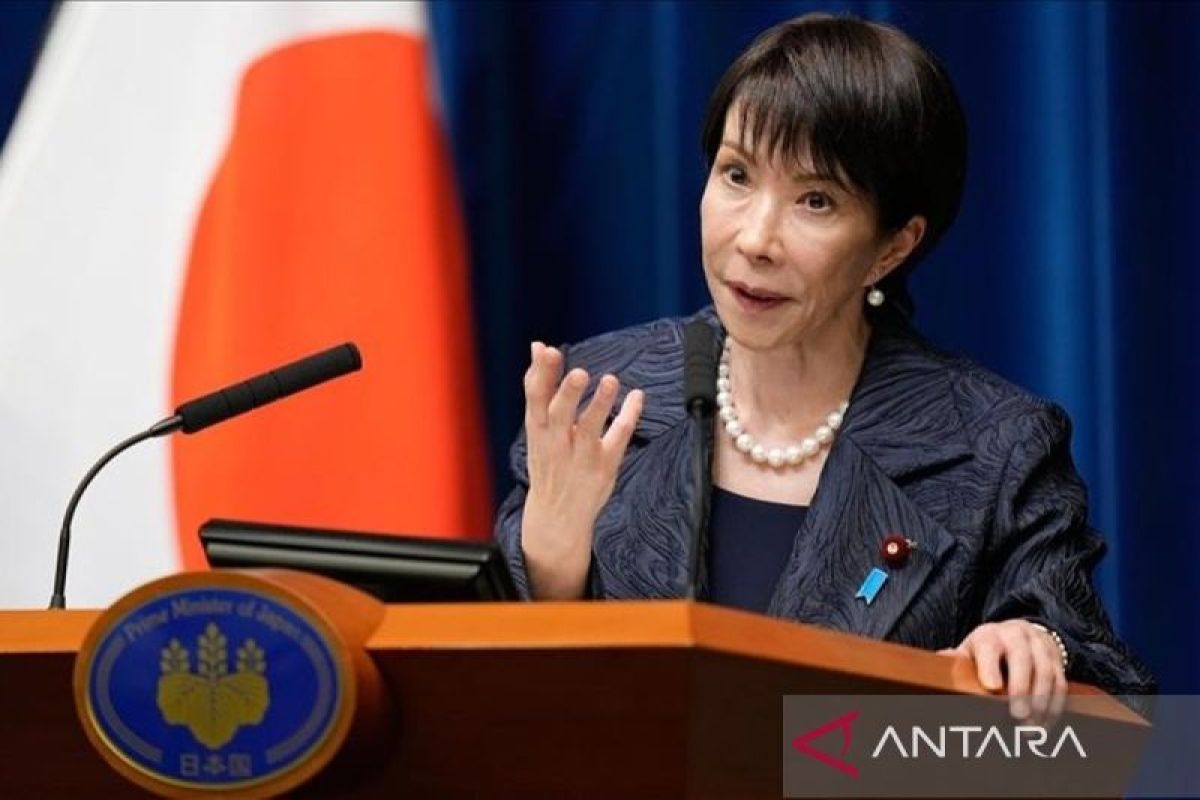
Washington (ANTARA) - Japan and the United States, on Thursday, announced plans to build small modular nuclear reactors as one of three new business projects worth a total of $73 billion (Rp1.236 trillion).
The construction plan is one of the business projects under Tokyo’s $550 billion (Rp9.316 trillion) commitment made last year in exchange for tariff reductions.
The second joint project group, announced after a meeting between Japanese Prime Minister Sanae Takaichi and US President Donald Trump in Washington, also includes the construction of natural gas power generation facilities in Pennsylvania and Texas.
Although the US Supreme Court overturned the Trump administration’s sweeping tariffs last month, Japan remains committed to the terms of the trade agreement reached by the two countries in July.
Under that agreement, Japan has committed $550 billion to US-based projects in strategic industries through investments, loans, and loan guarantees until the end of Trump’s second term, regardless of uncertainties arising from his administration’s aggressive and transactional approach to international relations.
In mid-February, Japan and the US announced the first three projects, including the construction of a gas-fired power facility in Ohio, the largest of its kind in US history, to supply power for artificial intelligence data centres.
On Thursday, the two countries said the construction of small modular reactors by GE Vernova Inc. and Hitachi Ltd. in Tennessee and Alabama, estimated to cost up to $40 billion (Rp677.5 trillion), will be a “breakthrough” in the US.
They said it will serve as an “outstanding next-generation stable power source,” leading to more stable electricity prices for Americans and enhancing their leadership in the global technology competition.
Separately, Japan and the US agreed to strengthen cooperation in critical minerals. Against the backdrop of China’s dominance in rare earth metals, which are vital for various economic activities and national security, they have established an action plan.
Among many other goals, the two allies said they will explore a plurilateral trade framework related to critical minerals with border-adjusted base prices or other measures to help ensure supply chains are not vulnerable to disruptions, including “economic coercion.”
They also signed a memorandum of understanding to advance joint efforts in developing deep-sea mineral resources.
By forming a working group, areas of cooperation under consideration include sharing information on Japanese projects near Minamitori Island, where sludge containing rare earth elements was recently collected from the seabed at a depth of about 5,600 metres.