
Japan and South Korea markets surge following oil price decline
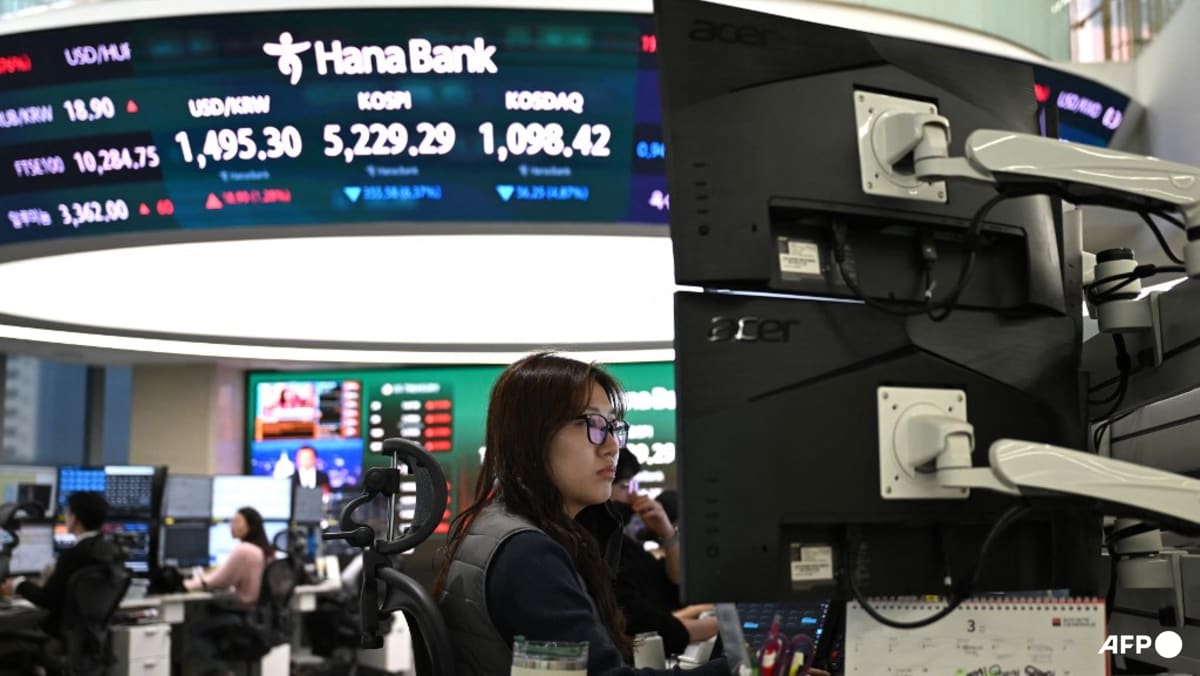
Japan, South Korea markets open higher after drop in oil prices
President Donald Trump said on Monday that his administration was lifting sanctions on some countries as part of efforts to stabilise the oil market.
TOKYO: Stock markets in South Korea and Japan rose sharply in early trade Tuesday (Mar 10), after a drop in oil prices.
South Korea’s benchmark Kospi rebounded more than 5 per cent, recovering after a sharp drop the previous day.
The Nikkei 225 in Tokyo also jumped more than 3 per cent, before falling back slightly.
Stocks tracked Wall Street movements overnight, when markets made remarkable reversals during the last hour of trading after President Donald Trump told CBS News that he thinks “the war is very complete, pretty much”.
That calmed worries that had built earlier in the morning, when the price for a barrel of Brent crude, the international standard, briefly touched US$119.50, their highest since 2022.
Those prices fell to under US$90 late Monday.
Around 12.30am GMT, the US crude oil benchmark, the West Texas Intermediate (WTI), was down 6.54 per cent at US$88.57 a barrel.
Brent Crude was down 6.78 per cent US$92.25.
Trump also told reporters in Florida on Monday that his administration was lifting sanctions on some countries as part of efforts to stabilise the oil market, but declined to provide details.
“So we have sanctions on some countries. We’re going to take those sanctions off until the Strait is up,” he said.
Easing sanctions on Russia would potentially boost world supplies of oil at a time of massive disruptions to Middle East shipments from the expanding Iran conflict. But it could also complicate US efforts to deprive Russia of revenue for its war in Ukraine.
The developments were “enough to spark hopes of some normalisation in supply and logistical dynamic”, said Chris Weston, an analyst with Pepperstone. “Traders moved quickly to sell crude and equity volatility.”
However, he warned that “the geopolitical backdrop remains fluid, and traders should expect volatility to remain a defining feature of the trading environment in the days ahead”.