
Janitor Fish Amid Jakarta's Structural River Pollution Problem
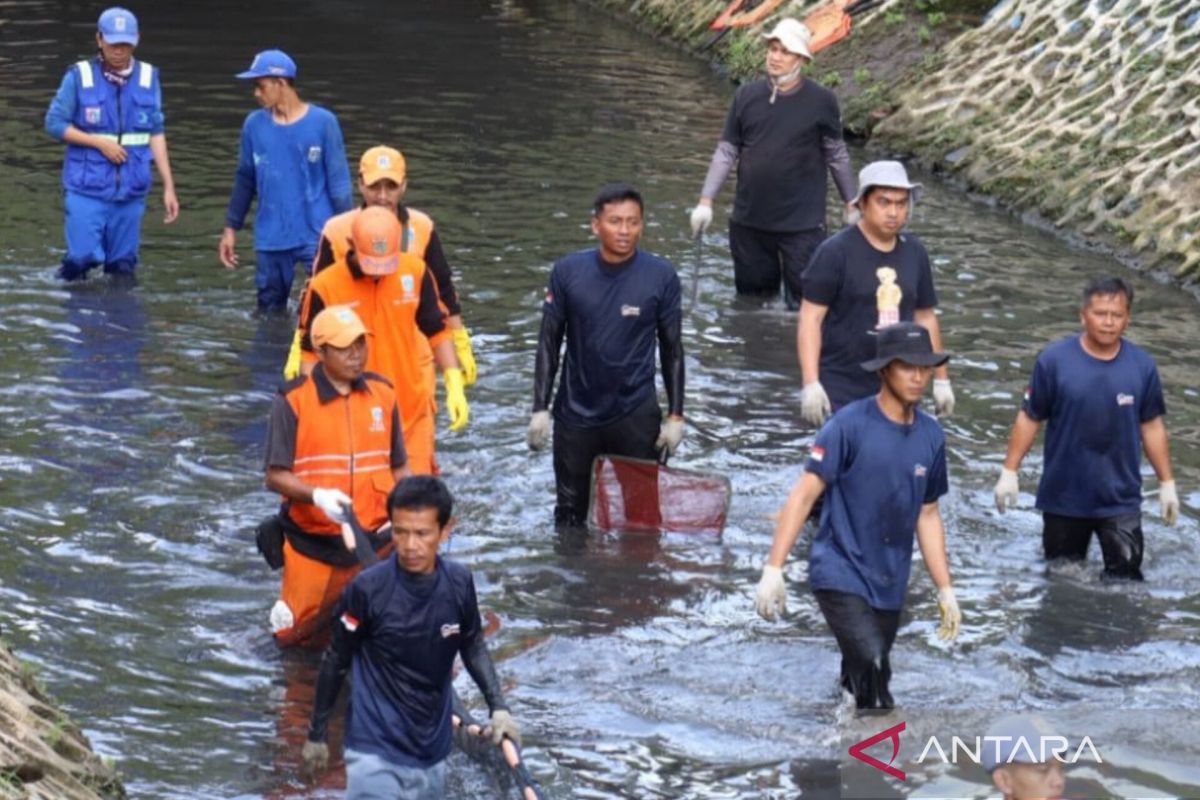
The operation to catch janitor fish should be positioned as part of a larger strategy. It is important as a control measure. However, it is not the main solution.
Jakarta (ANTARA) - Governor of DKI Jakarta, Pramono Anung’s instruction to conduct a comprehensive operation to catch janitor fish in the capital sounds simple, even reasonable, as a quick response to the visible ecological threat.
On one hand, the step feels concrete and easy to understand. There is visible activity, results that can be quantified, and a work narrative that can be conveyed to the public. However, on the other hand, a more fundamental question arises: does this policy truly touch the root of the actual problem?
Janitor fish are not a new phenomenon in Jakarta. They have long been permanent residents in rivers with declining water quality. Their presence is even almost predictable: where the water is polluted, that’s where they thrive. This makes the janitor fish more than just an invasive species, but part of a recurring ecological pattern.
From an ecological perspective, species like the janitor fish are called biological indicators. Their presence signals an unhealthy environmental condition. This means their existence is not the main cause, but rather a consequence of deeper damage. Removing them without improving the river conditions will only repeat the same cycle.
Therefore, the janitor fish catching operation has dual significance. On one hand, it is a necessary short-term control measure. On the other hand, this policy has the potential to distract from much more fundamental problems.
Technically, the janitor fish catching operation can be justified. However, symbolically, it resembles an effort to cover up the problem without truly solving it.
Rivers do not become clean just because janitor fish decrease. The river water can still carry domestic waste, detergents, and household activity residues. In many cases, this pollution load continues to increase over time. The fish are merely the visible part of a much broader problem.
Data from various environmental studies show that river pollution in urban areas in Indonesia is dominated by domestic waste. The percentage can reach more than half of the total pollutant load. This is not a minor issue that can be ignored. It is a structural problem that shapes the overall condition of the rivers.
When this structure is not addressed, every intervention becomes partial. It works at one point but does not change the larger system. The result is predictable: the problem returns in the same form. In fact, in some cases, the condition can become worse.