
Jakut Parks and City Forestry Sub-District Office Handles 2,377 Problematic Trees Through 2026
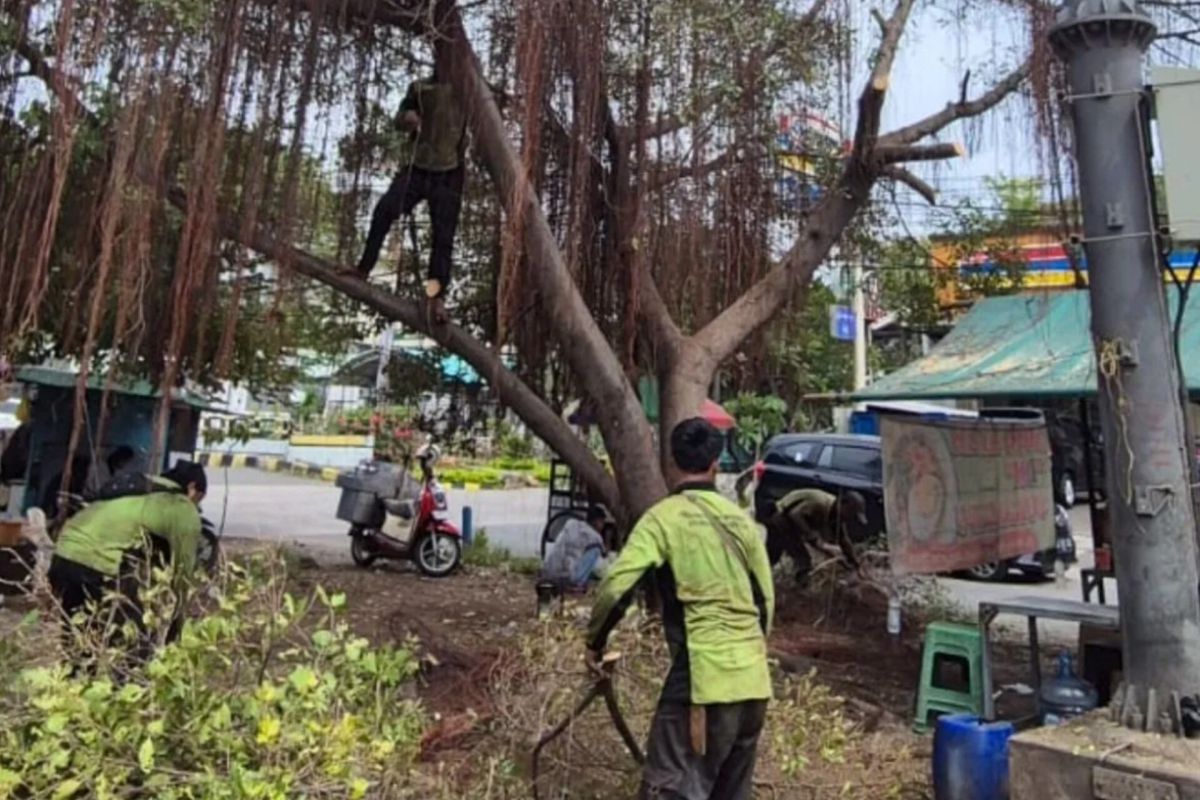
Jakarta (ANTARA) - The Parks and City Forestry Sub-District Office (Sudin Tamhut) of North Jakarta has handled 2,377 problematic trees in its six districts during the period from January to April 2026. “The handling is carried out as a preventive measure against extreme weather and strong winds that could cause trees to topple or branches to break,” said the Head of Sudin Tamhut North Jakarta, Reina Camelia, in Jakarta on Monday. She stated that the pruning also aims to make residential environments, parks, and green routes appear neater and more orderly. She noted that in January, 710 trees were handled. Then, 440 trees in February, 418 in March, and 809 in April 2026. According to her, the handling included light pruning (topping) on 356 trees, moderate pruning on 1,713 trees, heavy pruning on 137 trees, and felling of 83 trees. Additionally, there was handling of 18 leaning trees, as well as the evacuation of 70 fallen trees. “The types of trees handled are varied, including angsana, flamboyan, trembesi, ketapang, acacia, banyan, mango, and asam kranji,” said Reina. “In the same period, we have handled 436 trees based on residents’ complaints,” added Reina. The Sudin Tamhut North Jakarta, she said, not only focuses on pruning but also routinely plants trees every week as part of efforts to green the city and improve environmental quality. Up to April 2026, they recorded 216 trees planted in rotation across the six districts. The types of trees planted include pink tabebuya, yellow tabebuya, mahogany, flamboyan, and spatodea. “We also focus planting on hardscaped areas and green routes that have minimal vegetation or are filled with paving blocks. This is done to maintain and expand open green spaces in urban areas,” explained Reina.