
Jakarta's BPOM finds textile dye in iftar snacks
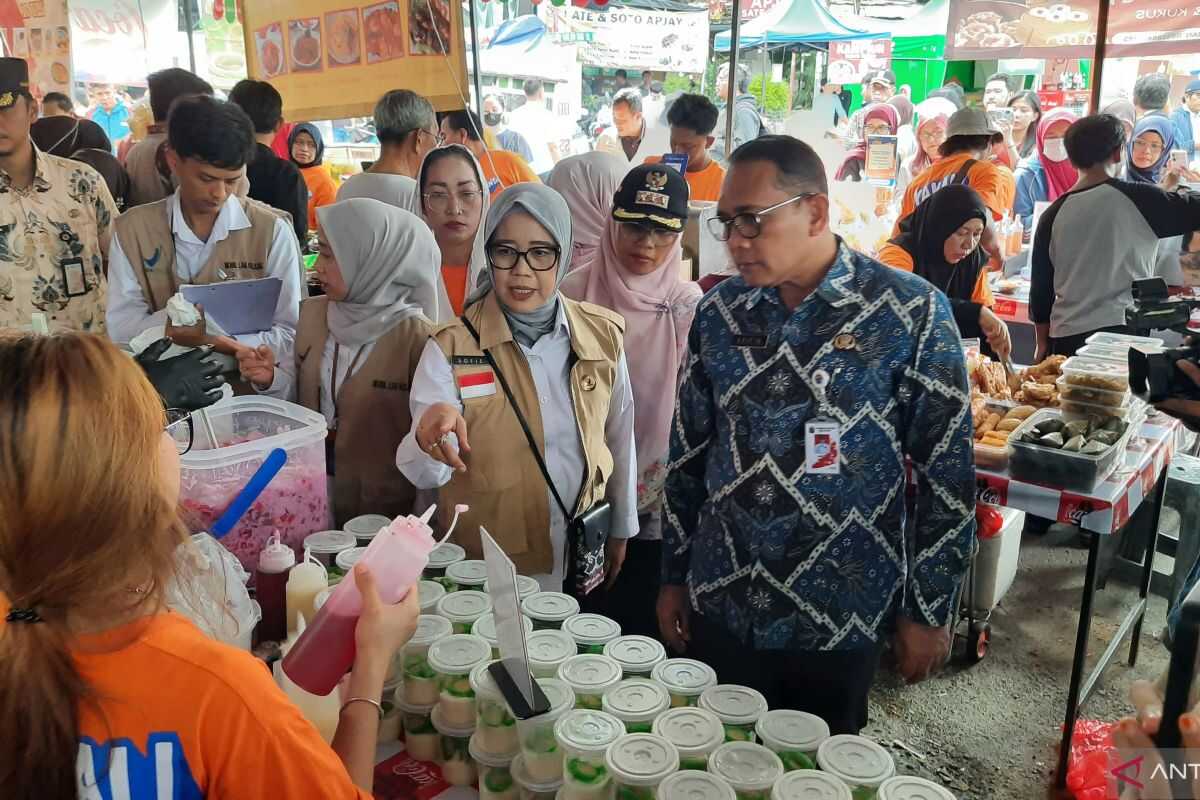
Jakarta (ANTARA) - The Jakarta branch of the National Agency of Drug and Food Control (BPOM) found that one out of 27 iftar snack samples in the Bendungan Hilir (Benhil) area of Central Jakarta allegedly contained textile dye.
“Out of a total of 27 samples (tested), one steamed sponge cake allegedly used textile dye,” said the Head of BPOM Jakarta, Sofiyani Chandrawati, in Central Jakarta, Thursday.
The cake was then confiscated, and the vendor was given education so that they could recognise and choose food that is free from harmful substances such as rhodamine B and methyl yellow.
Rhodamine B is a synthetic dye in the form of a reddish-purple powder, and in solution, it will be bright red. This substance is usually used for the textile and paper industries.
Both of these substances are harmful to health because they can cause irritation to the digestive tract, disrupt liver and bladder function, and cause cancer.
Sofiyani said that her agency would continue to monitor iftar snacks during Ramadan to ensure their suitability for breaking the fast.
On that occasion, the Deputy Mayor of Central Jakarta, Arifin, said that in addition to Benhil, monitoring of iftar snacks would also be carried out in the Kemayoran area.
Arifin said he was grateful that, in general, the iftar snacks in Benhil were safe.
Therefore, he asked the public not to worry when looking for iftar snacks there.
“The iftar snacks in Benhil are, thank God, safe based on the assessment. Although there are often results that contain formalin, here it is negative,” he said.
The results showed that six samples, or 4.1 percent, did not meet the requirements (containing harmful substances), while 141 other samples (95.9 percent) met the requirements.