
Jakarta's Air Quality Deteriorates as Exodus Season Begins
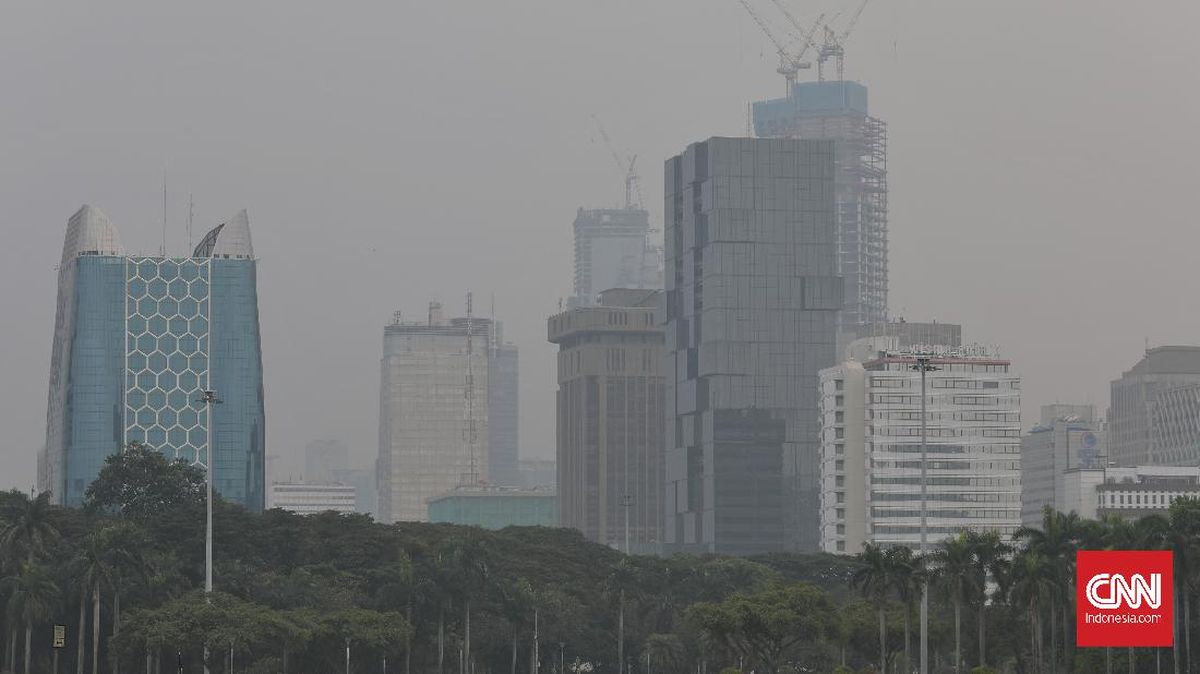
Jakarta’s air quality was recorded in the unhealthy category on Wednesday 18 March morning. The public has been urged to wear masks whilst undertaking outdoor activities to reduce pollution exposure.
Based on data from the IQAir air quality monitoring portal at 05:00 WIB, Jakarta’s air quality index (AQI) stood at 151. Meanwhile, the concentration of PM2.5 pollutant was recorded at 56 micrograms per cubic metre.
This figure far exceeds the annual air quality guideline value established by the World Health Organisation (WHO), being as much as 21 times higher.
PM2.5 refers to fine particles smaller than 2.5 microns that originate from dust, smoke, and soot. These particles can enter the respiratory tract and pose a risk of triggering serious health complications.
Long-term exposure has even been linked to increased risk of premature mortality, particularly among those suffering from chronic heart and lung diseases.
Given these conditions, the public has been advised to limit outdoor activities. In addition to wearing masks, residents are encouraged to close their home windows to prevent dirty air from entering, as well as to activate air filtration equipment if available.
In a national comparison, Jakarta’s air quality ranks as the fifth worst. The city with the worst air quality is South Tangerang with an index of 189, followed by Serpong (184), Bandung (170), and Bekasi (156).
The Jakarta Provincial Government is currently evaluating its Air Pollution Control Strategy (APCS). The evaluation is being conducted comprehensively, encompassing PM2.5 trends, emission load sources from various sectors, and its impact on public health.
The provincial government has emphasised that air pollution control cannot be carried out in isolation by a single region. Such efforts require cross-sectoral collaboration and inter-regional cooperation around Jakarta.
Dudi Gardesi Asikin, Deputy Head of the Jakarta Environmental Department, stated that strengthening the APCS based on data is key to reducing air pollution.
“By strengthening strategy, data-based evaluation, and inter-regional cooperation, air pollution control efforts are expected to be more targeted and have tangible impacts on public health and Jakarta’s environmental quality,” said Dudi.