
Jakarta–Yogyakarta Mudik via the Full Trans-Java Toll Road, Prepare This Amount of Money
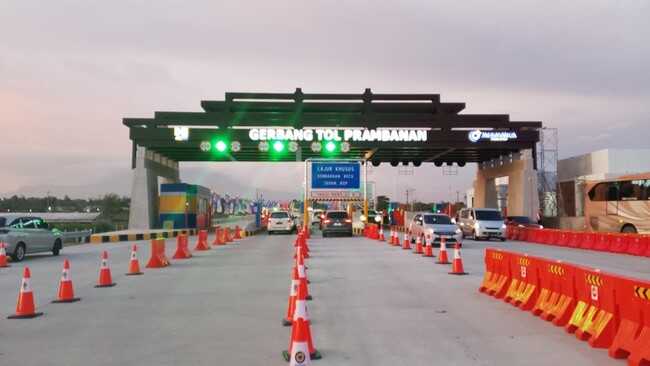
Jakarta, CNBC Indonesia – Yogyakarta has become one of the favourite Mudik destinations during Lebaran. Many travellers opt to use private vehicles due to their flexibility, especially for families carrying a lot of items or wishing to stop in several towns along the way.
If travelling by private car from Jakarta to Yogyakarta via the Trans-Java Toll Road, travellers need to set aside toll costs of around Rp591,500 for a Category I vehicle (private car) under the latest tariffs in effect.
The journey typically covers about 540-560 kilometres with a normal travel time of around 8-10 hours, depending on traffic during the mudik season.
Here is a breakdown of the toll road sections to be passed from Jakarta to Yogyakarta, with fees for Category I vehicles:
Jakarta Outer Ring Road (JORR): Rp17,000
Jakarta-Cikampek: Rp27,000
Cikopo-Palimanan (Cipali): Rp132,000
Palimanan-Kanci: Rp13,500
Kanci-Pejagan: Rp31,500
Pejagan-Pemalang: Rp66,000
Pemalang-Batang: Rp53,000
Batang-Semarang (Kalikangkung): Rp111,500
Semarang ABC: Rp5,500
Semarang-Solo: Rp92,000
Solo-Yogyakarta: Rp42,500
When added together, the total toll fees a mudik traveller needs to prepare for a one-way trip come to around Rp591,500.
In addition to tolls, travellers should also factor in fuel costs. Assuming a family car consumes about 12-14 km per litre, the Jakarta–Yogyakarta journey would require around 40-45 litres. With petrol at Rp13,000 per litre, fuel costs would be roughly Rp520,000–Rp585,000.
Thus, total travel costs for a private car from Jakarta to Yogyakarta could reach around Rp1.1 million to Rp1.2 million per one-way trip, comprising tolls and fuel.
Nevertheless, travelling via the Trans-Java Toll Road remains the preferred option for many mudik travellers because travel times are shorter and road conditions are generally better than on arterial routes.
Therefore travellers are advised to ensure their electronic money balance is sufficient before departure, and to plan rest stops at service areas to keep the journey safe and comfortable.