
Jakarta: Traces of a Coup from the Cold War Era
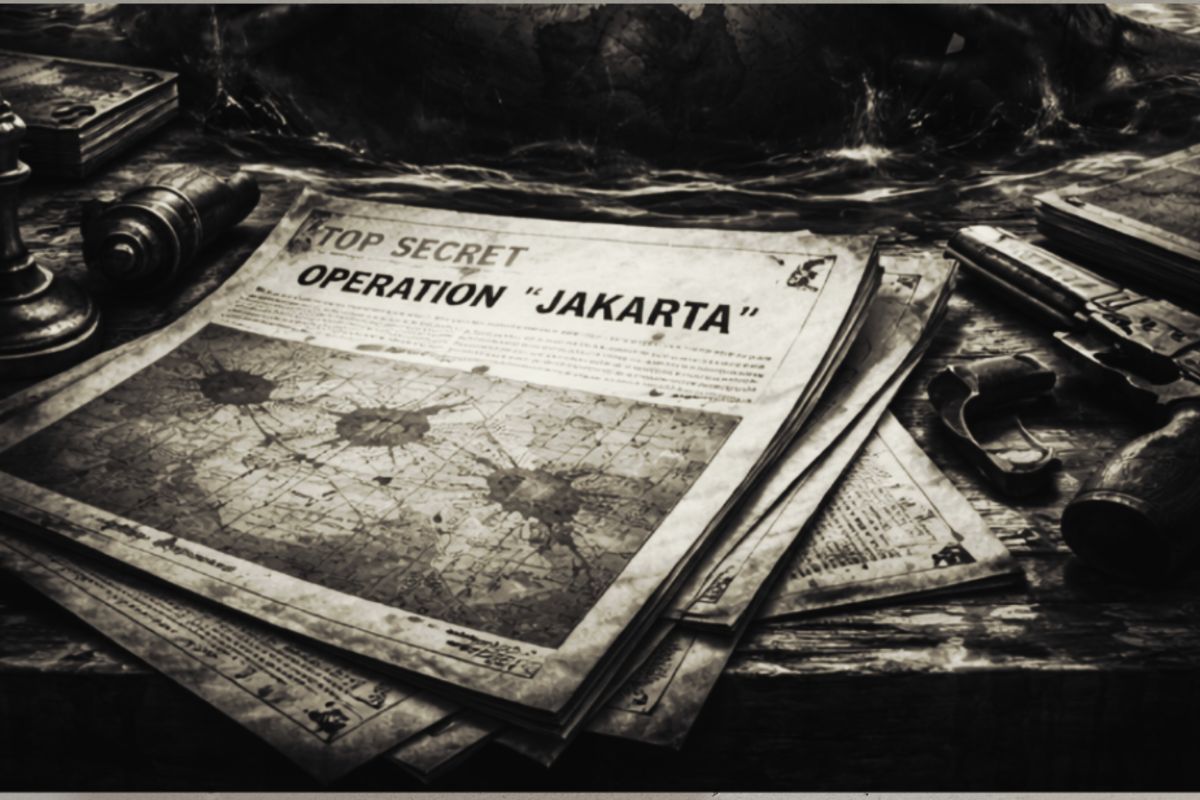
For Indonesia, the fact that its capital’s name was once used as a symbol in discourse surrounding global regime change is an important reminder of the nation’s strategic position in world political history. Indonesia was not merely a spectator in the drama of geopolitical contest.
In world geopolitical history, few city names have transcended their geographical boundaries to become symbols of international political strategy. Jakarta once occupied that position.
During the Cold War period, the name “Jakarta” referred not only to Indonesia’s capital but also served as a metaphor in global political discourse about regime change operations. In various countries, the name “Jakarta” was even used as code, a cipher describing the destruction of certain political forces through a combination of military operations, intelligence work, and planned propaganda.
This article seeks to reveal that this phenomenon was rooted in the crisis of political turmoil in Indonesia during 1965–1966, which began with the events of the 30 September Movement. This crisis triggered dramatic changes in the structure of national power, including the weakening of President Sukarno’s position, the emergence of military dominance under Suharto, and the dissolution of the Communist Party of Indonesia (PKI), which at that time was one of the world’s largest communist parties outside the socialist bloc.
The Cold War and bipolar rivalry
The G30S incident did not occur in a vacuum. It took place at the height of global rivalry between the United States and the Soviet Union in the context of the Cold War. Indonesia at that time held a strategic position as a large nation with a population of hundreds of millions, located on an important geopolitical route in Southeast Asia. For this reason, political change in Jakarta was viewed by many international observers and political practitioners as an event with global implications.
The strategic attention of the United States towards Indonesia increased sharply. Through intelligence and diplomatic networks, the Central Intelligence Agency (CIA) of the United States conducted in-depth monitoring of the political dynamics of the nation then led by Sukarno. The first step undertaken was a comprehensive mapping of the domestic power landscape.
In various historical research works, such as Geoffrey B. Robinson’s “The Killing Season” (2018) and Vincent Bevins’ “The Jakarta Method” (2020), the Indonesian events of 1965–1966 are often cited as an example of successful political reorientation of a nation without open interstate war. Various diplomatic archives later declassified by the National Security Archive demonstrate that developments in Indonesia were intensely monitored by major world powers.
From this emerged the term later known as the “Jakarta Method.” This term was not always used formally in government documents, but appeared in academic literature and geopolitical analysis to describe a pattern of power change involving a combination of political pressure, security operations, and campaigns to delegitimise certain ideologies. In the context of the Cold War, such patterns were often associated with efforts to destroy communist influence in various countries.
Interestingly, the term “Jakarta” later appeared in the political landscape of other nations. In the early 1970s, the slogan “Jakarta is coming” appeared in political graffiti as a threat to leftist groups. This expression emerged before and after the military coup that overthrew Chilean President Salvador Allende in the 1973 Chilean coup d’état.