
Jakarta Stock Exchange Plummets 5%, Eight Stocks Hit Hardest
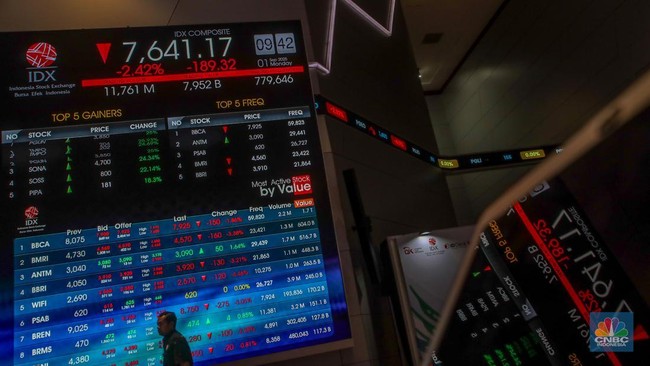
Jakarta — Indonesia’s composite stock index (IHSG) experienced significant selling pressure at the opening of trading on Monday, 9 March 2026. The benchmark index weakened sharply, declining by 5.05% to 7,202.56 shortly after the opening of the exchange.
Geopolitical Escalation and US Inflation Projections
The sharp correction in the IHSG was primarily driven by escalating tension between the United States and Iran. This situation prompted global market participants to shift towards commodity assets and begin avoiding risky assets, including reducing their equity exposure in emerging markets such as Indonesia.
On the macroeconomic side, additional pressure came from projections of US economic data. Market consensus anticipated a return to upward trends in general inflation releases and the US Personal Consumption Expenditures (PCE) indicator in the coming period.
Expectations of rising key inflation indicators strengthened concerns that the US Federal Reserve (the Fed) would respond by maintaining its benchmark interest rate at a restrictive level for a longer period.
This in turn drove higher returns on US bonds and triggered the potential for capital outflows from the domestic exchange.
Implementation of Trading Halt Protocol
The index decline, which rapidly reached the 5.05% threshold, occurred within approximately 25 minutes of market opening. A trading halt would be implemented if the IHSG touched an 8% decline during the trading session.
This temporary suspension is a standard operational procedure typically adopted to give market participants time to rationally digest fundamental information and dampen continuous sell-off activity.
Top Losers
The aggregate index correction also dragged stock prices across various sectors into negative territory. Based on trading data from the opening session, numerous shares experienced declines reaching the Auto Reject Bottom (ARB) limit.
Market participants were advised to continue monitoring the latest macroeconomic data releases and global geopolitical dynamics, which currently serve as the primary catalysts determining the direction of the exchange going forward.