
Jakarta Provincial Government Needs to Change Waste Management System at Bantar Gebang Integrated Waste Processing Facility
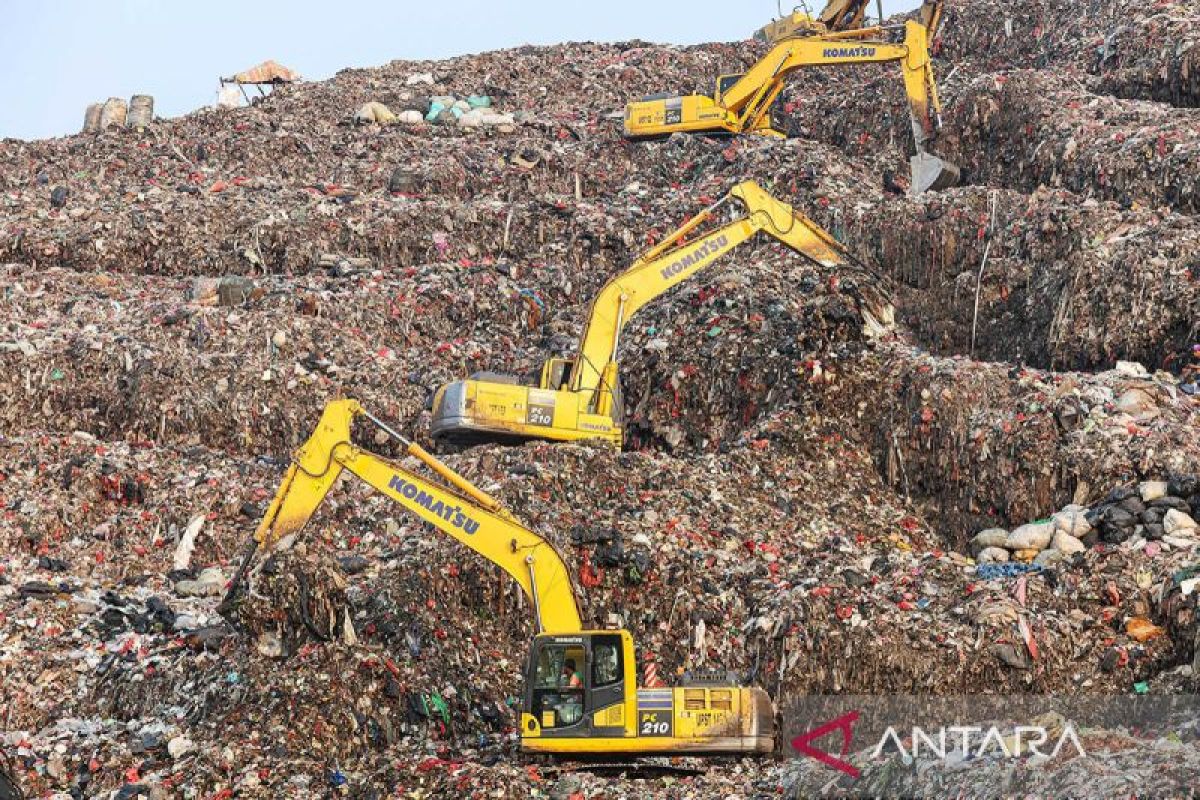
Jakarta (ANTARA) - The Jakarta Provincial Government needs to completely change the waste management system at the Bantar Gebang Integrated Waste Processing Facility after it was identified as one of the world’s largest methane emitters.
“We cannot continue to rely on Bantar Gebang as the main final disposal site,” said member of the Jakarta DPRD, Hardiyanto Kenneth, in Jakarta on Sunday.
Kenneth made this statement in response to a report from the Emmett Institute which stated that Bantar Gebang is the second largest methane emitter in the world, producing 6.3 tons per hour.
According to him, this issue should be a momentum for the Jakarta Provincial Government to make a total change in the waste management system.
Because so far, policy has focused too much on end-of-pipe solutions, while efforts to reduce waste at the source have not been fully implemented.
Kenneth said that the waste problem in Jakarta is no longer just an issue of urban cleanliness, but has developed into an environmental issue, public health, climate change, and even relates to the future sustainability of Jakarta and its surrounding areas.
He also emphasized the importance of public education and changes in community behavior because the waste problem will never be resolved if it is only burdened on the government without active participation from residents.
In addition, Kenneth asked the Jakarta Provincial Government to accelerate the development of modern waste processing facilities such as Refuse Derived Fuel (RDF), “waste to energy”, large-scale composting, and optimization of methane gas capture to be converted into energy.
According to him, a technology approach must go hand in hand with strengthening environmental regulations and supervision.
“We must be brave enough to invest in more modern and sustainable waste processing technologies. Many countries have turned waste into a source of energy and a new economic resource, such as Sweden, Singapore, Japan and China,” he said.
These countries utilize sophisticated incinerator technology to convert waste into electricity. Jakarta should also move in that direction. One scenario is methane gas capture; it should not be allowed to simply be released into the air, which could worsen global warming.
Kenneth also highlighted the social impact that has been felt by communities around Bantar Gebang, ranging from air pollution, unpleasant odors, health problems, to a decline in environmental quality.
Therefore, he said, the government has a moral responsibility to ensure that residents around it receive proper protection and attention.
“Residents around Bantar Gebang have been burdened with Jakarta’s waste for too long. Therefore, the state and local governments must be present to ensure that their health is maintained, their environment is improved, and their welfare is enhanced. There should not be ecological inequality where one area bears the burden for the convenience of another area,” he explained.
He added that the issue of methane emissions from the waste sector is also directly related to Jakarta’s commitment to reducing greenhouse gas emissions and facing the global climate crisis. Therefore, handling Bantar Gebang must be included in the priority agenda for sustainable development.