
Jakarta Provincial Government identifies anthrax as the main threat to sacrificial livestock
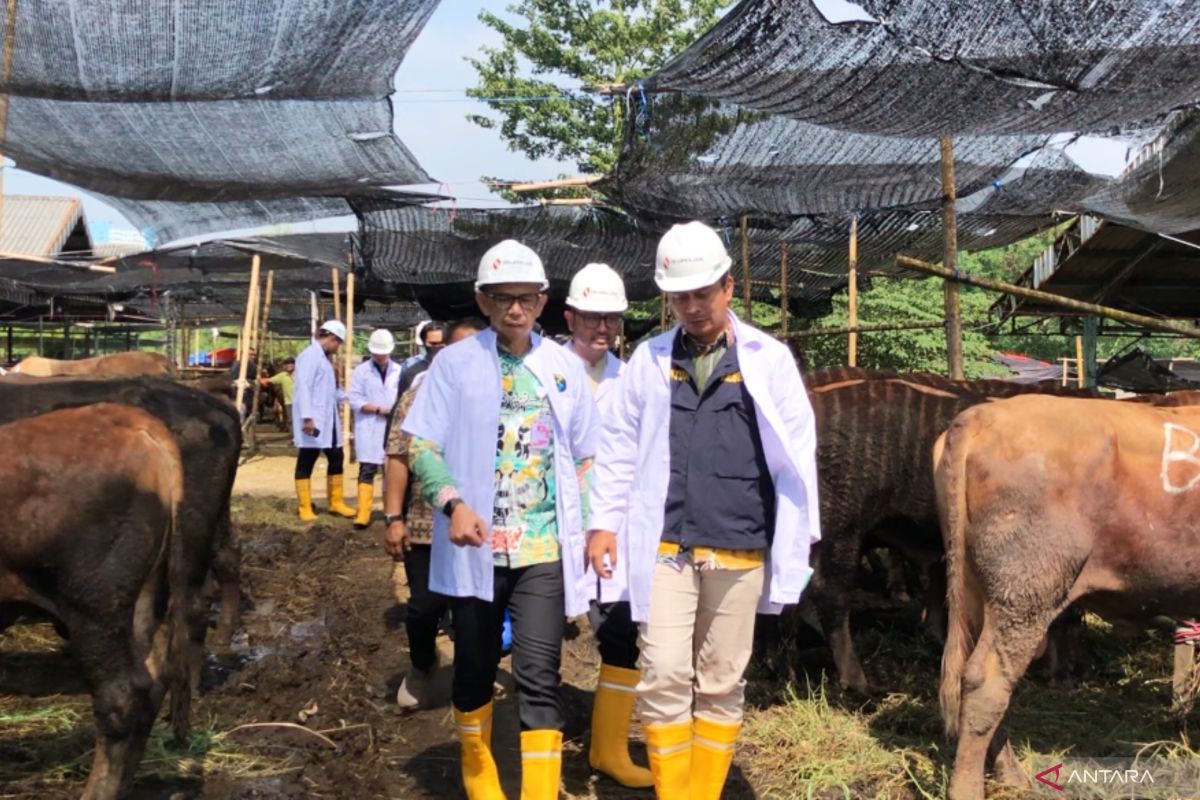
Jakarta (ANTARA) — The Jakarta Provincial Government (Pemprov DKI Jakarta) has identified anthrax as one of the principal threats to be vigilant about in sacrificial livestock ahead of Eid al-Adha 2026.
‘Anthrax is a primary concern due to its zoonotic nature, meaning it can be transmitted to humans,’ said Hasudungan A. Sidabalok, head of the Jakarta DKI Jakarta Food Security, Maritime Affairs and Agriculture Service (Dinas Ketahanan Pangan, Kelautan, dan Pertanian, KPKP), during an animal inspection ahead of Eid al-Adha 2026 at Perumda Dharma Jaya, East Jakarta, on Thursday.
Hasudungan said they are increasing vigilance against the threat.
To prevent entry of animals suspected of contagious diseases into Jakarta, the Jakarta Provincial Government makes it mandatory for all livestock shipped from outside the region to have an Animal Health Certificate (Surat Keterangan Kesehatan Hewan, SKKH) and an official veterinary certificate. These documents are the main prerequisites before animals can be marketed in Jakarta.
Inspections are carried out strictly through the iSIKHNAS system, which enables the government to monitor livestock movements from various regions. According to Hasudungan, the supervision is not limited to administrative documents but also includes direct physical examinations of animals by a team of veterinarians and paramedics.
‘If any animal is suspected of illness, we conduct laboratory tests at facilities owned by the Jakarta Provincial Government,’ Hasudungan said. He confirmed that all sacrificial animals entering Jakarta are also required to have been vaccinated, particularly against Foot-and-Mouth Disease (FMD) and anthrax.
The vaccination program is part of a national policy implemented at livestock centres.
Furthermore, the Jakarta Provincial Government also verifies the authenticity of animal health documents to prevent falsification of SKKH or veterinary certificates. ‘We clarify whether the documents are genuine or fake, and then compare them with the clinical condition of the animals in the field,’ Hasudungan said.
Additionally, the Jakarta Food Security, Maritime Affairs and Agriculture Service (KPKP) continues to intensify education for the public and business actors regarding slaughtering procedures and hygienic handling of sacrificial meat ahead of Eid al-Adha 1447 Hijriah.
According to Hasudungan, various preparations have been undertaken to ensure that the slaughtering of sacrificial animals in Jakarta proceeds safely, healthily, and in accordance with Islamic law. One major focus is providing training and outreach to sacrificial animal traders, abattoir managers, and the general public.
The materials include halal slaughter competency training, procedures for introducing sacrificial animals, guidelines for selecting healthy sacrificial animals, and requirements for selling venues and slaughter locations. This education is important to ensure that the slaughter process meets religious requirements as well as health and food hygiene standards.
In addition to informing about slaughter according to Sharia, officials educate the public on proper, hygienic handling of sacrificial meat.