
Jakarta Metropolitan Police Now Enforce Traffic Violations Using Mobile Handheld ETLE Devices
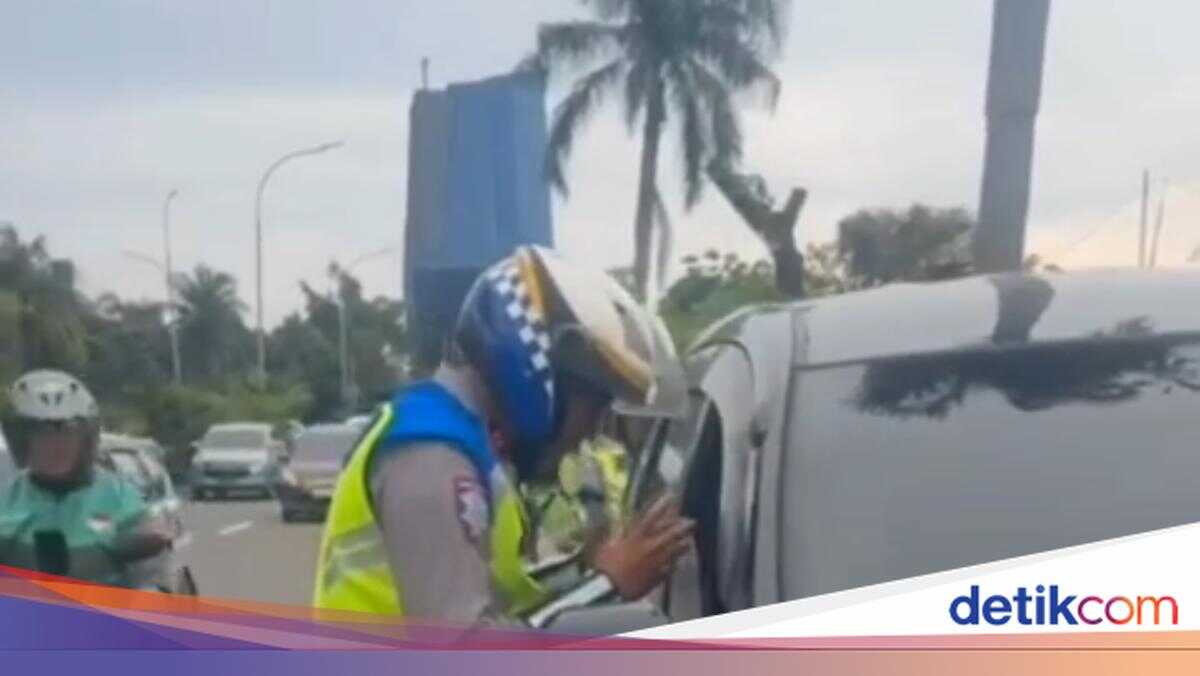
The Jakarta Metropolitan Police Directorate of Traffic (Ditlantas Polda Metro) is no longer relying solely on static cameras, with officers in the field now equipped with a new tool: the ETLE Mobile Handheld Presisi device.
The move follows instructions from National Traffic Police Corps (Korlantas Polri) chief Inspector General Agus Suryonugroho to tighten surveillance at violation-prone spots, from main arterial roads to vital infrastructure zones such as Soekarno-Hatta Airport.
“Enforcement is carried out dynamically. Officers in the field are now equipped with ETLE Mobile Handheld devices to catch violators who are not captured by static cameras,” said Inspector General Agus Suryonugroho on Monday (16 February 2026).
Based on video footage, enforcement using the ETLE Mobile Handheld Presisi devices has been carried out by units across the Jakarta Metropolitan Police Directorate of Traffic, including the Law Enforcement Sub-directorate, the North Jakarta Traffic Unit, the East Jakarta Traffic Unit, and the Soekarno-Hatta Airport Police Traffic Unit.
In the footage, traffic police officers can be seen swiftly photographing motorists committing violations across several areas of Jakarta. In the Soekarno-Hatta Airport area, officers targeted illegally parked vehicles and those stopping haphazardly, which frequently cause congestion. Enforcement was also conducted in a humane manner, with motorists given education to deter repeat offences.
The ETLE Mobile Handheld system enables officers to enforce violations directly on the spot. Key violations targeted by officers in the field include failure to wear a helmet or seatbelt, mobile phone use while driving, driving against the flow of traffic, ignoring stop signs, and illegal parking.
Inspector General Agus stressed that the use of this technology also aims to minimise direct interaction between officers and violators in order to prevent potential extortion, whilst simultaneously providing a more effective deterrent for the public.
“All of this is for the sake of public order and safety. We want the public to be aware that surveillance is everywhere, not just at points where cameras are installed,” said Inspector General Agus.
The initiative forms part of a strategic policy devised by Inspector General Agus Suryonugroho to drive the modernisation of traffic management in a manner that is adaptive to technological developments and the dynamics of public mobility.
Inspector General Agus emphasised that the use of technology must serve as the primary instrument in building a traffic system that is transparent, measurable, and safety-oriented. The digitalisation of enforcement is not merely about devices, but rather part of a cultural reform towards professional and accountable public services.
The ETLE Mobile Handheld is designed as a flexible and dynamic electronic enforcement device. Its portable form allows personnel to conduct monitoring at various strategic points, including high-activity zones, logistics distribution routes, crowded areas, and locations prone to traffic congestion. The device complements the static ETLE system, thereby broadening and evening out enforcement coverage.
The key advantage of the ETLE Mobile Handheld lies in its ability to perform real-time digital documentation that is directly integrated with the ETLE Back Office system. All recorded data is stored systematically and documented electronically, supporting administrative order and transparency in traffic data management.
Beyond being a mere technological device, the ETLE Mobile Handheld is expected to serve as an instrument for building a culture of traffic discipline. The presence of an objective and measurable digital system encourages the public to become increasingly aware that all activity in the traffic space exists within a modern and integrated ecosystem.
Through the optimisation of the ETLE Mobile Handheld Presisi, Inspector General Agus reaffirmed Korlantas Polri’s commitment to building a traffic system oriented towards safety, order, and public protection.
This digital transformation forms part of an ongoing effort to deliver professional, humane, and technology-based enforcement for the comprehensive realisation of security, safety, order, and smooth traffic flow.