
Jakarta Information Commission urges Central Jakarta Health Sub-District Office to improve information management
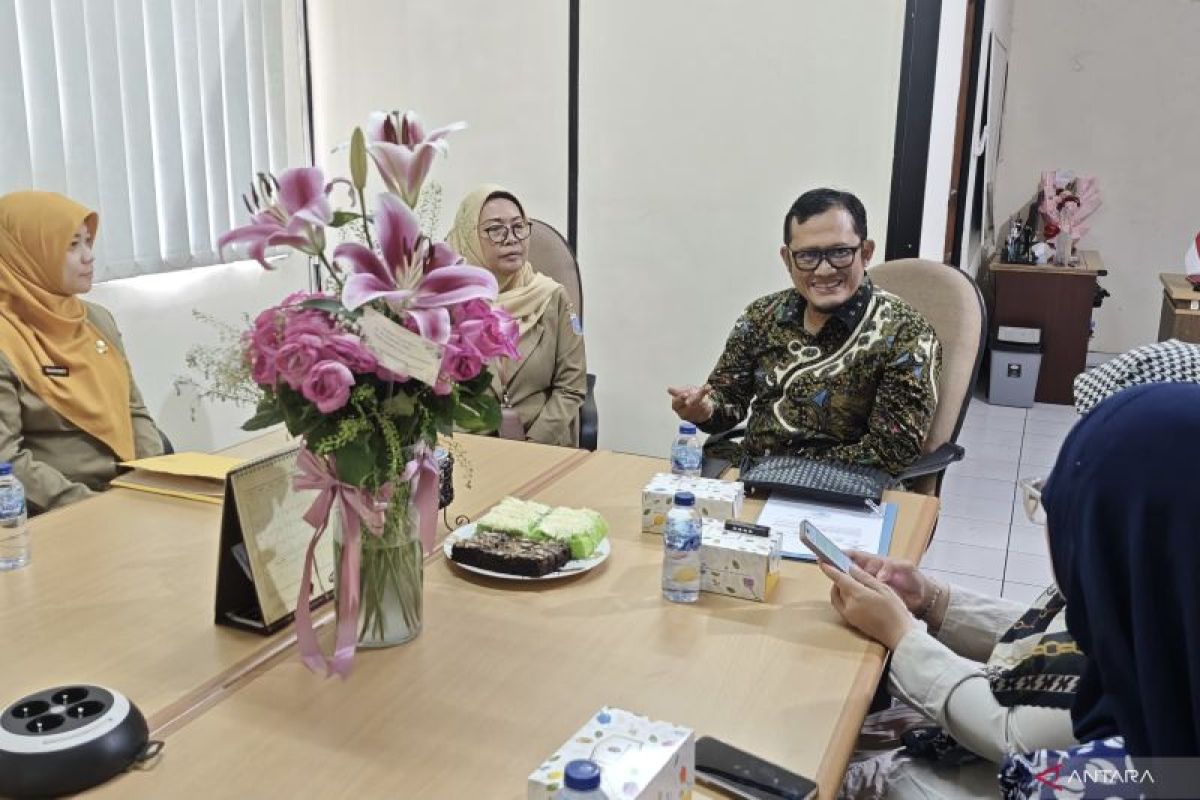
Jakarta (ANTARA) - The Jakarta Information Commission (KI DKI) has urged the Central Jakarta Health Sub-District Office (Sudinkes) to improve information management, as data and information are the primary strengths in enhancing the quality of public services.
“By its core duties and functions, KI resolves information disputes. However, we also conduct monitoring, evaluation, visitation, and socialisation as part of the ecosystem for public information openness,” said Deputy Chairman of KI DKI Jakarta, Luqman Hakim Arifin, during a visitation to the Central Jakarta Health Sub-District Office on Monday.
Luqman explained that the visitation activity is an ongoing agenda of KI DKI Jakarta in building an integrated ecosystem of public information openness among public bodies.
He stressed that information openness should not be viewed merely as an administrative obligation but as a strategic need for every public body.
He stated that under the framework of the Public Information Disclosure Act (UU KIP), there are three main actors. First, public bodies as information providers; second, the public as information requesters; third, regulations as regulators of the relationship between the two, namely the Information Commission as the body overseeing UU KIP No. 14/2008.
“Public bodies that use state budgets and public donations have a responsibility to provide accurate and accountable information to the public,” said Luqman.
Furthermore, he highlighted the important role of the Information and Documentation Management Officer (PPID) in managing data and information.
According to him, although the public relations function does not yet have a specific legal umbrella, PPID serves as a strategic instrument in ensuring that information management is well documented.
Luqman added that the results of the 2025 electronic monitoring and evaluation (e-monev) show that only around 10–20 percent of public bodies fall into the informative category. This presents a challenge for public bodies to improve the quality of information services.
“E-monev is a simple method to assess information openness. Moving forward, public bodies must take information and data management more seriously in accordance with the mandate of UU KIP No. 14 of 2008,” he explained.
On that occasion, he also reminded about the mechanism for public information services, where every public body is obliged to respond to information requests within a maximum of 10 working days, which can be extended by a maximum of 7 working days.
Through this visitation, KI DKI Jakarta hopes to build a joint commitment to strengthening transparent, accountable public information governance oriented towards public services.
Meanwhile, the Head of Sudinkes Central Jakarta, Dr. Rismasari, welcomed the visitation as a learning momentum to improve the quality of information services, particularly in the health sector.
She emphasised the importance of legal awareness and legal protection for health workers supported by good communication and information.
“We need to understand legal controls for health workers supported by communication and information. Our focus is to provide hospitable services for patients,” said Rismasari.
According to her, Sudinkes Central Jakarta continues to strive to improve the quality of information presentation to make it more informative and easily accessible to the public.
“Together with KI, we are learning to package information to be more informative and well-received by the public as service users,” she said.