
Jakarta Information Commission highlights key instruments for village-level public information services
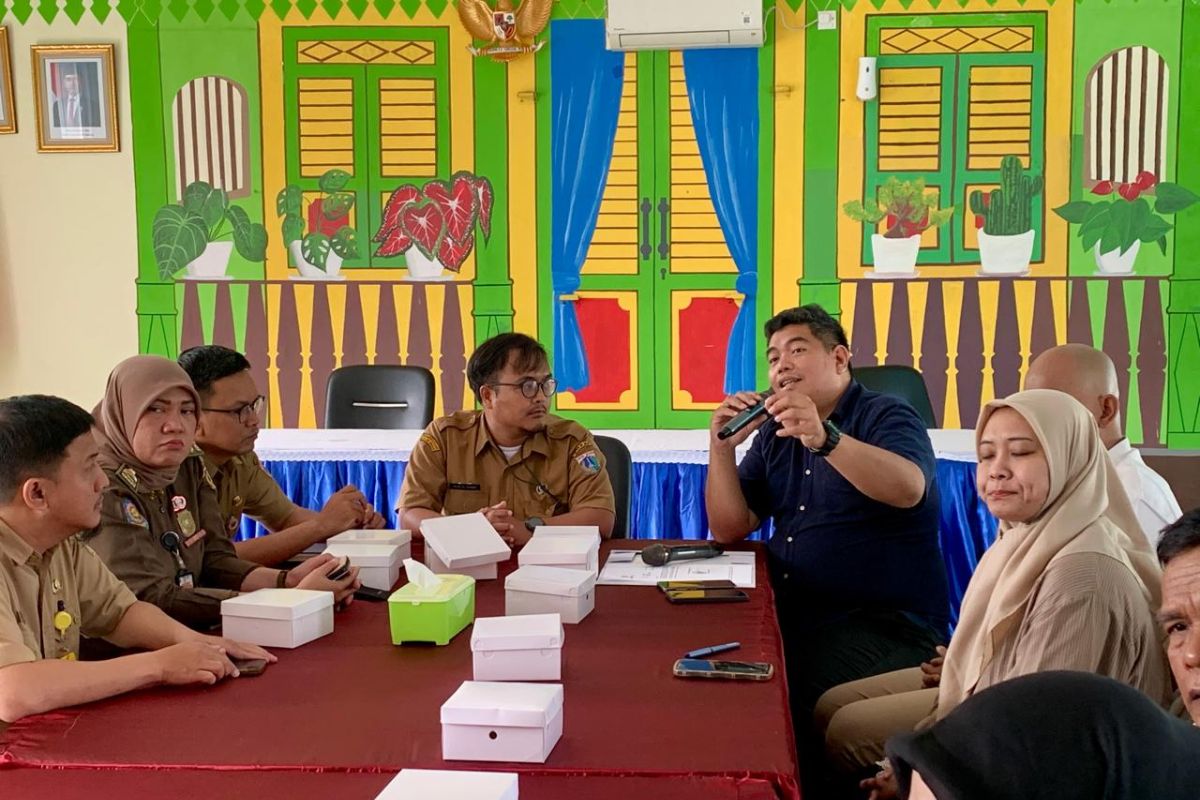
The Jakarta Information Commission (KI DKI) has emphasised the importance of the Public Information List (DIP) and Exempted Information List (DIK) as the two primary instruments for public information services at village level.
The presence of these instruments is crucial for public bodies to improve transparency and achieve an ‘informatif’ rating in the 2026 E-Monev assessment.
“The key to handling information requests lies in the DIP and DIK. If both are available, any incoming requests can be answered more easily,” said Harry Ara Hutabarat, Chairman of the Jakarta Information Commission, during a confirmation in Jakarta on Thursday.
Harry stated that these two public information instruments are key for villages to attain an ‘informatif’ rating in the 2026 E-Monev, including Cilandak Timur Village in South Jakarta, which the commission visited on Monday, 25 May.
The visit aimed to strengthen public bodies’ commitment to transparency and convey E-Monev recommendations.
“We hope Cilandak Timur will achieve an ‘informatif’ rating this year. We have already provided the recommendations directly to the village head for immediate action. Leadership commitment is vital,” Harry said.
Harry also highlighted the importance of strengthening direct information services to the public. He requested that information facilities such as banners explaining the information request process be made larger and more visible.
“I noticed the banners are still small and not easily visible. They should be enlarged so the public can easily understand the information request mechanism. Public services at village level must not be minimalistic as frontline providers of ‘city hall at the village level’,” Harry said.
He also stressed the importance of digitalising public information services through an omni-channel approach.
According to Harry, public bodies should not rely solely on websites but also integrate various digital platforms and social media to disseminate public information.
“The main assessment is based on the website, but for digitalisation indicators, we expect the website to connect with social media. Nowadays, the public rarely visits websites, so various digital platforms need to be utilised,” he added.
Harry assessed that the recommended improvements for Cilandak Timur Village are relatively minor, given its 82.5-point score in last year’s E-Monev, which is close to the ‘informatif’ category.
“I believe the improvements are not too difficult. Just a few more points to reach the ‘informatif’ rating,” Harry said.
He also emphasised the critical role of the Public Information and Documentation Officer (PPID) at village level in ensuring optimal and professional public information services.
Not all information requesters have clear intentions, Harry noted, so public bodies must understand appropriate public information service strategies without compromising citizens’ right to information.
“There are requesters for research, but also those who appear to seek information but aim to disrupt public bodies, or what we call bad-faith requesters,” he stressed.
Meanwhile, Village Secretary Najib Al Khanie thanked the Jakarta Information Commission chairman for the visit and guidance.
Najib committed to immediately implementing the recommendations, including providing facilities such as PPID offices or desks, and banners detailing public information disclosure regulations and request procedures.
“We hope Cilandak Timur Village can provide comprehensive and optimal services to the public,” he concluded.