
Jakarta Faces Waste Emergency Risk, DKI DPRD's Kenneth Calls for Total Overhaul of Waste Management
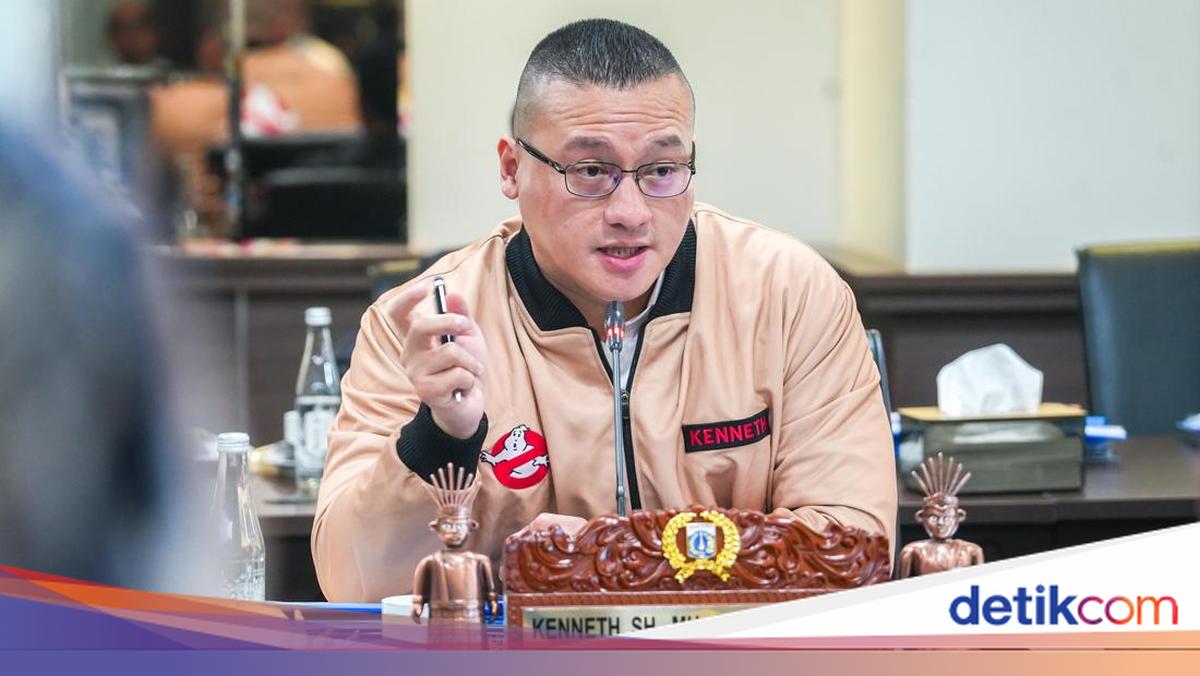
Member of the DKI Jakarta DPRD, Hardiyanto Kenneth, has emphasised the importance of concrete steps, from public education to overhauling the integrated waste management system from upstream to downstream.
The man commonly known as Bang Kent believes that the waste issue is not solely the government’s responsibility but requires collaboration from all parties, including the public and local apparatus.
“The waste problem has still not been handled optimally to date. We see many accumulation points, untimely collection, and low public awareness in sorting waste at the source,” said Kent in his statement on Thursday (7/5/2026).
The member of Commission C of the DKI Jakarta DPRD stressed that the DKI Jakarta Environment Agency must be more proactive in designing education programmes that directly target the public. These programmes should not merely be socialisation efforts but must be applicable and sustainable.
“The public must be given a clear understanding of how to sort organic and inorganic waste, how to reduce household waste, and how to reuse waste that still has economic value,” he said.
According to him, the role of local apparatus such as district heads, sub-district heads, village heads, and neighbourhood associations (RT and RW) is also crucial in ensuring effective waste management at the grassroots level.
“Waste handling cannot be done by the provincial government alone but must be collaborative. RTs, RWs, and community groups must be genuinely involved,” emphasised the Chairman of IKAL (Association of Lemhannas RI Alumni Families) PPRA Class LXII.
Kent also warned that Jakarta could face a waste emergency if there is no significant improvement, particularly in collection and management at Temporary Disposal Sites (TPS).
“Going forward, Jakarta could enter a waste emergency phase if there are no swift actions. TPS must be managed with disciplined timing. Do not let waste pile up for days due to delayed collection. This is not just about the city’s aesthetics but also public health,” he explained.
To that end, he encourages the implementation of incentive schemes for the public and field officers who contribute to waste management.
“We also need to think about incentive schemes. The public who diligently sort waste should be given recognition or economic benefits,” he said.
In addition, Kent has asked the DKI Jakarta Provincial Government to prepare stricter and more systematic regulations, as well as to build a comprehensive waste management ecosystem.
“It can no longer be piecemeal. The system must be formed from the waste source, collection, to final processing,” he stressed.
In terms of education, he emphasised the importance of massive public campaigns through various communication channels, including public transport, television, and social media.
“Education must be expanded. It can be through Transjakarta buses, television, to social media. There must be a grand narrative on waste management that is consistently conveyed to the public. This is about behavioural change, so it cannot be instant,” he stated.
Kent also highlighted several Asian countries that have demonstrated effective and sustainable waste management practices. For example, Singapore implements strict rules supported by modern incineration technology that can convert waste into energy. This system significantly reduces the volume of waste ending up in final disposal sites.
“Then in Japan, the public is required to sort waste in detail. High compliance from citizens, supported by early education, is the key to the success of that system. Meanwhile, South Korea relies on a technology-based approach and economic incentives, including a payment system based on the volume of waste produced,” he explained.
Furthermore, Kent noted that Taiwan has successfully emerged from a waste crisis through firm policies and public participation. Meanwhile, Malaysia continues to improve through plastic reduction and enhanced standards for final disposal site management.
In the meantime, Kent positively welcomes the signing of a memorandum of understanding (MoU) between the DKI Jakarta Provincial Government and Danantara regarding the plan to build two Waste-to-Energy (PLTSa) facilities.
According to him, this cooperation can be a strategic step in addressing Jakarta’s increasingly complex waste issues, while also promoting the utilisation of waste as an alternative energy source.
“In principle, we support the Provincial Government’s steps to seek innovative solutions to the waste problem. PLTSa can be one of the answers, provided it is well-designed and transparent,” said Kent.
Nevertheless, he reminded that the project should not only focus on infrastructure development but must also consider environmental, health, and sustainability aspects.
“It must be ensured that the technology used is environmentally friendly and does not create new pollution. Do not let the intention to solve the waste problem instead cause other issues. Then, I ask that all processes be transparent. I will certainly carry out oversight functions to ensure this project truly benefits the public,” he said.
In addition, Kent reminded that the presence of PLTSa should not neglect efforts to reduce waste at the source. Education and sorting systems must remain the top priority.
“PLTSa is a downstream solution. But the upstream must still be fixed. Education, waste sorting, and reduction from households must not be abandoned,” he said.
Kent hopes that this cooperation can proceed as planned and become part of a more integrated waste management system in Jakarta.
“If this is implemented well, it could become one of the important breakthroughs. But it must be monitored together so that it does not become just a project,” he stated.
Kent hopes that with structured, collaborative, and consistent steps, the waste problem in DKI Jakarta can be curbed before it develops into a more severe environmental crisis.