
Jakarta Environment Agency Urges Public Not to Burn Trash, Warns of PM2.5 Dangers
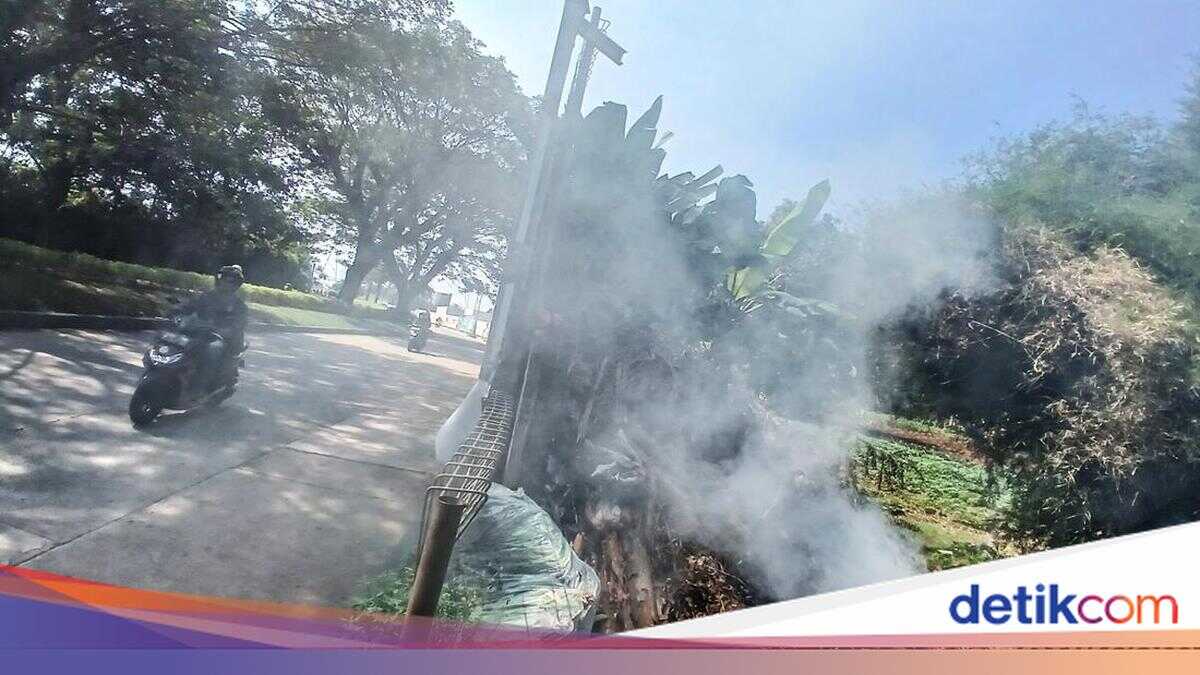
The Jakarta Provincial Environment Agency (DLH DKI Jakarta) has urged the public to be vigilant about the health dangers posed by exposure to fine particulate matter, PM2.5. The particles, extremely small and toxic, can reach the lungs and trigger a variety of health problems, the agency says, particularly when air quality deteriorates during the dry season.
Erni Pelita Fitratunnisa, Head of the Pollution Control and Environmental Damage Division at DLH DKI Jakarta, explained that PM2.5 particles are highly toxic and can penetrate the respiratory system, reaching the lungs and potentially causing upper respiratory infections (ISPA) and even serious diseases. “PM2.5 are extremely small particles containing many toxic sub-particles. They enter the breath, reaching the lungs. The impact can include ISPA and a risk of serious illnesses,” she said during a relaxed discussion on air pollution in Menteng, Central Jakarta, on Wednesday (4 March 2026).
She cited studies, including one from the Faculty of Public Health at the University of Indonesia (Fakultas Kesehatan Masyarakat UI), showing that PM2.5 exposure is linked with a reduction in life expectancy. Vulnerable groups such as young children and the elderly are the most affected.
“The ISPA trend increases as air quality worsens. The vulnerable groups, like children and older people, are the most affected. That is why our air quality monitoring app always includes alerts once the standards are exceeded,” she said.
DLH DKI operates the Air Quality Monitoring Station (SPKU), the data from which is publicly accessible. If PM2.5 concentrations exceed the threshold, the public is advised to limit outdoor activities, especially for vulnerable groups.
Erni also stressed that PM2.5 sources are not limited to motor vehicles and industry. Open burning activities—such as burning trash and even grilling satay—also contribute to the rise of fine particles in the air.
“Trash is one of the polluting sources, especially if burnt indiscriminately. The penalties are laid out in Local Regulation Number 4 of 2019, with fines of Rp 500,000,” she explained.
She gave an example of PM2.5 spikes around the SPKU being triggered by burning in residential areas. In fact, the satay grilling activity during Car-Free Day near Bundaran HI has been detected by the monitoring equipment.
“Satay grilling also contributes to the air. Especially if the intensity is high. It can be picked up by our stations,” she said.
According to Erni, enforcement against waste burners remains challenging because it is difficult to identify the perpetrators in the field. The DLH is also considering regulatory aspects before applying social sanctions, such as publicising violators.
Meanwhile, with the approach of the dry season expected to run from May to August, the DLH DKI is aware of the potential for air quality to decline. Dry conditions and reduced rainfall can worsen pollutant concentrations in the atmosphere.
“If the trend of worsening air quality continues into the dry season, we can re-activate rapid-response measures,” she said.
The DLH urges the public not to burn rubbish, to regularly conduct vehicle emissions tests, and to monitor daily air quality before outdoor activities.
“If Jakarta takes the lead only, it will be difficult. But at least from a behavioural perspective, we can start with ourselves. Do not burn rubbish, reduce emissions. The impact is not just shortness of breath; it can also affect life expectancy,” she added.