
Jakarta Council Seeks to Plug Regional Revenue Leaks from Illegal Parking
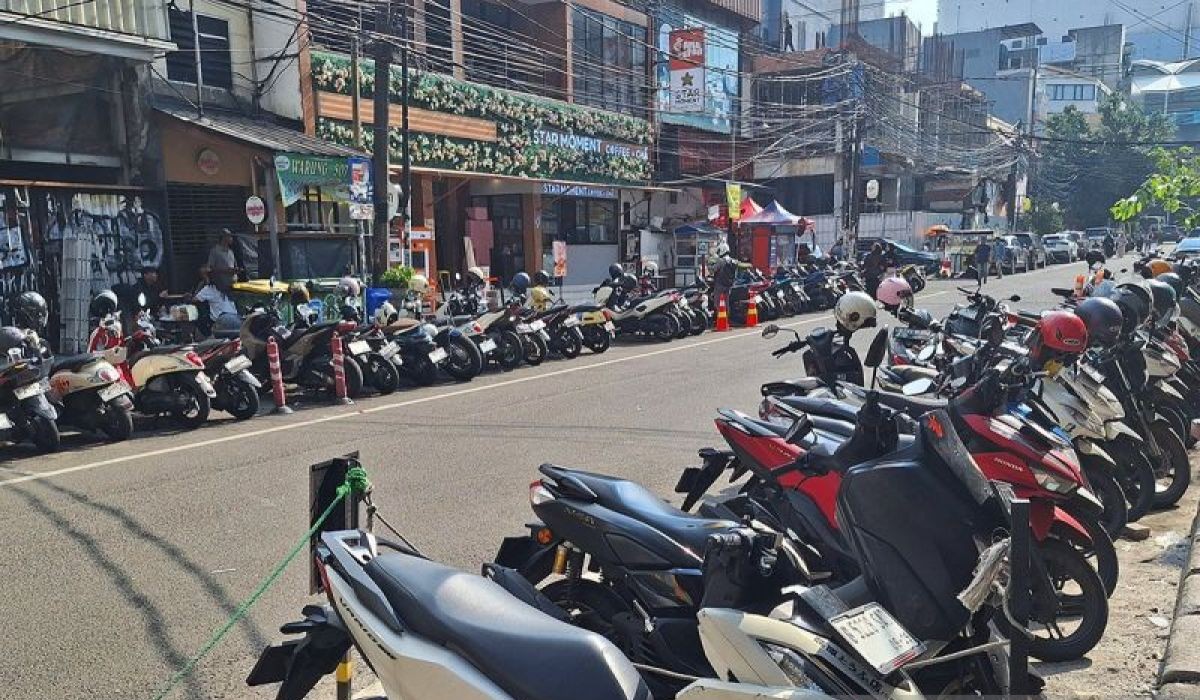
The Special Committee (Pansus) on Parking Management of the Jakarta Regional House of Representatives (DPRD) has sharply highlighted the potential leakage of locally generated revenue (PAD) from the parking sector. The committee argues that cracking down on illegal parking attendants (jukir liar) is not a long-term solution if the on-the-ground management system still leaves wide gaps for revenue leakage.
The Chairman of the Pansus on Parking Management, Jupiter, stressed that the parking problem in the capital must be addressed comprehensively. This includes the legality of operators, standardisation of charges to the public, oversight aspects, vehicle security, and transparency of contributions to PAD.
“If the approach is only enforcement operations, this problem will never be resolved. Today it is cleared, tomorrow it can reappear with a different modus operandi,” Jupiter said when contacted by Media Indonesia on Wednesday (19/8).
Jupiter explained that the Pansus is currently pushing for a paradigm shift from a focus on enforcement to a prevention system. He emphasised the importance of clarity at every parking point, from legal status and applicable tariffs to the responsible operator and a transaction mechanism whose flow can be traced.
“My principle is simple: do not just catch leaks after they occur, but we must close the door to leakage,” he asserted.
As an initial step, the Pansus is proposing the development of an integrated Jakarta parking database. This system would need to record in detail location data, operator identities, permit status, land capacity, tariffs, and daily transaction history in real time.
In addition to the database, the digitalisation of transactions is a crucial point being pushed by the Pansus to minimise the use of cash. With a digital system, the Jakarta Provincial Government can accurately monitor the number of vehicles and potential revenue at each location through a clear audit trail.
“Do not let one agency say a location is legal while another agency does not have the data,” Jupiter added.
While advocating for a new system, Jupiter confirmed that enforcement against illegal parking operators must still be carried out consistently. However, he underlined that the Pansus’s success should not be measured solely by the number of illegal parking attendants arrested.
“Our target is not merely to eliminate illegal parking attendants. The ultimate goal is to create a Jakarta parking ecosystem that is legal, orderly, safe, transparent, digital, and contributes maximally to PAD,” he concluded.