
Jakarta Composite Index Plunges Nearly 5 Per Cent at Opening Trade
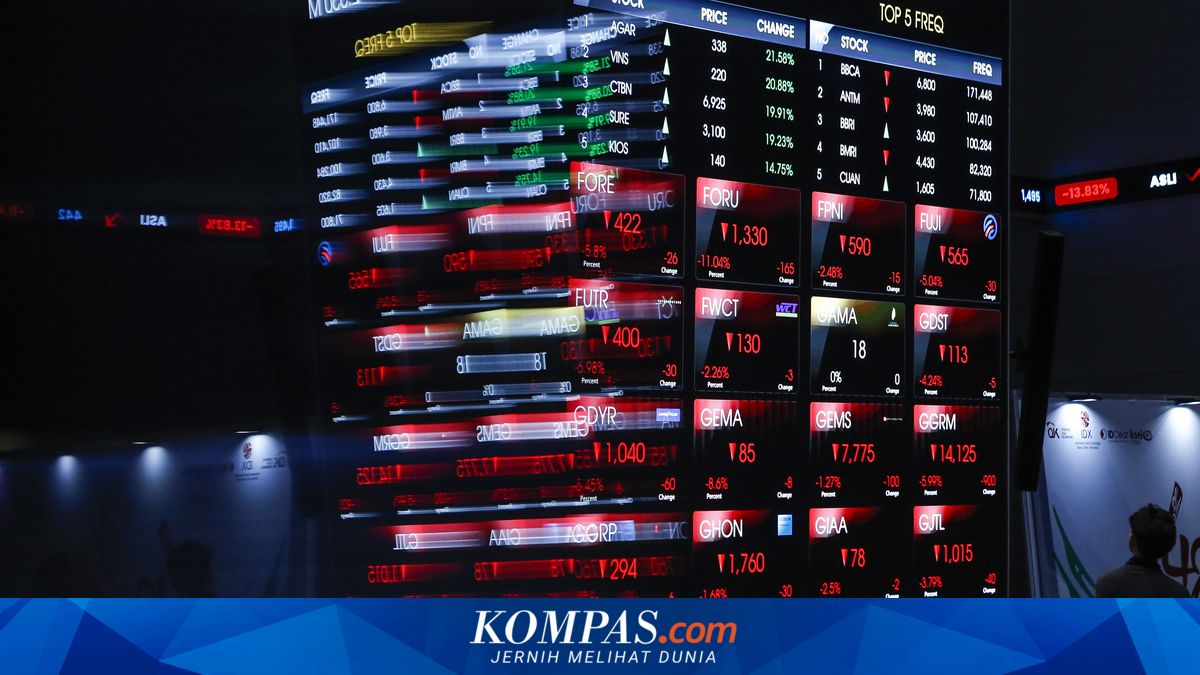
JAKARTA – The Jakarta Composite Index (IHSG) plummeted at the opening of trading on the Indonesia Stock Exchange (BEI) on Monday, 9 March 2026. Based on trading data at 09.08 WIB, the IHSG fell 374.951 points or 4.94 per cent to 7,210.736 points.
The IHSG decline occurred across all sectoral indices. The deepest losses were recorded in the raw materials sector, which plunged 8.55 per cent.
Weakness also affected the infrastructure, non-staple consumer goods, energy, and industrial sectors.
Other declining sectors included property and real estate, staple consumer goods, transport and logistics, technology, healthcare, and finance.
PT Barito Pacific Tbk (BRPT) fell 12.86 per cent, PT Merdeka Copper Gold Tbk (MDKA) declined 11.78 per cent, and PT Bumi Resources Tbk (BUMI) weakened 11.3 per cent.
On the other hand, only a few stocks recorded gains. PT Medco Energy International Tbk (MEDC) rose 1.7 per cent, PT Indo Tambangraya Megah Tbk (ITMG) strengthened 0.46 per cent, and PT AKR Corporindo Tbk (AKRA) advanced 0.4 per cent.
David Kurniawan, Equity Analyst at PT Indo Premier Sekuritas (IPOT), stated that pressure on the IHSG was driven by a combination of global and domestic sentiment that influenced investor risk perception towards the Indonesian market.
Kurniawan said that this shift in outlook signalled that the global market was beginning to pay closer attention to Indonesia’s fiscal discipline and the direction of the government’s budgetary policies.
“This change signals that the global market is beginning to scrutinise more closely Indonesia’s fiscal discipline and the direction of government budgetary policy,” Kurniawan said in a statement on Monday.
Additionally, rising geopolitical tensions in the Middle East region also weighed on market sentiment.
These conditions prompted global investors to adopt a more defensive stance or risk-off approach, characterised by a tendency to reduce exposure to assets deemed riskier.
From the domestic perspective, the market also highlighted increasing concerns about fiscal policy risk or “fiscal policy at risk”.