
Jabodetabek Transport Integration: Towards an Integrated Agglomeration Governance Framework
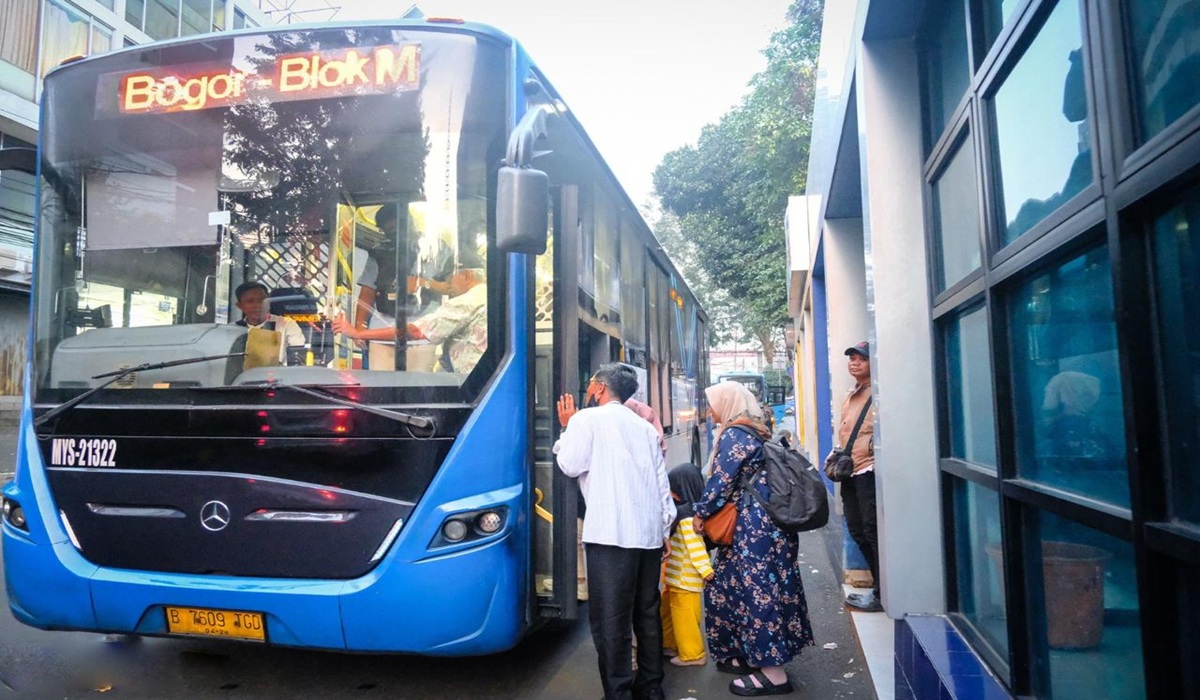
Jabodetabek is currently facing massive mobility challenges, with more than 4.4 million commuter movements recorded daily. Of this number, around 1.5 million journeys originate from the Bodetabek area (Bogor, Depok, Tangerang, and Bekasi) to Jakarta. Yet the scale of these movements is not matched by a coordinated management system.
To date, cross-regional transport services are still managed separately by various institutions with different authorities. This fragmentation creates urgency for a comprehensive policy that can cross administrative and sectoral boundaries.
In response, the Institute for Transportation and Development Policy (ITDP) Indonesia, together with Yayasan Visi Indonesia Raya Emisi Nol Bersih (ViriyaENB), held a Focus Group Discussion titled ‘Towards an Integrated Transport Institution in Jabodetabek’ on 13 May 2026 in Jakarta. The forum is part of the Comprehensive Low-Emission Action for Resilient Transport in Jabodetabek (CLEAR Jabodetabek) project.
Taufiq Hidayat Putra, Director of Partnership and Infrastructure Development Integration at the Ministry of National Development Planning/National Development Planning Agency (Kementerian PPN/Bappenas), emphasised that service integration and governance are tangible needs for agglomeration areas. He highlighted the strategic role of Jakarta’s Master Plan for the Development of Agglomeration Areas (RIPKA), which is being prepared.
‘RIPKA Jakarta is expected to synchronise cross-border planning across regions and sectors so that more connected and higher-quality transport services can truly be realised on the ground,’ said Taufiq.
The following is a brief data snapshot on mobility burden and transport conditions in Jabodetabek:
The DKI Jakarta Provincial Government states that institutional integration is no longer a choice but a necessity. Acting Head of the DKI Jakarta Province Department of Transportation, Ujang Harmawan, representing the Assistant for Economy and Finance to the Provincial Secretary, Suharini Eliawati, asserted that residents’ mobility can no longer be constrained by administrative boundaries.
‘Institutional integration of transport must not only be a coordination forum, but must be able to accelerate cross-border problem solving, reduce emissions, and improve service quality for the public,’ Ujang stressed.
Echoing this, ITDP Southeast Asia Director Gonggomtua Sitanggang explained that the organisation is committed to delivering agglomeration-scale transport modelling based on data. This modelling is prepared as a contribution ahead of the 500-year anniversary of Jakarta next year.
In the discussion involving more than 60 stakeholders, recommendations emerged to form a service governance entity that transcends administrative borders. The entity would not replace existing operators but would act as an integration hub ensuring legal clarity and service standards.
One strategic solution proposed is the development of an account-based ticketing system. The system is seen as a data foundation for calculating fiscal contributions and subsidies more transparently and accountably across regions.
This step is expected to achieve a fair distribution of fiscal burden, not only based on route length but also by considering the economic benefits experienced by each Jabodetabek area.