
Jabodetabek Tolls Gripped by Congestion: What Is the Government's Solution?
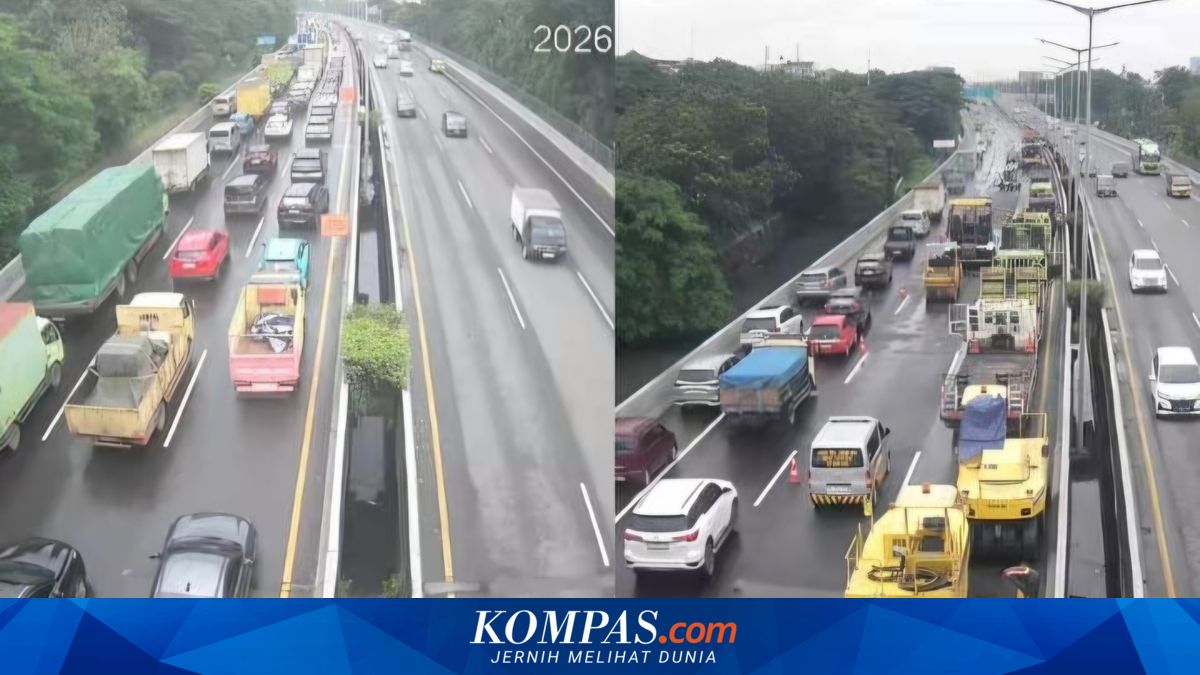
Jakarta — The toll road network in the Jabodetabek megapolitan region is currently regarded as an irreplaceable artery of the national economy, stretching 533.84 kilometres. However, latest data from March 2026 reveals that the expansion of toll roads no longer correlates linearly with reduced congestion.
Instead, the region finds itself trapped in a “vicious cycle” where vehicle volumes continually exceed road capacity, creating stagnation that triggers massive economic and social losses. The core issue is no longer simply about adding new toll sections, but rather how to manage user behaviour, restructure the tariff system, and discipline logistics transport, which has become a significant public safety concern.
Academics from ITSB, Henry Armijaya and LB Budi Prasetyo, have highlighted a strategic issue often overlooked: toll tariff disparities. Currently, traffic patterns in Jabodetabek remain highly centralised towards Jakarta, with peak loads concentrated in East Jakarta (28,500 movements) and West Jakarta (27,000 movements) daily.
This traffic imbalance is compounded by stark differences in per-kilometre tariffs across toll sections. Consequently, drivers tend to choose routes with the lowest tariffs, even when this causes congestion on specific sections and ignores newer toll routes that are more efficient in distance but costlier. “We need regulatory intervention to develop area and time-based tariffs through dynamic pricing. Without this, road construction will merely be a superficial solution,” Henry emphasised.
On the regulatory side, the Directorate General of Highway Development (Ditjen Bina Marga) has begun tightening the Minimum Service Standard (SPM) instrument. Under Government Regulation (PP) Number 23 of 2024, compliance with SPM is no longer mere formality but an absolute requirement for toll road operators (BUJT) to apply for periodic tariff adjustments. Oversight now encompasses technical road friction (skid resistance), surface smoothness (International Roughness Index), and the elimination of potholes.
Dedy Gunawan, Director of Expressways at Ditjen Bina Marga, emphasised that any quality shortfall must be promptly addressed to prevent service degradation. However, the greatest challenge remains safety.