
Jabodetabek Property Market Enters Phase of Sustainable Growth in Early 2026
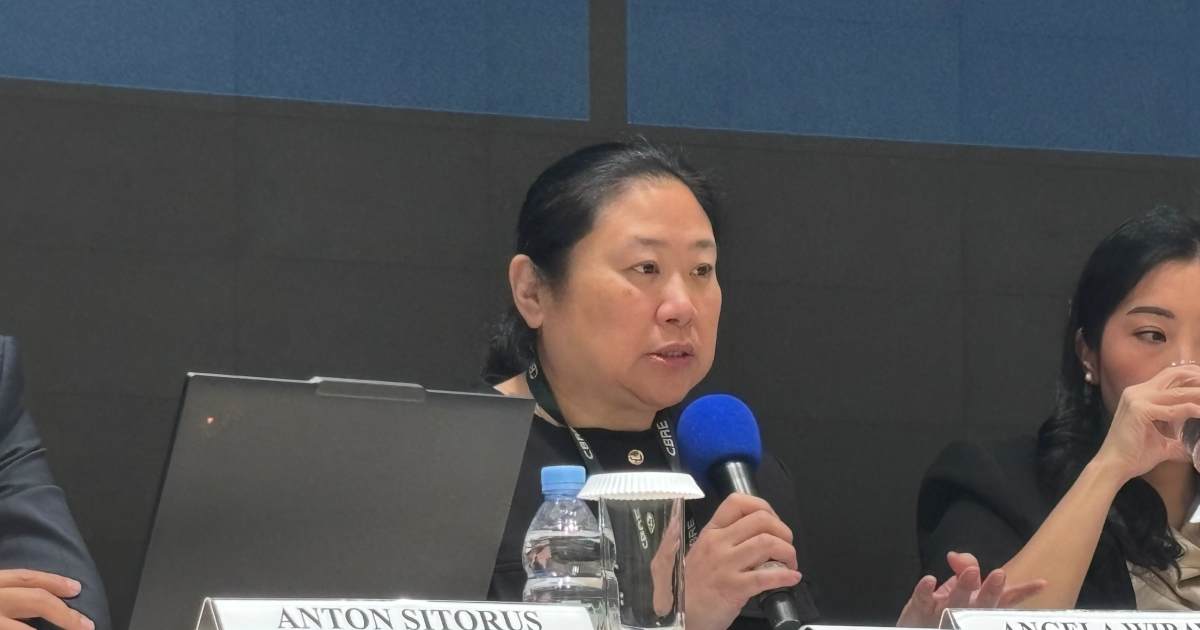
JAKARTA - The Jabodetabek property market in the first quarter of 2026 demonstrates continued recovery and is beginning to enter a phase of more sustainable growth. This is reflected in the improved quality of demand across major sectors, supported by stable macroeconomic conditions and more controlled new supply.
Managing Director of CBRE Advisory Indonesia, Angela Wibawa, stated that the current property market recovery is considered healthier than previous cycles. “The property market is no longer dominated by speculative developments but is more driven by real demand from tenants (occupiers) and end-users,” she said during a media briefing in Jakarta on Wednesday (6/5/2026).
According to Angela, this situation creates a more predictable market, allowing business players, both tenants and investors, to make long-term decisions with greater confidence.
From a macroeconomic perspective, Head of Research & Consulting at CBRE Indonesia, Anton Sitorus, conveyed that Indonesia’s stable economic growth around 5% serves as the main foundation for the property market. In the first quarter of 2026, realisations of domestic investment (PMDN) and foreign investment (PMA) reached approximately Rp500 trillion, dominated by downstream industry, services, and mining sectors.
“The current growth is driven by real absorption, not speculation, thus reducing the risk of losses and supporting sustainable returns,” Anton explained.
In the office sector, he continued, market performance shows improvement. For the central business district (CBD) in Jakarta, office space absorption reached around 21,300 square metres (m²) with occupancy rates rising to 76.1%. Demand is dominated by Premium Grade and Grade A buildings, driven by tenant relocations and space efficiency strategies.
Meanwhile, in non-CBD areas, additional supply of around 56,000 m² from one new project in Pantai Indah Kapuk (PIK) is colouring the market. Absorption rates are recorded at around 22,800 m² with occupancy reaching 72.9%. Rental prices are beginning to show an upward trend, especially in buildings with strategic locations and high quality.
On the retail side, shopping centre occupancy rates have increased to around 86% with net demand reaching 15,600 m². This growth is driven by expansions of food and beverage (F&B), lifestyle, and entertainment tenants.
High-end shopping centres, Anton said, recorded the best performance with occupancy above 95%, while mid-to-upper-class malls show stable improvements. “Managers who innovate in concepts and tenant mixes based on experiences are deemed able to increase visitor traffic,” he stated.
In the industrial and logistics sector, land absorption reached around 86 hectares (ha) with an occupancy rate of 90.8%. Activities in Jakarta’s eastern corridor as well as the growth of data centre construction are the main drivers of demand.
Head of Capital Markets & Industrial Services at CBRE Indonesia, Ivana Susilo, mentioned that land limitations in established areas like Cikarang are also driving price increases. Meanwhile, modern logistics centres record high occupancy rates of up to around 98%.
“Strong demand comes from e-commerce, FMCG, manufacturing, and cold chain sectors,” Ivana said.
In conclusion, CBRE assesses that the Jakarta property market is currently in an important transitional period towards a more mature and balanced condition.
“The property market is now more mature and balanced. Growth rates may be more moderate, but more sustainable,” Angela concluded.