
Jababeka's Cikarang Industrial Area Becomes Indonesia's First Industrial Tourism City
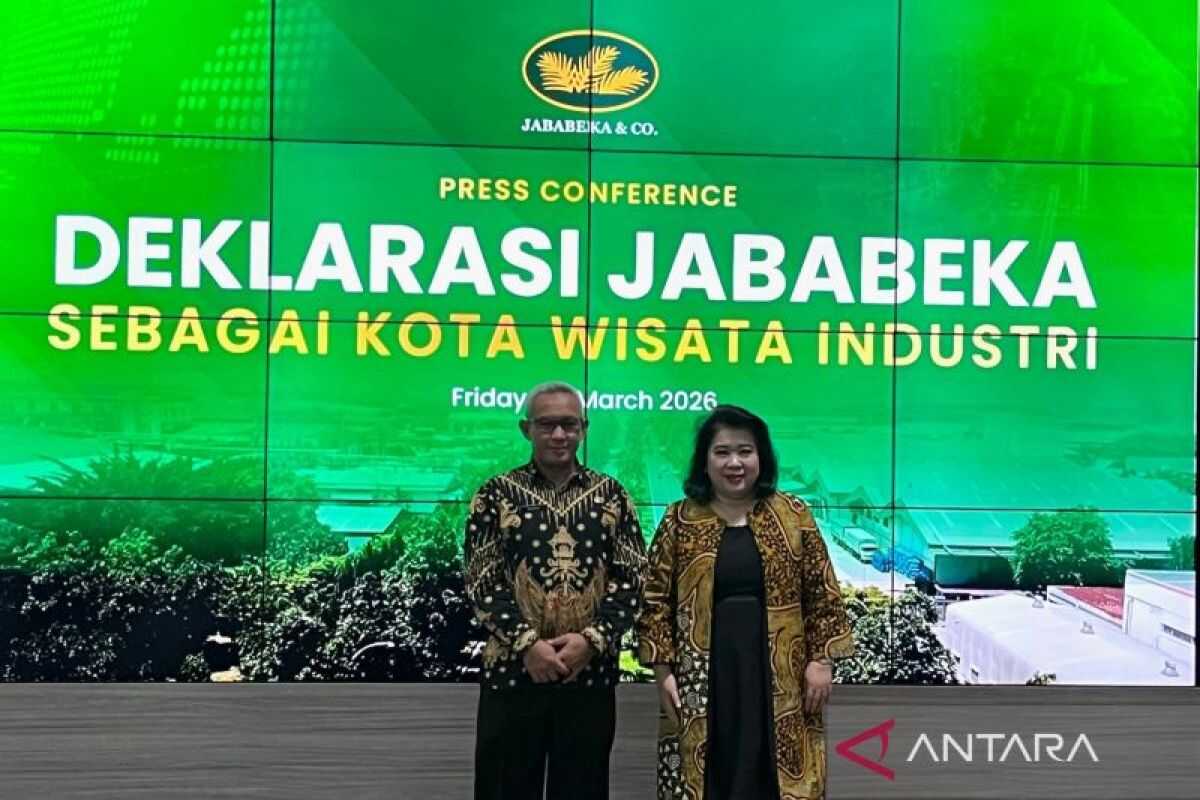
Within the area, everything is integrated—not only as industry or manufacturing, but also as a place to live, and as an industrial tourism city. Jakarta (ANTARA) - PT Jababeka Tbk, a property and industrial estate developer, has declared the Jababeka industrial estate in Cikarang, Bekasi, West Java, as an industrial tourism city—an concept that combines manufacturing activity with educational tourism within a single integrated estate ecosystem, the first of its kind in Indonesia.
Ivonne Aggraini, President Director of PT Grahabuana Cikarang, who develops Jababeka, said at a press conference in Jakarta on Friday that the concept arose from the huge potential of the area, which has not only functioned as a manufacturing hub but also as a residential area, education, and recreation facilities.
“Because essentially in Cikarang there is 5,600 hectares of land and that is the Jababeka industrial area. But inside our area everything is integrated—not only as industry, as manufacturing, but also as a place to live, as well as an industrial tourism city,” Ivonne said.
She stated that the declaration marks a moment to strengthen Jababeka’s identity as a living and dynamic industrial area, not merely a production centre.
“Because there are many tenants as well as residents in the area. There are already 2,000 factories, both local and multinational. And 1.2 million people live in Cikarang,” she said.
She added that the area is also a workplace for around 10,000 foreign workers from various countries such as Japan, Korea, China, Singapore, Malaysia, and Europe.
Ivonne explained that the industrial tourism concept aims to offer a space that also provides recreation and social interaction for the community.
In addition to being a tourist destination, the area is also designed as a learning space for students and the public to understand industrial production processes directly.
As part of developing industrial tourism, Jababeka also plans to build the Jababeka Factory Outlet to showcase various products and production processes from the factories operating in the area.
She gave examples of potential industrial education that can be developed, such as student visits to food or manufacturing plants to observe production processes firsthand.
Going forward, Jababeka also plans to hold an annual industrial tourism festival involving tenants from various countries, showcasing their cultures and creativity.
Meanwhile, Andri Julianto, Acting Head of Bekasi Regency’s Tourism Office, described the declaration as an important moment for transforming an industrial area into an educational tourism destination.
He explained that the industrial tourism concept allows the public, students, and tourists to see directly the production processes and technological innovations across companies.
Andri added that Bekasi Regency has great potential to develop industrial tourism because it has 11 industrial estates, including around 2,000 companies in Jababeka.
He said that developing an industrial tourism city could also drive regional economic growth, from job creation to increased original regional revenue.
“We are confident that the development of an industrial tourism city will have a significant impact,” he said.
He emphasised that transforming an industrial area into an educational tourism destination is hoped to make the West Java region not only a production hub but also a space for learning, inspiration, and collaboration for the community.