
Jababeka Declares Itself an Industrial Tourism City, Strategy to Tackle Deindustrialisation in Indonesia
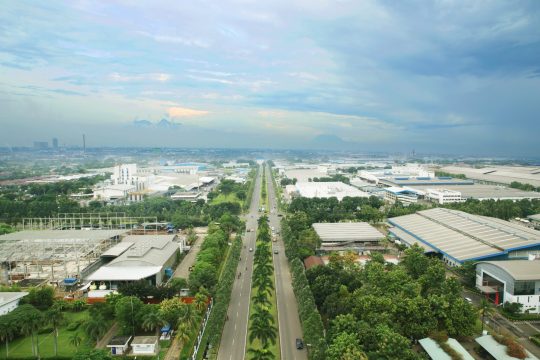
JAKARTA – Indonesia faces an early deindustrialisation phenomenon, a condition when the manufacturing sector’s contribution declines before industrialisation reaches its optimal phase. This presents a serious challenge to long-term economic growth sustainability as it potentially weakens industrial competitiveness and slows structural transformation of the national economy. In response to this challenge, Jababeka City in Cikarang, developed by PT Jababeka Tbk, has taken strategic and innovative steps by declaring itself an industrial tourism city.
This initiative is designed to integrate the strengths of the manufacturing sector with industry-based tourism potential, so the industrial area is not only a production hub but also a space for education, exploration, and economic promotion.
As a fully integrated independent city, the area has evolved into a global-scale hub of housing, industry, business, and education with a population of about 1.2 million and an international community of more than 10,000 expatriates. The diversity of backgrounds strengthens the city’s character as a dynamic global ecosystem while supporting productive cross-cultural interactions for economic growth and investment.
With more than 2,000 national and multinational companies, the area offers a unique and educational tourism experience. The public can shop directly from factories, students see production processes in real time, while investors can directly understand business potential and the dynamic industrial ecosystem.
“We see that the future of industrial areas is not only as production centres, but also as spaces for learning, collaboration, and innovation. The development of an industrial tourism city is our commitment to strengthening the revitalisation of manufacturing while creating sustainable added economic value for the community, businesspeople, and global investors,” said Ivonne Anggraini, President Director of PT Graha Buana Cikarang, in a written statement.
She also emphasised that this approach expands the fundamental functions of industry.
“The transformation of an industrial area into an industrial tourism destination is a strategic step to broaden industry functions from mere production to a centre of experience and knowledge. With this approach, we aim to create sustainable added value while strengthening the national industry’s competitiveness amid global economic change,” she said.
This transformation is also realised through collaboration between global industry, culture tourism, and empowerment of local SMEs. The synergy creates an inclusive, dynamic, and competitive economic ecosystem, while expanding economic impact for the community and strengthening interactions between the industrial sector and social-cultural life.
“We believe that a strong industry must grow together with the surrounding community. Through integrating industry, tourism, and empowerment of SMEs, we strive to create more inclusive economic circulation, open up new business opportunities, and deliver tangible benefits to local communities,” Ivonne asserted.
Support for this initiative also came from the Bekasi Regency Tourism Office.
“We see the Jababeka declaration as an industrial tourism city as a progressive step aligned with diversifying regional tourism destinations. The industrial tourism concept has great potential to broaden the tourism segment, particularly educational and business tourism, and to spur more evenly distributed local economic growth,” said Acting Head of Bekasi Regency Tourism Office, Andri Julianto.
As a concrete manifestation of this vision, PT Jababeka Tbk has hosted the Jababeka Harmony Festival 2026, held 6–8 March 2026, as a space for collaboration bringing together the global industrial ecosystem, culture tourism, and empowerment of more than 100 local SMEs. The festival is a special moment that fuses Cap Go Meh and the Ramadhan Festival on one stage, representing harmonious cultural acculturation as well as strengthening tenant involvement in building an inclusive, dynamic, and highly competitive economic ecosystem.
In addition, the festival features a series of charitable activities involving Jababeka, tenants, and the community as a tangible expression of social concern and shared responsibility for the surrounding environment.
“Jababeka Harmony Festival 2026 is a tangible manifestation of how industry, culture, and society can meet in one collaborative space. The festival reflects the spirit of global harmony that characterises the area, while showing that economic growth can go hand in hand with cultural and social diversity,” he said.
Jababeka’s steps do not stop at the festival; going forward, Jababeka is preparing strategic steps including the development of Jababeka Factory Outlet or JFO, designed as one of the industrial tourism icons in the area. JFO will be a showcase of industry, a space where the public can directly observe the manufacturing quality of products from Jababeka’s tenants. Visitors can not only obtain products at competitive factory-direct prices but also understand the stories behind the production processes, innovations, and industry quality standards present in the area.
“A stable, collaborative ecosystem open to cultural diversity is a key factor in building investor confidence. The sustainable development of the industrial tourism city will not only strengthen the area’s economic foundation but also demonstrate our readiness to become a strategic partner for long-term investment, as well as a model for innovative solutions in facing Indonesia’s early deindustrialisation challenge,” he closed.