
IWIP develops green energy to support ESG in nickel industry
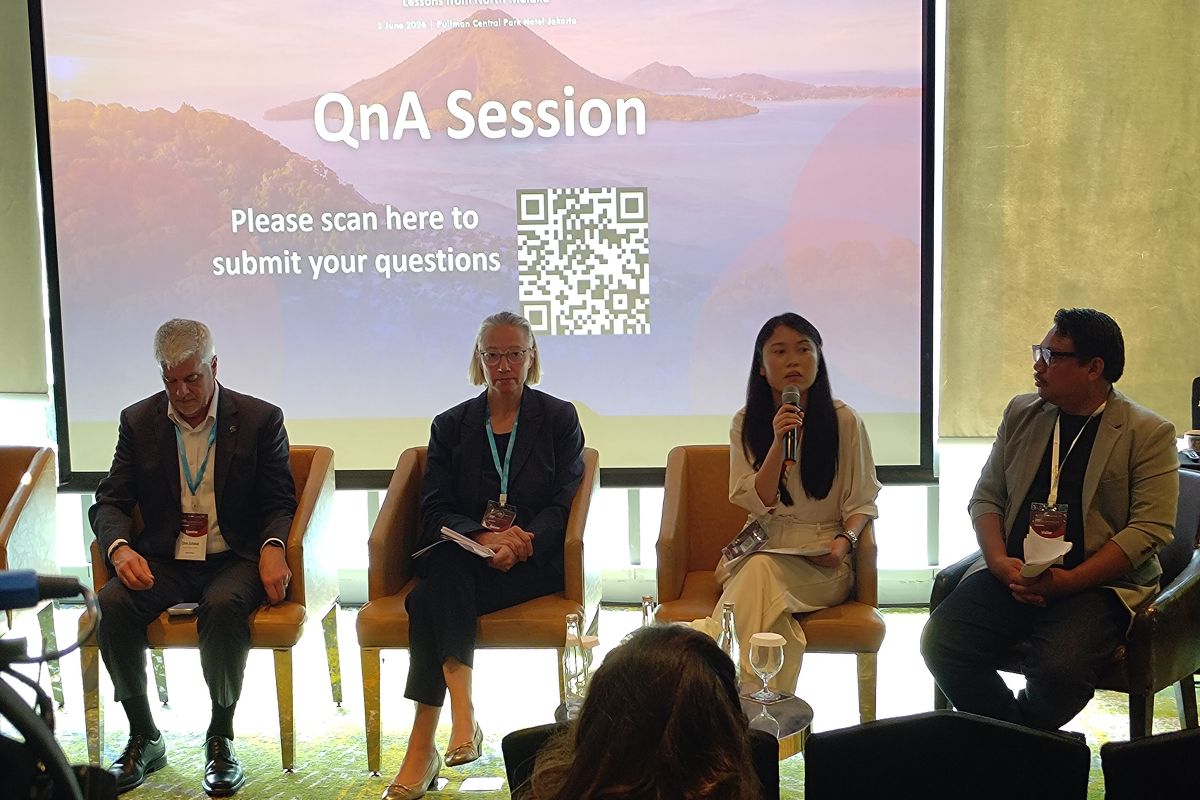
PT Indonesia Weda Bay Industrial Park (IWIP) is developing the use of green energy as part of its efforts to strengthen Environmental, Social, and Governance (ESG) aspects within the nickel downstream industry.
IWIP ESG Superintendent Xiaolin Wang stated that this move comes amid increasing global market attention towards the sustainability of the supply chains for electric vehicle (EV) batteries and critical minerals. “IWIP has begun its journey towards green energy development,” Xialin said during a discussion titled “Responsible Downstreaming at Scale: Lessons from North Maluku” in Jakarta on Wednesday.
He explained that IWIP is currently developing wind and solar power plants as part of its clean energy initiatives within the industrial estate. For wind power, Xiaolin noted that IWIP plans for a capacity of approximately 4 megawatts. He added that two to three wind turbine units have begun construction, with some already integrated into the industrial estate’s power grid.
Furthermore, IWIP is developing solar power through the utilisation of rooftop solar panels across the industrial park. Xiaolin mentioned that the use of photovoltaic panels is still in the early stages of development within the IWIP area.
In addition to wind and solar energy, the company has begun utilising domestic waste to generate electricity through waste-to-energy facilities. He noted that one waste-based power unit has already obtained the necessary government licences and permits to operate.
This green energy development is also part of an Eco-Industrial Park project conducted in collaboration with the United Nations Industrial Development Organization (UNIDO). “We want to be part of a responsible nickel supply chain,” said Xiaolin.
According to Xiaolin, the project is aimed at enhancing energy efficiency, environmental management, and the long-term sustainability of the industrial estate. IWIP, located in Central Halmahera, North Maluku, is one of Indonesia’s national nickel downstream hubs, featuring an integrated production chain ranging from mining to the processing of raw materials for EV batteries and stainless steel. The industrial estate encompasses Rotary Kiln Electric Furnace (RKEF) smelters, High Pressure Acid Leach (HPAL) facilities, Nickel Pig Iron (NPI), Mixed Hydroxide Precipitate (MHP), nickel sulphate, and electrolytic nickel.
Based on United States Geological Survey (USGS) data, Indonesia’s nickel production is projected to reach approximately 2.6 million tonnes by 2025, accounting for about 66.7 per cent of global production, making Indonesia the world’s largest nickel producer. As the demand for EV raw materials rises, the global nickel industry faces increasing pressure to reduce emissions and adopt more environmentally friendly energy sources.
During the forum, Xiaolin noted that industrial tenants within IWIP serve various markets and end-users, including the stainless steel and EV battery industries across multiple countries. He emphasised that strengthening ESG within industrial estates cannot be achieved instantly, as it requires a process of continuous improvement and the involvement of various stakeholders. “ESG management is a process of continuous improvement,” he concluded.