
IWD 2026 Celebrations: KPPPA Highlights 12 Gender Equality Issues
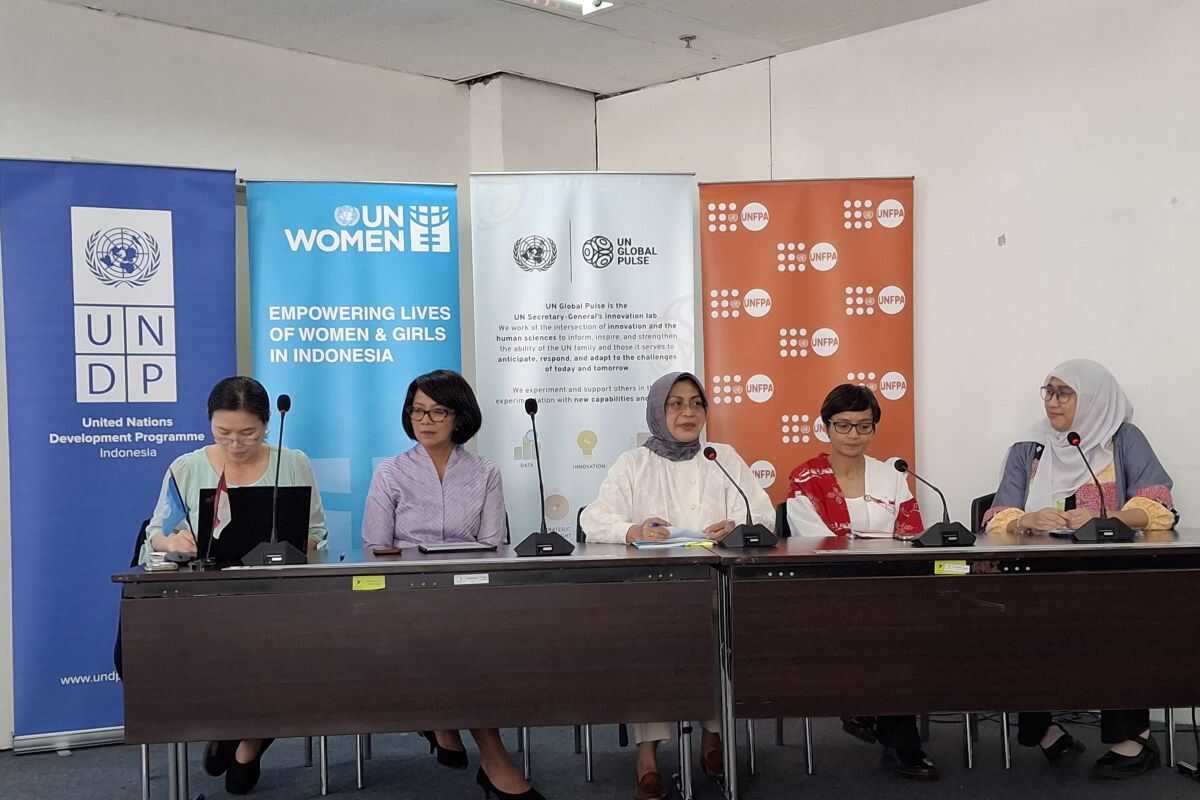
Jakarta (ANTARA) — The Ministry of Women’s Empowerment and Child Protection (KPPPA) of the Republic of Indonesia has highlighted twelve key issues for realising gender equality in the run-up to International Women’s Day (IWD) 2026, which will be celebrated on 8 March.
Thus, there are twelve critical areas that, to date, have attracted our collective attention regarding how we can realise gender equality itself, said Dr. Amurwani Dwi Lestariningsih, Deputy for Gender Equality at the Ministry of PPPA, at the IWD 2026 event with the theme “Rights, Justice, Action for All Women and Girls” held at UN Global Pulse, Jakarta, on Wednesday.
The Ministry of PPPA continues to be committed to addressing the gender disparities experienced by women and girls in Indonesia. In its efforts to realise gender equality, the ministry is committed to addressing the imbalance between women and men by ensuring that women gain access, participation, control and benefits equal to men in every sector of development.
“This is an absolute mandate that we will continue to oversee,” she added.
In realising this, Amurwani cited the twelve critical areas that to date have been the focus of the Ministry of PPPA. Among these areas are poverty alleviation, education and training, women’s health, elimination of violence against women, and increasing women’s participation in decision-making structures.
The twelve areas serve as a reminder that gender inequality is a multidimensional issue. Consequently, solutions cannot be pursued in isolation but must be integrated into the entire planning of development systems.
“This underscores how crucial gender mainstreaming is in national development,” she said.
To achieve this, the Indonesian government employs a layered approach, spanning the fulfilment of rights and protection, empowerment, and the provision of basic services. In the National Medium-Term Development Plan 2025-2029 (RPJMN 2025-2029), gender equality issues are not merely positioned as ancillary programmes but as a central focus of development.
Specifically, in the first pillar of Asta Cita related to strengthening democracy and human rights (HAM), Amurwani explained that the state seeks to ensure that every policy is humane, inclusive, and gender-responsive, while strengthening the rule of law to protect women and children in Indonesia.
That commitment is stated in the fourth pillar of Asta Cita, which focuses on human resources development (SDM), where gender equality and the strengthening of women’s roles are expressly mentioned.
Thus, the Government of Indonesia is committed, in terms of roles, functions, and institutions related to the empowerment of women and protection of children.