
Iwakum Values Constitutional Court Ruling Strengthening Certainty of Journalistic Work and Preventing Press Criminalisation
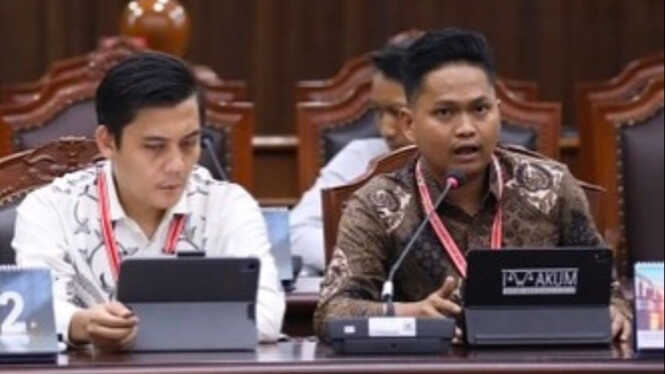
Jakarta – The Constitutional Court (MK) has issued an important decision regarding the constitutional review of Article 21 of the Anti-Corruption Law (UU Tipikor). This ruling has received appreciation from the Indonesian Journalists Association (Iwakum), as it is seen as providing legal certainty whilst strengthening protections for journalistic work in Indonesia.
In its ruling, the Constitutional Court affirmed that the dissemination of information, media reporting, investigative journalism, public discussion, and academic opinion cannot be categorised as obstruction of justice or impeding investigations. This clarification represents welcome relief for journalists and academics who have long been concerned about the overly broad interpretation of this provision.
Iwakum Chairman Irfan Kamil described the ruling as a strategic measure in safeguarding democratic space.
“This Constitutional Court decision is extremely important because it draws a clear line between actions that genuinely obstruct legal proceedings and legitimate journalistic activities, public discussion, and academic opinion. Press work must not be perceived as obstruction of justice,” Kamil stated in a written statement on Monday, 2 March 2026.
According to him, the obstruction of justice provision has frequently been interpreted too broadly. This situation has the potential to drag journalists, academics, or civil society into criminal proceedings simply for disseminating factual information in the public interest.
“The Constitutional Court has sent a strong message that law enforcement cannot be carried out by silencing public discourse. Information, criticism, and investigation are actually part of democratic oversight,” he added.
Similar sentiments were expressed by Iwakum Secretary-General Ponco Sulaksono. He hopes that law enforcement officials will use the Constitutional Court ruling as a guide in handling cases, particularly corruption cases that attract significant public scrutiny.
“We hope that this Constitutional Court decision is understood and applied consistently by investigators, prosecutors, and judges. There should be no more attempts to bring journalistic work or academic discourse into criminal proceedings under the pretext of obstructing the legal process,” Ponco stated.
He added that the decision not only strengthens press freedom but also supports transparency in anti-corruption efforts.
“Investigative journalism and public information disclosure actually help ensure that legal proceedings run objectively and with integrity,” Ponco said.