
IvorySales Route from Tesso Nilo Ends in Solo
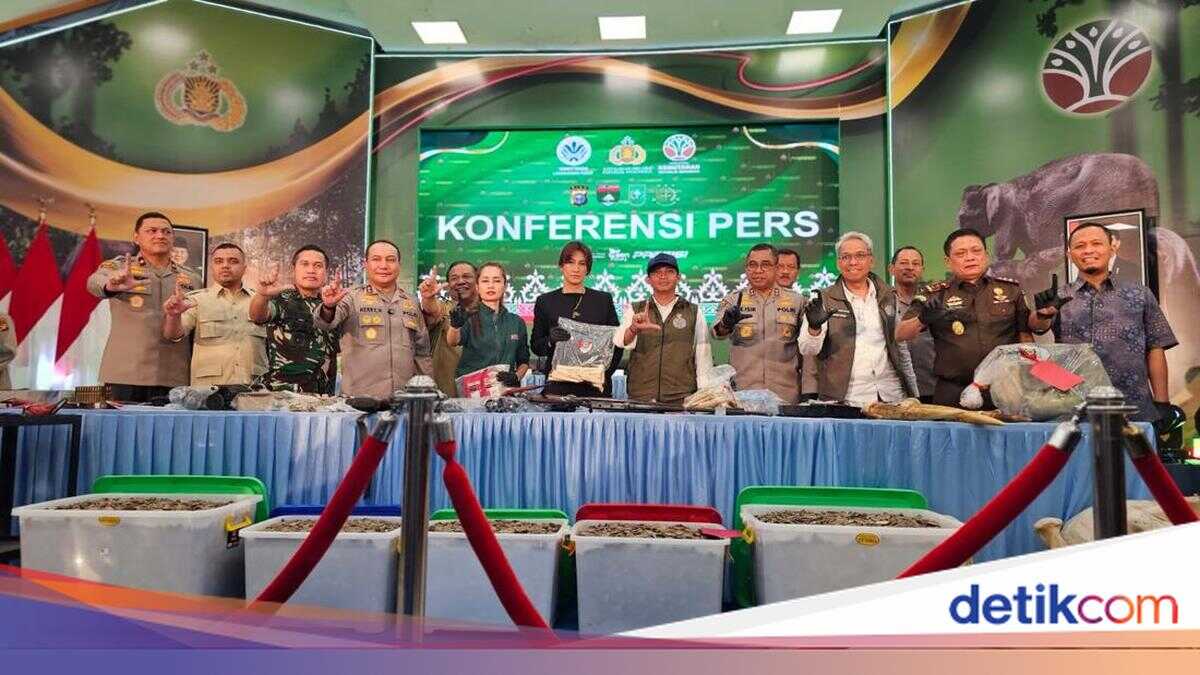
The discovery of a Sumatran elephant carcass in Tesso Nilo National Park, Ukui District, Pelalawan Regency, has uncovered the darker side of elephant ivory trade. An investigation by the Riau Regional Police shows a long-running ivory trafficking route from Sumatra forests that ends in Solo, Central Java.
Riau Police Chief Inspector General Herry Heryawan stressed that illegal elephant hunting is an extraordinary crime. ‘I ask the State Attorney to press charges against the perpetrators to the maximum, because this is an ongoing crime,’ he told reporters on Wednesday (4 March 2026). He added that crimes against protected wildlife threaten ecosystems and that authorities will crack down on any crime against protected wildlife without compromise. ‘We must protect Riau’s forests, protect wildlife, and uphold the law without compromise,’ he insisted.
Illegal Elephant Hunting
Meanwhile, Director of Criminal Investigation and General Crimes for the Riau Regional Police, Kombes Ade Kuncoro, explained that the male elephant, about 40 years old, was believed to have died about two weeks before it was found on 2 February 2026. Necropsy results showed the elephant died from gunshot wounds. ‘The wound pattern and tusk loss indicate illegal hunting,’ said Kombes Ade Kuncoro.
A joint team comprising the Ditreskrimsus (Criminal Investigation), Ditreskrimum (General Crimes) of the Riau Regional Police, and Satreskrim of Pelalawan Police conducted scientific crime investigation by combining scene processing, necropsy, digital forensics analysis, GPS collar data, and ballistic testing at a forensic laboratory. The team finally obtained information about the suspects.
From the investigation, the Riau Police arrested 15 suspects at several locations with various roles, including elephant shooters, financiers, tusk traders, and even a cigarette-pipe seller. Three other suspects were listed as Wanted Persons (DPO).
The investigation revealed the ivory trade route from Tesso Nilo to Solo. The route unfolded as follows, according to Kombes Ade Kuncoro:
From Riau to Padang
The Sumatra elephant was killed by suspects with the initials AN (DPO) and his associate RA on 25 January 2026. The elephant was shot twice in the head. After the elephant died, the two suspects cut off part of the elephant’s head with an axe and knife. This activity continued until approximately 21:00 WIB.
‘At around 21:00, suspect RA contacted FA, the financier, and asked him to collect the ivory weighing 7.6 kilograms,’ said Kombes Ade Kuncoro.
Two days later, on 27 January 2026, suspect FA collected the ivory from Kecamatan Pangkalan Lesung, Pelalawan Regency. There he paid Rp 30 million to suspect RA. ‘At the request of HY, suspect FA then cut the ivory into four pieces in HY’s yard,’ he added. FA then sent the four ivory pieces to suspect HY using a Pekanbaru-based travel service. FA earned Rp 76 million.
From Padang to Jakarta and Surabaya
The ivory package arrived in Padang, West Sumatra on 29 January 2026. It was offered to suspect AR at Rp 94,875,000 and AB assisted in sending the package by air cargo from Padang airport to Jakarta.
‘On 30 January 2026, after receiving the ivory package, under AR’s instruction TI (a witness) sent the package to AC’s address in Surabaya by railway cargo,’ he said. In Surabaya, the ivory was documented before being sold back to ME in Jakarta for Rp 117,645,000 in early February 2026.
Illegal downstream in Solo
The ivory’s journey ended in Solo, Central Java. On 6 February 2026, suspect ME took the ivory to Kudus to sell to SA for Rp 125,235,000. From SA, the goods moved to JS in Sukoharjo, then to HA. At the apex, the ivory was handed to RB (DPO) in Solo to be produced into high-value items. Investigations show the ivory was processed into 10 cigarette-pipe pieces.
On 19 February 2026, HA took the finished product and sold 10 ivory cigarette-pipe pieces to JS for Rp 10,700,000 on Jalan Veteran, Solo. Investigations show the intermediaries earned varying profits, with retailers possibly making Rp 200,000 to Rp 500,000 per pipe.