
It's Time for Campuses to Drive Change in Waste Issues
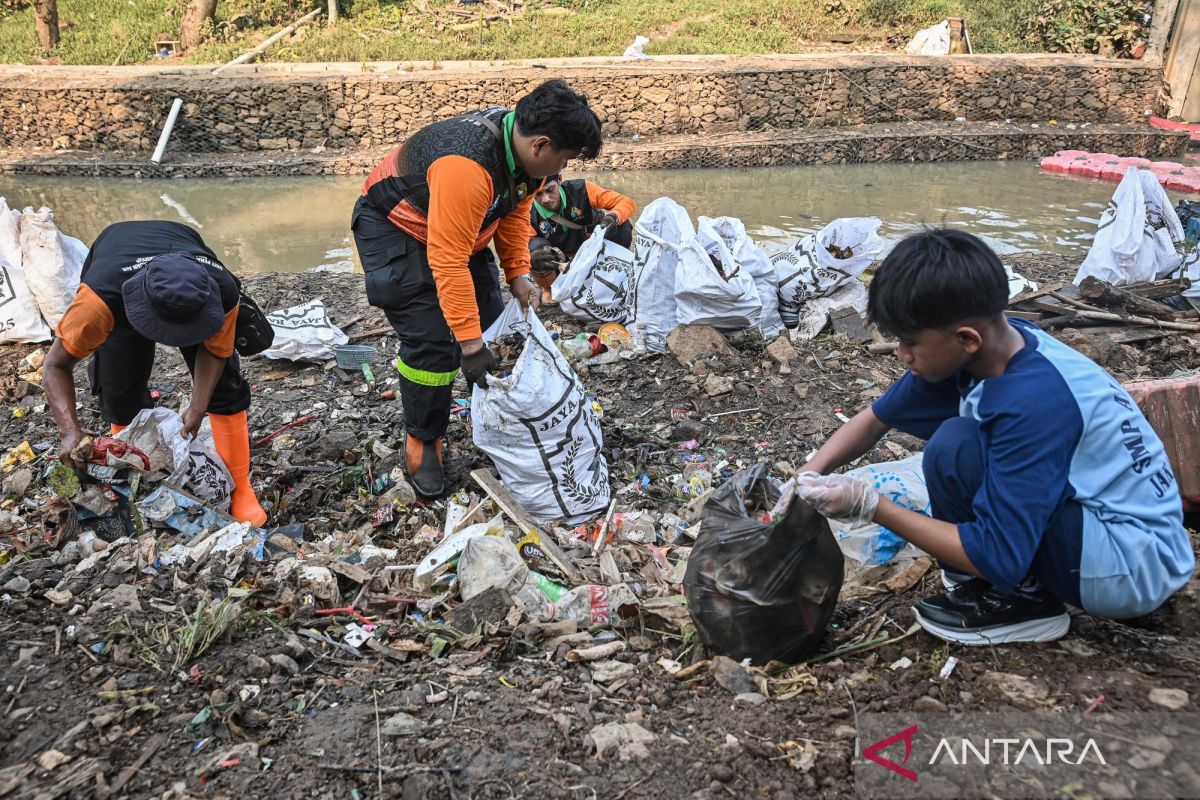
Jakarta (ANTARA) - Indonesia’s waste problem is no longer merely an aesthetic issue but a serious threat to regional ecosystems.
President Prabowo Subianto has called on universities to take action in managing waste across various regions. The President does not want higher education institutions to be trapped in an “ivory tower” of academic theorising while rivers behind campuses are clogged with plastic.
Waste has now become a national intellectual challenge that must be addressed through appropriate science and technology. The waste crisis has even exceeded tolerance limits. Data shows that Indonesia produces 69 million tonnes of waste per year, with nearly 60 per cent unmanaged, polluting the environment.
This collective failure requires total scientific intervention. Such steps must be taken radically through new, more effective methods.
Extreme measures are indeed necessary to save the future of the living environment and the fate of future generations. They must not live surrounded by microplastics and deadly soil pollution.
The capacity of final waste processing sites in major cities is now in a critical condition. The majority still rely on open dumping systems that endanger the health of surrounding communities. The collect-transport-dispose pattern has proven ineffective in facing the explosion of waste in both urban and rural areas.
Therefore, technological breakthroughs are needed that can solve the problem directly at the source. Without such steps, mountains of waste will merely shift from one location to another without real resolution. In fact, waste can be processed into energy or new products with economic value.
ASRI Programme
The President’s instructions on the Aksi Sanitasi dan Resik Indonesia (ASRI) programme represent a structured clean-sweep movement against waste.
This programme is designed to improve regional waste management in a sustainable and integrated manner. However, ASRI without scientific intervention will only become an event for distributing waste carts.
The programme demands intelligent execution so that waste can be transformed into economic potential.
Campuses must become the driving brain for ASRI operations. The government also needs to continue encouraging strategic collaboration with academics in every stage of public policy. Campus interventions can be carried out through the creation of waste processing technology standards, to post-harvest waste management.
To date, several regions have often failed because they purchased expensive technology that eventually turned into scrap metal. High-priced waste processing machines could not be used optimally. Therefore, campuses must be able to design appropriate processing tools that local communities can use independently.
Regions must not end up displaying imported scrap machines due to the lack of affordable spare parts or expert technicians.
Innovation must indeed emerge from campuses, as they understand the anatomy and characteristics of Indonesia’s organic waste. This country needs solutions compatible with local conditions so that heterogeneous household waste mixtures can be separated and processed into useful products.
In addition, more research centres and mobile laboratories are needed that can be transferred to village-level workshops to break the chain of complex problems.
Devi Fitriani, a science and technology processor expert from the University of Indonesia, emphasised the importance of an integrative approach between hardware and digital systems in waste management.
Technology must be able to sort waste automatically with high precision. Without initial sorting accuracy, the recycling process will instead result in energy wastage.
Science must provide efficient technical solutions, keeping operational costs low. This is the real challenge for engineers and researchers on campuses.
Meanwhile, the Minister of Higher Education, Research and Technology, Bryan Yulianto, emphasised the importance of adopting sensor technology and digital data management in the national waste processing ecosystem.
Digitalisation enables real-time monitoring of waste flows from upstream to downstream, without gaps.
Data integration as a basis for waste management will ensure every kilogramme of waste is handled transparently and responsibly. Technology is not a supplementary instrument but the backbone of a modern clean environment management system. With accurate data, the government can make fact-based public policy decisions from field realities.
Campuses play a key role in data validation through in-depth research in every region. To date, many regional policies have been born from guesses without accurate mapping of the types of waste produced by communities.
Academic involvement makes every step in the ASRI programme more precise and scientifically measurable. Whether a region needs an organic fertiliser factory or a plastic recycling industry, all must be decided based on scientific studies so that national infrastructure investments are not misdirected again.
Social Engineering
The waste problem is fundamentally a complex human behaviour issue rooted in each region’s culture. Campuses have instruments for social engineering through thematic Kuliah Kerja Nyata (KKN) programmes spread to remote villages.
Students must become agents of cultural change by assisting residents in sorting waste directly from their kitchens. Young intellectuals have strong moral legitimacy to dismantle bad community habits.
Changing the mentality of littering indiscriminately is far more difficult than simply building the most advanced waste processing facilities in cities.
Waste management budgets in many regencies have so far been spent up to 80 per cent just on transportation. Very little funding remains for processing innovations or field technology research. Therefore, campus involvement must be able to dismantle this wasteful pattern through smart on-site processing strategies.
This system