
ITS Students Win World Championship Defeating MIT, Showcase Highly Advanced Robot
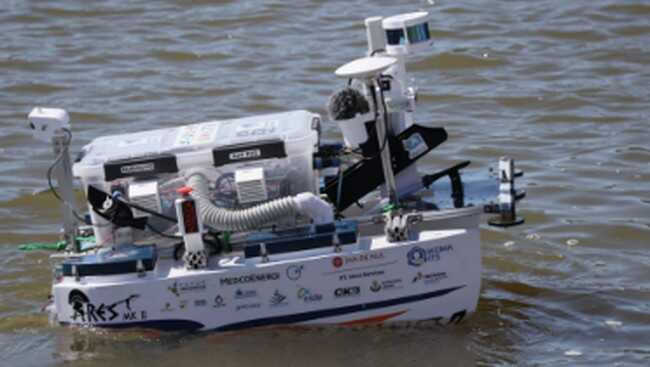
An Indonesian student team has brought honour to the nation on the international stage, securing victory at a prestigious competition held in the United States. The Barunastra team from the Institut Teknologi Sepuluh Nopember (ITS) achieved a remarkable feat at the International RoboBoat Competition (IRC) 2026, held in Florida. The competition represents one of the most competitive races for the development of Autonomous Surface Vehicles (ASV).
ASV refers to unmanned vessels capable of moving and executing missions independently with the support of sensor systems, programming for vessel control, and navigation algorithms.
Barunastra ITS competed against 36 teams from 10 countries and successfully secured all major categories on offer. These included first place in both the Autonomy Challenge category and the Design and Documentation category.
Leading global technology universities participated in the competition, including the Massachusetts Institute of Technology (MIT), Queen’s University, Georgia Institute of Technology, and dozens of other universities from the Americas, Europe, and Asia.
Thanks to this achievement, Barunastra ITS earned the Grand Champion title, becoming the only team to sweep all major categories. Additionally, the team also won the Best Technical Design Report award, recognising the superior quality of the technical report as assessed by the judging panel.
The RoboBoat Competition 2026 tested the capabilities of unmanned vessels in executing missions independently in open waters, including navigation systems, operational performance, and the quality of technical reports compiled by each team.
The Autonomy Challenge category this year featured the theme “Storm Response: Technology in Action for Recovery and Relief”, depicting a simulation of a port after being hit by a disaster. In this category, autonomous vessels were tasked with executing various missions independently, such as identifying affected areas and supporting relief distribution processes. The category involved a series of missions that had to be completed, including:
Evacuation Route & Return: navigating through red-green gates as initial evacuation routes.
Debris Clearance: scanning areas to detect survivors whilst avoiding hazardous objects among the debris.
Emergency Response Sprint: vessels must move quickly in emergency conditions according to directions indicated by visual markers.
Supply Drop: delivering water and logistical aid to target vessels with high precision.
Navigate the Marina: locating safe berthing locations and performing docking procedures according to indicator priorities.
Harbour Alert: responding to sound-based emergency signals requiring the system to halt missions and switch zones independently.
This series of missions tested the vessel’s ability to read situations, make rapid decisions, and maintain stable operation under changing conditions, such as in evacuation and relief distribution scenarios in port areas.
The other major category won by Barunastra ITS was Design and Documentation. This category assessed the entire design and development process of the vessel as reflected in the technical report, from design concept through to test results. The assessment also included the quality of development videos and the team’s official website containing comprehensive project documentation.
The delegation competing consisted of students from Physics Engineering, Electrical Engineering, Telecommunications Engineering, Informatics Engineering, Shipping Systems Engineering, and Shipping Engineering programmes.
The vessel’s development was also supported by team members who contributed from various departments, including Civil Engineering, Computer Engineering, Electrical Automation Engineering, Mechanical Engineering, Maritime Transportation Engineering, and Information Systems. This collaboration across multiple disciplines formed the foundation for the development of the unmanned vessel created jointly by the Barunastra ITS team.