
It's Not in the Head: Crickets' Ears Are Actually Located Here!
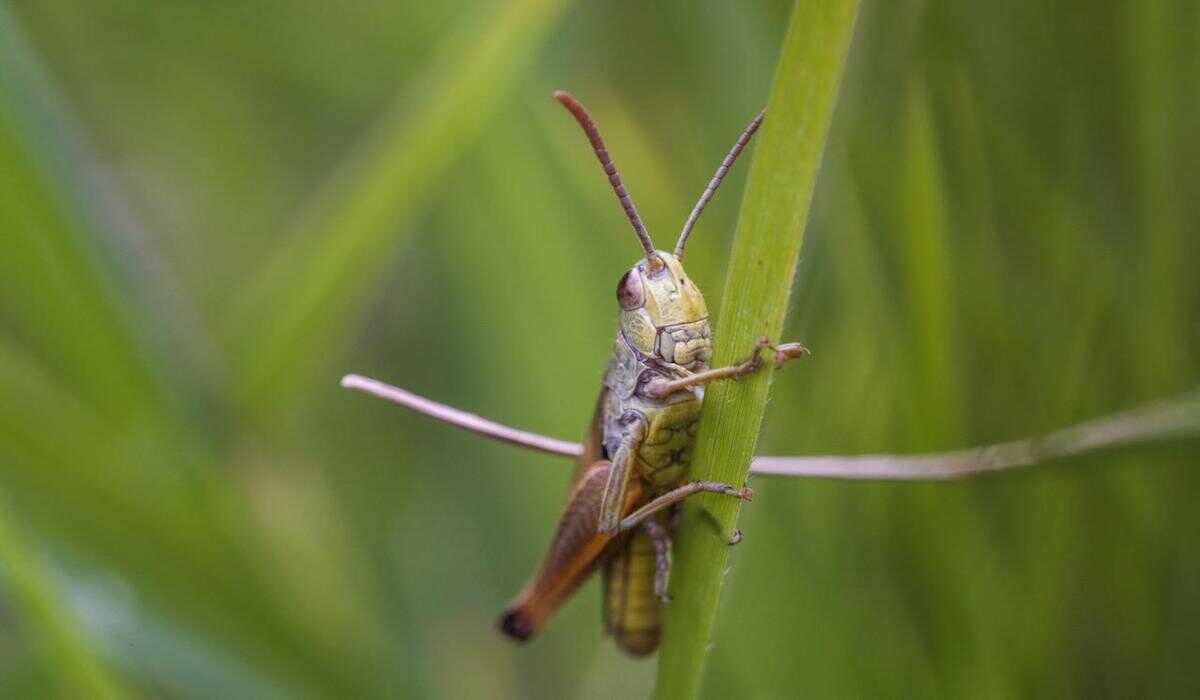
Have you ever imagined if human ears were located on their knees? For crickets, this is not just an imagination, but an amazing biological fact.
This insect from the order Orthoptera has a hearing system that is very different from mammals, where its auditory organ is actually located on its legs.
Unlike humans who have earlobes on their heads, the cricket’s auditory organ is located on its front legs, precisely below the knee joint on a part called the tibia. This unique structure is known as the tympanic organ.
According to research published in the Proceedings of the National Academy of Sciences, this organ is in the form of a thin membrane that functions similarly to the human eardrum. This membrane will vibrate when it captures sound waves from the surrounding environment.
Interesting Info: The internal structure on the cricket’s legs works similarly to the cochlea in humans, including having a mechanism for amplifying specific frequencies with high precision.
The cricket’s hearing process involves a very complex but efficient mechanism. Morphological studies published in the Journal of Experimental Biology reveal that vibrations on the tympanic membrane are transmitted through an internal air duct system to special nerve receptors.
This system allows crickets to detect sounds with specific frequencies, especially the chirping of their peers for reproductive purposes. Experimental data shows that some species of crickets can detect frequencies between 2 and 8 kilohertz, a range that corresponds to mating calls.
Biologically, the placement of ears on the legs provides a significant evolutionary advantage for the survival of crickets in the wild:
This uniqueness also attracts the attention of the world of engineering technology. Scientists are studying the cricket’s hearing mechanism to develop miniature, high-precision acoustic sensors. The compact but highly sensitive structure on the cricket’s legs is considered to have the potential to be applied in small-scale microphone technology to future robot navigation systems.
This finding confirms that evolution often presents unexpected solutions. In crickets, the ability to hear is not located in the head, but in the knee, an intelligent adaptation that ensures they continue to exist for millions of years. (Z-10)
Source: Proceedings of the National Academy of Sciences, Journal of Experimental Biology, University of Cambridge Department of Zoology.
Over the past decade, chefs and nutritionists have been looking for environmentally friendly sources of protein. One of the candidates is crickets, which are now being processed into versatile flour.