
Itinerant Toy Vendors Become Last-Mile Retailers in Cities, Economists Say Their Role is Important but Vulnerable
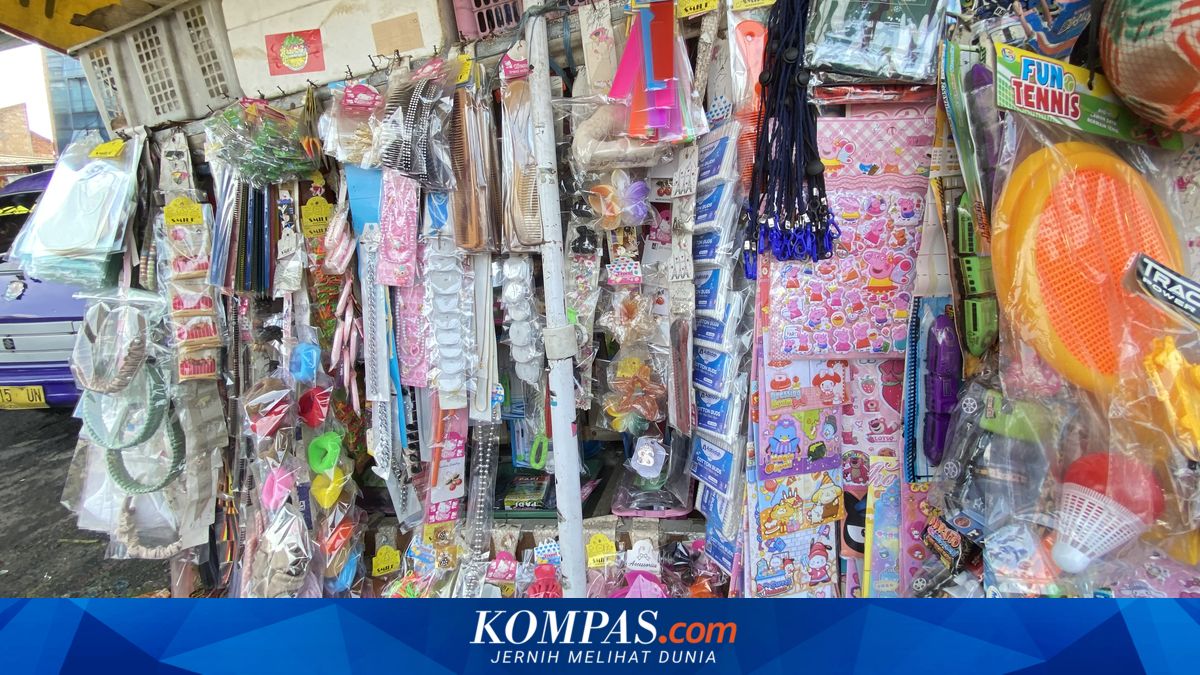
JAKARTA, KOMPAS.com - Itinerant toy vendors remain a familiar sight at various urban spots, from station areas and in front of schools to pavements in shopping centres. Amid the proliferation of modern stores, marketplaces, and the trend towards digital toys, they persist through a simple approach: directly approaching consumers, greeting children, and offering affordable items that can be taken home immediately. Economist and researcher at the GREAT Institute, Adrian Nalendra Perwira, views itinerant toy vendors as an important part of the urban informal economic ecosystem. Although not fully recorded in formal administrative systems, their activities still contribute to daily economic circulation, particularly in the segment of small and quick consumption. Adrian notes that the informal sector remains the main pillar of the labour market in Indonesia. He refers to data from the Central Statistics Agency (BPS), which records that as of August 2025, informal sector workers reached 57.80 percent of the total 146.54 million working population. This figure indicates that the informal sector continues to serve as the primary buffer for labour absorption when the formal sector has not been able to provide sufficient employment. “They are last-mile retailers, namely the end retailers who reach children in narrow alleys, in front of schools, or dense residential areas that are not on the radar of modern retailers,” said Adrian. He explains that this position makes them strategic yet vulnerable. Strategic because they fill distribution gaps not reached by modern markets, but fragile due to pressures from costs, competition, and changes in consumer behaviour. Adrian also highlights pressure from the digital economy. The value of e-commerce transactions in Indonesia increased from around Rp 205.5 trillion in 2019 to around Rp 487 trillion in 2024. This growth tightens competition, especially for small vendors selling similar goods whose prices can be easily compared online. Nevertheless, he assesses that itinerant toy vendors still have room to survive in certain segments, such as toys that need to be demonstrated directly, low-value cheap items that are inefficient to sell online, and products that follow viral trends. Adrian views the phenomenon of itinerant toy vendors as also reflecting the economic adaptation of lower-class communities. In conditions of purchasing power pressure, consumers still buy for their children, but on a smaller and more selective scale. This pattern is called trading down, namely adjusting consumption to a lower level without stopping purchases. From an employment perspective, many itinerant vendors are in survival entrepreneurship conditions. They run businesses not for expansion, but as a survival strategy amid limited access to formal jobs. He assesses that this also reflects the limitations of the urban labour market structure, which is not yet fully inclusive, thus making the informal sector the last refuge.